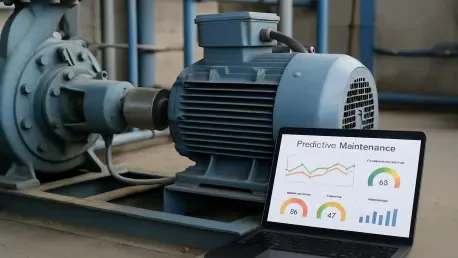

A sudden spike in vibration data may indicate an imminent mechanical failure in a steady-state environment, but it often represents a normal operational sequence during a machine’s startup phase. This distinction highlights the fundamental challenge of modern industrial oversight: the transition from raw data collection to meaningful operational intelligence. For many years, the industry focused heavily on the mathematical elegance of machine learning models and the sensitivity of hardware sensors, yet the true measure of success lies in the execution of the maintenance response. Predictive maintenance is not merely a playground for data scientists to refine algorithms; it is a comprehensive service workflow designed to convert a technical signal into a tangible business outcome. When an organization prioritizes technical prowess over the infrastructure required to act on that information, they risk creating a sophisticated monitoring system that fails to prevent downtime. The realization of value in 2026 depends on whether a prediction leads to a timely, well-informed action that fits seamlessly into the existing daily routine of a facility. Shifting the focus toward operational reliability requires a disciplined approach to how alerts are triaged and managed, ensuring that the end goal remains the preservation of asset health rather than the mere generation of data points. By treating predictive maintenance as an end-to-end service, companies can move beyond the novelty of data collection and achieve the operational resilience required for global competition.
Bridging the Gap Between Data and Action
Many organizations encounter a significant roadblock when they prioritize model accuracy at the expense of operational reality. This oversight leads to a scenario where high-fidelity data visualizations exist in a vacuum, separated from the maintenance teams who are ultimately responsible for repairing the equipment. In these environments, data stays confined to a digital dashboard, serving as a point of interest for analysts but failing to prompt a specific, necessary repair in the real world. A predictive model, regardless of its mathematical precision, is fundamentally unsuccessful if its output does not result in a physical intervention when one is required. This disconnect often stems from a lack of integration between the data science department and the operations floor, creating a culture where success is measured by the reduction of false negatives on a screen rather than the reduction of unplanned outages in the factory. To rectify this, leadership must view predictive tools not as standalone software products but as extensions of the mechanical tools used by the technicians. Without a direct link to the maintenance schedule, even the most prophetic algorithm becomes a source of frustration rather than a driver of efficiency. Ensuring that insights are actionable requires a cultural shift where the final repair is considered the most critical part of the data lifecycle.
In several industrial applications, a relatively simple model that is fully integrated into daily service workflows proves to be far more valuable than a complex, highly accurate one that operates in isolation. The true worth of a prediction is measured by the clarity and immediacy of the next step it provides to the workforce. If an automated alert identifies a potential bearing failure but fails to specify whether the machine requires an immediate shutdown or merely closer monitoring over the next forty-eight hours, it generates alert noise rather than a strategic advantage. This ambiguity forces human operators to spend valuable time deciphering the data themselves, which defeats the primary purpose of an automated predictive system. By focusing on the integration of these insights into established maintenance management systems, companies can ensure that every alert comes with a clear set of instructions and a priority level. This approach minimizes the cognitive load on technicians, allowing them to focus on their core competencies rather than trying to act as amateur data analysts. Streamlining the path from detection to resolution ensures that the organization can respond to threats with the same speed at which the sensors detect them. Ultimately, the effectiveness of predictive technology is determined by how little the human operator has to guess when a notification appears on their handheld device.
The Critical Importance of Operational Context
Sensors provide a constant stream of raw numbers, but these data points are functionally meaningless without a robust layer of operational context to filter and interpret them. For instance, a sudden increase in the temperature of a hydraulic pump might indicate a failing seal in one context, yet in another, it may be the expected result of a planned increase in production speed or a change in ambient factory conditions. To be truly effective, a predictive maintenance system must weigh real-time telemetry against the current state of the machine, its recent maintenance history, and even the surrounding environmental factors. In 2026, the leading systems are those that ingest external variables, such as humidity and power grid stability, to differentiate between a technical anomaly and a genuine mechanical risk. Without this contextual layer, the system is prone to making correct observations that lead to incorrect conclusions, resulting in unnecessary downtime for machines that were actually performing within their safe operating limits. Building this context requires a deep collaboration between engineers who understand the physics of the equipment and the software developers who write the logic for the alerts. When the software understands the difference between a machine under heavy load and a machine in distress, the maintenance strategy transitions from being reactive to being truly intelligent and precise.
Failure to properly account for operational nuances inevitably leads to a flood of false positives, a phenomenon that quickly erodes the trust of the technicians working in the field. Once the people on the ground stop believing that the alerts are credible, the entire investment in predictive technology begins to lose its utility, as workers start to ignore notifications or bypass the system altogether. A robust system must be designed with enough sophistication to distinguish between a harmless technical fluke and a genuine business risk that demands immediate attention. Maintaining trust requires that every intervention triggered by an alert is justified by a verifiable physical finding during the subsequent inspection. This level of accuracy cannot be achieved through data analysis alone; it requires a deep understanding of the specific operational cycles of each asset type. By ensuring that the alert logic is conservative and context-aware, organizations can maintain the integrity of the maintenance process and keep the workforce engaged. The goal is to move toward a state where a notification is viewed as a reliable indicator of work to be done, rather than a nuisance that interrupts a productive shift. As trust builds, the organization can more aggressively implement the recommendations provided by the software, leading to higher levels of uptime and a more predictable operational budget across the entire enterprise.
Automating the Path to Intervention
Bridging the distance between a digital prediction and a physical resolution requires a dedicated layer of service automation that connects raw data to the existing organizational hierarchy. This infrastructure is responsible for managing the logic of intervention, determining exactly who is responsible for a specific asset and when a watch status should officially escalate into a formal work order. By establishing clear rules for escalation, companies can ensure that critical warnings do not get lost in the shuffle of a busy workday or buried in an overcrowded inbox. This automation acts as the connective tissue between core data collection and the broader business logic of the company, transforming a passive observation into an active command. In 2026, this often involves the use of intelligent routing protocols that send specific technical data to the most qualified person available, rather than broadcasting a general alert to an entire department. This targeted approach ensures that the response is handled by someone with the necessary skills and parts on hand to address the specific issue identified by the sensors. Furthermore, this layer of automation can prioritize tasks based on the potential financial impact of a failure, ensuring that the most critical equipment receives attention first. By formalizing these pathways, organizations create a structured environment where technology serves the organizational goals rather than dictating a chaotic set of uncoordinated responses.
The ultimate goal of service automation is to make the predictive process feel like a routine part of operations by automating the heavy lifting of administrative tasks such as ticket creation and data routing. By integrating predictive alerts directly into existing tools, such as Enterprise Resource Planning (ERP) systems or Computerized Maintenance Management Systems (CMMS), technicians can focus their energy on the physical repair rather than on manual data entry or interpretation. This seamless integration eliminates the risk of human error during the transcription of technical data and ensures that the right information reaches the right person at exactly the right time. When a sensor detects an anomaly, the system should automatically check for the availability of replacement parts, look up the service manual for the specific asset, and prepopulate a work order with the relevant diagnostic codes. This level of preparation drastically reduces the time between detection and resolution, which is the most critical metric in any predictive maintenance program. In 2026, the maturity of these integrations has reached a point where the predictive element is almost invisible to the end-user, appearing instead as a standard, high-quality work request that happens to arrive just before a failure occurs. By reducing the friction inherent in administrative workflows, companies can maximize the productivity of their skilled labor force and ensure that their expensive predictive software provides a tangible return on investment.
Managing Scale and Workflow Integration
Expanding a predictive maintenance solution from a small, controlled pilot to a global fleet of thousands of assets is a high-risk transition that requires a rigorous level of deployment discipline. Organizations must utilize staged rollouts and representative testing to ensure that any new alert logic or updated algorithms do not trigger a wave of unnecessary service calls across a vast geographic area. The complexity of managing diverse equipment types across different climates and operational environments means that what works in a single facility may not be suitable for a worldwide rollout without significant adjustments. Having the technical capability to quickly roll back changes is an essential safeguard for maintaining operational stability as the system expands in scope and complexity. This precautionary approach prevents alert storms that can overwhelm a service network and lead to significant financial losses from dispatched technicians who find no faults. In 2026, sophisticated deployment platforms allow for A/B testing of maintenance strategies, where different logic is applied to small subgroups of assets to verify effectiveness before a full-scale launch. This disciplined methodology ensures that the growth of the predictive program is sustainable and that the quality of the insights remains high, regardless of how many new sensors are added to the network. Scaling is as much a challenge of change management and logistics as it is a challenge of cloud computing or data storage.
For a predictive maintenance program to succeed at scale, it cannot exist as a standalone process; it must be woven into the fabric of the existing digital and human workflows that already define the organization. Different stakeholders, ranging from frontline equipment operators to senior regional managers, require vastly different views of the same predictive event to perform their specific duties effectively. While a technician needs detailed diagnostic telemetry and a list of required tools, a plant manager might only need to see the projected impact on this week’s production schedule and the estimated cost of the repair. Success depends on the system’s ability to provide each individual with the specific insights they need without overwhelming them with irrelevant technical jargon or excessive data points. This multi-layered transparency ensures that everyone involved in the asset lifecycle is aligned on the necessary actions and their priority. In 2026, user interfaces are increasingly designed to be role-based, automatically filtering out noise and presenting only the most pertinent information to the user at hand. This tailored approach reduces the time spent in meetings discussing the validity of data and increases the time spent making strategic decisions. By integrating these predictive insights into the daily habits of the workforce, the organization transforms maintenance from a necessary evil into a competitive advantage that supports the overall goals of the business.
Ensuring Continuous Improvement Through Feedback
The final and perhaps most critical stage of the predictive maintenance lifecycle involves a structured process of learning from the results of each physical intervention. By systematically capturing feedback from technicians in the field—such as whether a predicted fault was actually present or if the root cause differed from what the algorithm suggested—the system can continuously refine its detection thresholds. This closed-loop process ensures that the predictive model evolves based on real-world ground truth rather than remaining stagnant or relying solely on theoretical data patterns. In 2026, the most advanced organizations have automated the feedback loop, using mobile applications that prompt technicians to verify the accuracy of an alert before a work order can be closed. This data is then fed back into the training sets for the machine learning models, allowing them to adapt to the specific wear patterns and failure modes of the local equipment fleet. Without this constant influx of field-verified data, an organization is essentially flying blind, unable to determine if its maintenance actions are truly preventing downtime or if the system is merely generating lucky guesses. The technician’s post-repair report serves as the ultimate validation of the system’s efficacy and the primary source of truth for all future model updates. By mastering these often-overlooked details of service management, companies can ensure that their predictive maintenance program remains relevant and continues to provide increasing value over time.
Establishing a successful predictive maintenance program required a shift in perspective where the focus moved from the technical brilliance of the software to the practical discipline of the execution phase. Organizations that thrived in this environment were those that recognized the necessity of bridging the gap between data science and the operational floor, ensuring that every insight was backed by a clear path to action. They invested heavily in service automation and contextual filters, which reduced the burden on their human workforce and increased the reliability of the automated alerts. By 2026, the industry had largely moved past the era of experimental pilots and moved toward fully integrated systems where feedback loops were the standard rather than the exception. The transition focused on actionable next steps, such as implementing mandatory feedback protocols for all field repairs and integrating predictive data into the core financial planning of the company. Leaders realized that the true value of their technology was unlocked only when it was treated as a fundamental part of the service lifecycle. To maintain this momentum, stakeholders should have prioritized the continuous training of their personnel, ensuring that technicians remained comfortable with the evolving digital tools. The successful mastery of these mundane yet essential operational details allowed companies to finally turn predictive maintenance into a high-value, scalable service that provided a consistent return on investment across their entire global asset portfolio.