
The current industrial landscape demands a level of precision that was once considered impossible, yet Shenzhen Jingcheng Dingyi Forming Technology Co., Ltd. has managed to turn these rigorous requirements into a standardized global service model. As modern manufacturing shifts toward highly complex, multi-functional components, the need for a partner that can bridge the gap between abstract design and tangible production has become a critical necessity for international firms. JCDY, known for its technical prowess, has successfully positioned itself at the nexus of this evolution by offering a tripartite service model that combines CNC machining, sheet metal fabrication, and 3D printing. This integration allows companies in the aerospace, automotive, and robotics sectors to move through the product development cycle with unprecedented speed. By focusing on engineering accuracy and production stability, the company has redefined what it means to be a manufacturing partner in an age where micron-level tolerances are the minimum baseline for success.
Integrating Multi-Disciplinary Manufacturing Solutions
At the heart of this manufacturing revolution is a sophisticated approach to CNC machining that prioritizes both high-volume output and extreme repeatability for specialized components. In sectors like aerospace and medical technology, where a deviation of a few microns can compromise the entire integrity of a system, the reliability of subtractive manufacturing processes remains irreplaceable. JCDY utilizes advanced multi-axis machining centers to produce intricate geometries that maintain structural integrity across diverse material types, from lightweight aluminum alloys to high-strength titanium. This technical capability ensures that whether a client requires a single prototype for mechanical testing or ten thousand units for a global product launch, the dimensional accuracy remains uniform. By removing the traditional friction points between small-batch prototyping and large-scale industrialization, the firm provides a continuous engineering pathway that reduces the time-to-market for innovative hardware solutions while maintaining rigorous safety standards.
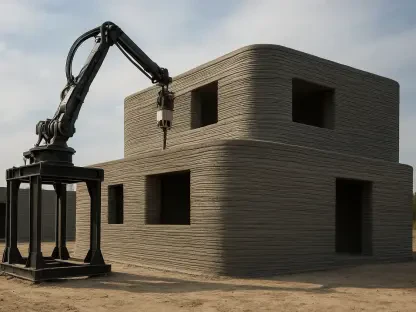
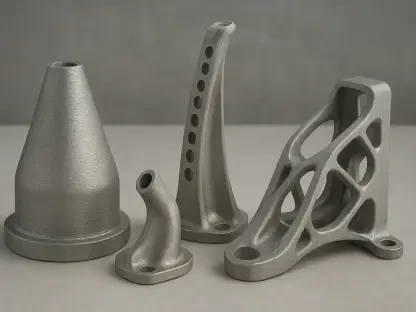
Beyond the scope of subtractive machining, the integration of sheet metal fabrication and additive manufacturing creates a versatile production environment that caters to complex industrial needs. The sheet metal division focuses on precision bending, stamping, and assembly, which are essential for creating the structural frames and protective enclosures required for communication equipment and industrial robotics. Simultaneously, the inclusion of 3D printing technology offers a layer of flexibility that allows engineers to validate complex internal geometries and ergonomic designs before committing to expensive tooling. This hybrid approach enables a more iterative design process, where physical models can be tested and refined in a matter of days rather than weeks. By offering these diverse disciplines under one organizational structure, JCDY allows its partners to source complex, multi-part assemblies from a single reliable provider, thereby ensuring that every component of a final product fits together with the high precision intended by the original designers.
Streamlining Global Supply Chains Through Consolidation
The modern procurement strategy for global B2B buyers has undergone a fundamental shift toward the consolidation of vendor networks to mitigate the risks of supply chain fragmentation. Managing dozens of disparate suppliers for different manufacturing processes often leads to logistical bottlenecks and communication errors that can derail tight production schedules. JCDY addresses this challenge by functioning as an end-to-end strategic partner, capable of handling every phase of production from initial material selection to final quality inspection. This holistic management style significantly reduces the administrative and logistical overhead for international clients, providing them with a streamlined point of contact for complex engineering projects. By centralizing these diverse capabilities, the company eliminates the risk of technical details being lost in translation between separate specialized shops, ensuring that the design intent is preserved throughout the entire manufacturing journey and resulting in more reliable lead times.
Global standardization plays a pivotal role in this consolidated model, as international clients require products that meet uniform quality benchmarks across North American, European, and Southeast Asian markets. JCDY has invested heavily in standardized inspection protocols and advanced quality assurance systems to ensure that every part leaving the factory floor adheres to stringent international certifications. This commitment to consistency is particularly vital for the aerospace and automotive sectors, where safety-critical components must undergo rigorous testing and documentation to ensure long-term performance. The integration of 3D printing for rapid design validation before moving to CNC machining or sheet metal stamping allows for a more responsive and agile development cycle. As companies seek to build more resilient supply chains, the ability to rely on a single partner that maintains such high standards of engineering accuracy becomes a major competitive advantage, fostering trust and long-term collaboration in a highly demanding global marketplace.
Driving High-Value Engineering in the Shenzhen Ecosystem
The trajectory of JCDY is a clear indicator of the broader transformation occurring within the Shenzhen manufacturing landscape, moving away from low-cost mass production toward high-value precision engineering. In the past, the region was primarily known for its volume, but today, the focus has shifted toward technical merit and the ability to solve complex engineering problems for high-stakes industries. This transition is driven by the increasing complexity of modern electronics and mechanical systems, which require a level of sophistication that goes far beyond basic manufacturing. By prioritizing technical proficiency and investing in the latest machining hardware, JCDY exemplifies the modern firm that competes on the basis of reliability and specialized expertise. This shift not only enhances the company’s individual market position but also contributes to the rising reputation of the regional ecosystem as a global center for industrial innovation, where quality is no longer a luxury but a fundamental requirement of the production process.
The practical impact of this engineering excellence is most visible in fields like medical robotics and automotive drivetrains, where the cost of component failure is exceptionally high and tolerances are non-negotiable. In medical applications, surgical robotic arms and diagnostic equipment require parts that are both biocompatible and manufactured with extreme dimensional accuracy to ensure patient safety and operational success. Similarly, the automotive industry relies on high-performance components that can withstand extreme thermal and mechanical stresses over long durations. JCDY’s focus on precision engineering provides these sectors with the stability they need to innovate without the fear of hardware limitations. By specializing in high-performance enclosures and structural parts for sensitive electronics, the company supports the next generation of technological breakthroughs. This focus on specialized, high-stakes manufacturing ensures that the firm remains a vital node in the global supply chain, providing the essential infrastructure for industries that are shaping the future of global technology.
Embracing Automation and the Smart Factory Future
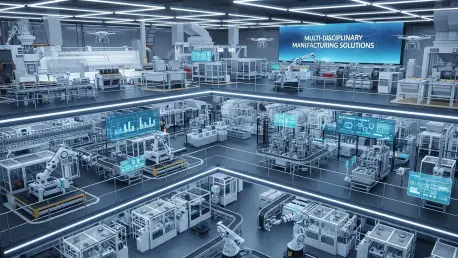
As the demand for faster production cycles and higher precision continues to escalate, the integration of digital tools and automation has become the next logical step for leading manufacturers. JCDY is actively adopting Smart Factory technologies to enhance its operational throughput while maintaining absolute consistency across even the most complex production runs. By utilizing automated machining cells and real-time monitoring systems, the company can identify and correct potential deviations before they affect the final product, resulting in a significantly lower scrap rate and higher overall efficiency. This transition toward a more data-driven manufacturing environment allows for a greater degree of transparency, as clients can receive precise updates on production progress and quality metrics. The use of advanced software to simulate machining processes before they occur also reduces the risk of tool damage and material waste, further optimizing the cost-effectiveness of high-precision manufacturing for both small batches and large-scale orders.
The strategic shift toward flexible manufacturing systems positioned JCDY to effectively address the rising global demand for low-volume, high-mix production where customization was the primary requirement. By integrating advanced digital workflows and automated systems, the company successfully bridged the gap between traditional industrial stability and the modern need for rapid, specialized innovation. For organizations looking to optimize their hardware development in the current market, the focus shifted toward selecting partners that prioritized technical agility and end-to-end oversight over simple cost savings. These industry leaders recognized that long-term success depended on maintaining rigorous quality standards while embracing the speed of digital fabrication. The adoption of these integrated models provided a clear roadmap for future industrial breakthroughs, ensuring that the supply chain remained resilient against shifting market pressures. Ultimately, the transition to high-precision, automated manufacturing offered a sustainable solution for the most complex engineering challenges of the mid-twenties.