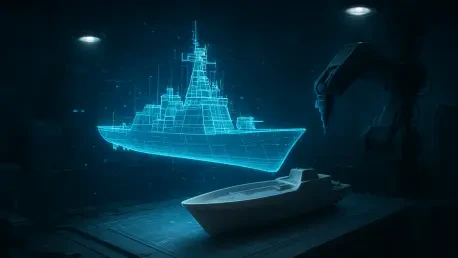

The capability to fabricate a remote-controlled raiding craft in a matter of hours demonstrates how logistics has evolved into a kinetic capability for Stand-In Forces. In the humid, salt-heavy air of Okinawa, Japan, during the summer of 2026, the United States Marine Corps achieved a historic technological milestone that fundamentally alters the nature of maritime sustainment. By successfully fabricating and deploying a 7-meter raiding craft using advanced additive and subtractive manufacturing techniques directly at the point of need, expeditionary units have bypassed the traditional constraints of industrial shipyards. This achievement, a cornerstone of the RAMFORCE initiative, marks a departure from the days when hardware losses meant waiting months for trans-Pacific shipments. Instead, the focus has shifted toward a model where combat power is generated locally and autonomously. The deployment of this vessel proves that the manufacturing floor has moved from the continental United States to the very edge of the contested zone, providing a level of resilience that traditional logistics models cannot match. This successful demonstration serves as a blueprint for future operations where the ability to rapidly replace lost or damaged assets determines the outcome of long-term engagements in the Indo-Pacific.
Strategic Framework: The RAMFORCE Initiative in the Pacific
The Resilient Advanced Manufacturing For Contested Environments (RAMFORCE) program serves as a high-level strategic effort hosted by the Office of the Under Secretary for Research and Engineering. During Exercise Valiant Shield 26, this program demonstrated that expeditionary forces could seamlessly collaborate with civilian engineers and private industry to create and repair critical hardware on-site. This collaborative environment is designed to eliminate the single points of failure inherent in long and vulnerable trans-Pacific supply chains. By integrating high-tech manufacturing directly into the operational tempo of the 3rd Marine Logistics Group, the military has proven that sophisticated fabrication is no longer a luxury reserved for secure, rear-area bases. The ability to build mission-essential equipment in-theater allows for a much more agile response to emerging threats, ensuring that units remain functional even when traditional support networks are under duress. This shift toward localized production is not merely about convenience; it is a vital component of survival in high-intensity environments where the speed of adaptation often dictates the pace of tactical success.
Beyond the immediate tactical advantages, the integration of these advanced manufacturing technologies into a month-long exercise provided a wealth of data on how expeditionary units can sustain themselves in isolation. The RAMFORCE framework emphasizes a decentralized approach to hardware readiness, where digital design files are treated with the same importance as physical ammunition. By turning these blueprints into physical assets in a matter of hours, the Marine Corps is effectively redefining the entire concept of expeditionary sustainment. This approach ensures that a hardware failure or a combat loss does not lead to a permanent degradation of capability, as the means of production are always present with the forward-deployed unit. The program demonstrates a significant shift in military thought, moving away from the “Iron Mountain” approach that relied on massive stockpiles of spare parts toward a “just-in-time” manufacturing model. This evolution ensures that the logistical tail of a unit is as flexible and as difficult to target as the combat forces it supports, creating a more persistent and formidable presence across the vast maritime reaches of the Pacific.
MASS Strategy: Defining Attritable Systems for Combat
At the heart of the current manufacturing push is a strategy known as Manufacturing Attritable Systems at Scale (MASS). In the context of modern military operations, the term “attritable” refers to platforms and equipment that are cost-effective enough to be lost in high-intensity combat without compromising the broader mission objectives or the financial stability of the force. By manufacturing these systems locally, the Marine Corps addresses the high cost and extreme logistical difficulty associated with transporting traditional amphibious platforms over thousands of miles. This strategy allows the military to maintain a persistent and pervasive presence in contested areas without the need to risk multi-million-dollar flagship assets for every scouting or transport task. If a 3D-printed raiding craft is destroyed or rendered inoperable, the unit on the ground can simply initiate the printing process for a replacement, maintaining their operational tempo without skipping a beat. This capability significantly changes the strategic calculus for any potential adversary, who must now account for a force that possesses the organic ability to replenish its own ranks almost instantly.
The implementation of the MASS strategy required a significant departure from traditional military procurement and design philosophies. Working closely with experts from the Naval Surface Warfare Center Carderock, the Marines adopted a modular design philosophy that prioritizes the manufacturing process over specific, rigid hull geometries. The primary objective was to establish a reliable pipeline where complex digital design files are transmitted from engineers in the United States to front-line units equipped with portable manufacturing suites. These units then utilize local equipment to produce the specific hardware they need for a given mission, whether that involves specialized raiding craft, unmanned reconnaissance vessels, or structural repair components. This decentralized method makes the supply chain incredibly difficult to disrupt, as there is no single central hub or warehouse for an enemy to target. By producing equipment exactly where it is used, the Marine Corps bypasses the traditional vulnerabilities of international shipping lanes, ensuring that the flow of hardware continues even when global logistics networks are contested or blocked.
Technical Execution: Engineering the Seven-Meter Craft
The successful manufacturing of the 7-meter foam raiding craft relied on the synchronized operation of three core pieces of industrial equipment. First, a high-precision CNC router was employed for the subtractive shaping of structural components, ensuring that the final geometry of the vessel met exacting maritime standards. Second, a large-format polymer 3D printer was utilized to create the intricate structural segments that form the backbone of the craft. Finally, a specialized spray foam system was integrated to provide the necessary buoyancy and impact resistance required for high-speed waterborne operations. These tools work in tandem to create a vessel that is both exceptionally lightweight and surprisingly durable, capable of handling the rigors of the open ocean. The combination of additive and subtractive manufacturing methods ensures that the final product is not just a prototype, but a fully functional military asset ready for immediate deployment. This technical synergy represents the cutting edge of expeditionary engineering, where disparate technologies are woven together to provide a comprehensive solution for field manufacturing.
One of the most remarkable outcomes of the exercise in Okinawa was the drastic reduction in the time required to move from raw material to a finished vessel. While early development prototypes of these craft took considerable time to refine, the current operational team estimated that a crew of just 12 Marines could now produce a complete 7-meter craft in roughly six hours. This rapid turnaround is a total departure from traditional procurement cycles, which can often take weeks or even months to deliver a single replacement boat to a forward-deployed unit. The ability to go from a digital file to a seaworthy vessel in less than a day provides commanders with an unprecedented level of tactical flexibility. Furthermore, the cost efficiency of this method is staggering; a 5-meter version of the same craft requires only about $11,000 in raw materials. This makes the 3D-printed vessel an order of magnitude cheaper than standard military-grade raiding craft, enabling the military to deploy these assets in high-risk roles that might otherwise be considered too dangerous or costly for more expensive, traditionally manufactured equipment.
Environmental Adaptability: Additive Manufacturing in Motion
A significant challenge for industrial 3D printing has traditionally been the requirement for a stable, temperature-controlled environment, as even minor vibrations or changes in humidity can lead to catastrophic print failures. To address these limitations, the Marines conducted a series of “Print on the Move” experiments during the recent demonstrations in Okinawa. These tests were designed to evaluate the hardware’s ability to maintain precision and structural integrity while being transported on tactical vehicles across rugged terrain or while situated aboard vessels experiencing the pitch and roll of the sea. By successfully printing critical components in these vibrating and humid environments, the Marine Corps has proven that additive manufacturing can be an active and mobile part of a modern force’s toolkit. It moves the technology out of the controlled laboratory setting and places it directly into the hands of the tactical operator, who must often work in less-than-ideal conditions. This breakthrough ensures that manufacturing capabilities are not tethered to static depots but can instead move with the units they support.
The capability to manufacture essential equipment while in transit allows a Marine unit to arrive at its destination with the necessary hardware already prepared for immediate use. This maximizes the time available for actual mission execution and significantly reduces the logistical footprint required on the ground, as there is no need to set up a stationary factory before production can begin. Furthermore, this mobile manufacturing capability allows for real-time adjustments to equipment designs based on the specific environmental or tactical conditions encountered during a deployment. If a unit discovers that a particular hull shape or structural reinforcement is needed for a specific island’s coastline, they can modify the digital file and print the updated version while en route. By proving that these printers can operate effectively in chaotic field conditions, the Marine Corps has greatly expanded the potential use cases for additive manufacturing. It is no longer a capability limited to static maintenance facilities but a dynamic tool that supports a distributed force moving through diverse and challenging maritime environments.
Precision Repair: The nRugged and Hybrid Systems
The RAMFORCE initiative also prioritized the critical need for electronics repair through the implementation of the nScrypt nRugged system. In the high-tech landscape of modern warfare, a single broken circuit card can sideline an entire drone fleet or a vital sensor system, creating a significant gap in a unit’s capabilities. Traditionally, these damaged parts were either discarded or sent back to a major depot for repair, a process that leads to substantial downtime for expensive and mission-essential equipment. The nRugged system changes this dynamic by allowing for “microsurgery” on complex electronics using high-definition imaging to identify and fix damaged pathways on circuit boards with extreme precision. This allows Marines to repair sophisticated equipment on-site, significantly increasing the resilience and self-sufficiency of distributed units. It transforms the military maintenance philosophy from a “replace-all” model to a much more sustainable “repair-on-site” model, ensuring that high-tech assets remain in the fight for longer periods without requiring external support.
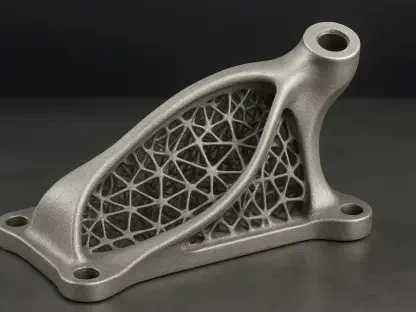
In addition to electronics, the focus on hybrid manufacturing involved a close collaboration with the Oak Ridge National Laboratory to advance metal fabrication in the field. This process combines additive metal deposition with high-precision subtractive machining to create or repair metal parts that meet rigorous military tolerances. By scanning a damaged mechanical part and “building” it back up with layers of metal, Marines can restore components that would otherwise be impossible to fix outside of a specialized industrial facility. This capability is vital for maintaining the heavy machinery and specialized engines that power expeditionary forces. The integration of electronics repair and metal fabrication provides a comprehensive maintenance suite that allows a unit to maintain not just its simple platforms, but also its most advanced sensors and mechanical systems. This level of self-sufficiency is a critical requirement for units operating far from traditional repair facilities, ensuring they can overcome mechanical failures that would otherwise terminate a mission.
Cybersecurity: Protecting the Digital Manufacturing Exchange
The ability to print parts and vessels in the field is only useful if the unit has secure access to the correct technical data, but the act of sharing sensitive blueprints across a contested battlefield poses a major cybersecurity risk. To address this vulnerability, the Marine Corps utilized the Digital Manufacturing Exchange (DMX) to secure their data transmissions during the Okinawa exercises. This system acts as a highly protected digital library for technical data packages, ensuring that only authorized users can access, download, and utilize the designs for military hardware. The DMX is specifically engineered to function in environments where bandwidth is limited or intermittent, which is a common reality in distributed maritime operations. This ensures that even if a Marine unit is temporarily cut off from the primary military network, they can still access the digital “inventory” they need to produce spare parts or new equipment. This reliance on digital files replaces the need for massive, vulnerable physical stockpiles of spare parts that are difficult to transport and easy for an enemy to destroy.
Data sovereignty and integrity are key concerns for senior military leaders who must trust that a field-manufactured part will perform exactly as intended in a high-stakes combat situation. The DMX provides a “digital thread,” which is a verifiable and encrypted history of a design from its origin in a research lab to the final output on a 3D printer in the field. This level of verification gives commanders the necessary confidence to utilize 3D-printed parts in critical roles where failure could have dire consequences. By securing the digital supply chain, the Marine Corps protects its emerging manufacturing capabilities from cyber-attacks and industrial espionage, ensuring that the blueprints for its technology remain out of enemy hands. This digital infrastructure is just as important as the physical printers themselves, as it maintains the integrity and reliability of every part produced. It allows the military to leverage the speed and connectivity of the digital age while maintaining the strict security and control of a closed, military-grade system.
Kinetic Logistics: Sustaining Operations in the Island Chain
The technologies demonstrated through the RAMFORCE initiative are essential for the implementation of modern naval doctrines such as Stand-In Forces and Expeditionary Advanced Base Operations (EABO). These strategies require small, highly mobile units to operate deep within the range of an adversary’s long-range missile systems. In such a lethal environment, traditional, large-scale logistics hubs are simply too vulnerable to serve as effective supply points, as they present easy targets for precision strikes. By decentralizing manufacturing and moving it to the front lines, the Marine Corps makes its supply chain distributed and nearly invisible to an opponent. There are no massive fuel depots or parts warehouses for an adversary to target, and the destruction of any single manufacturing node does not cripple the entire force’s ability to operate. This creates a level of persistence and endurance that is extremely difficult for an opponent to degrade through conventional military means, as the force can regenerate its capabilities wherever it is located.
Logistics is now being viewed as a kinetic capability rather than just a secondary support function, as the ability to produce equipment on-demand directly influences the outcome of tactical engagements. For example, the capability to manufacture unmanned surface vessels (USVs) on-demand allows for the rapid deployment of reconnaissance or decoy missions that can confuse or overwhelm an adversary’s defenses. These low-cost, 3D-printed vessels can serve as expendable sensor nodes or even one-way attack craft, providing a massive tactical advantage without the need for high-end, expensive platforms. This transition allows the Marine Corps to remain a lethal and relevant force even in the most contested and isolated environments. The ultimate goal is to ensure that the “logistics tail” is just as agile and resilient as the combat forces it supports, reducing the military’s reliance on the slow and predictable grind of traditional global shipping. By moving the factory to the edge of the battle, the Marines have fundamentally changed the way a maritime conflict is sustained and won.
Human Element: Cultivating Innovation at the Tactical Edge
One of the most significant findings from the recent exercises in Okinawa was the remarkable speed with which junior Marines mastered these complex, high-tech manufacturing systems. Personnel at the lowest levels of the command structure were trained by leading scientists and engineers to operate advanced 3D printers, CNC routers, and electronic repair stations. This empowerment of the Fleet Marine Force allows units to solve complex technical problems immediately as they arise in the field, rather than waiting for instructions or parts from a distant headquarters. The collaboration between the military and the scientific community has significantly accelerated the process of fielding new technology, creating a rapid feedback loop that benefits both sides. Instead of waiting years for a formal acquisition program to deliver a new tool, Marines are now part of an iterative design process, providing real-time feedback to engineers that results in more rugged, practical, and mission-effective equipment for actual combat use.
This fundamental shift in training and responsibility creates a culture of “bottom-up” innovation where the individual closest to the problem is also the one equipped with the tools and knowledge to build the solution. It transforms the role of the Marine from a mere user of equipment into a producer of tactical assets, fostering a level of intellectual agility that is a key component of the modern Marine Corps’ competitive edge. The equipment and training provided during Valiant Shield 26 have remained with the 3rd Maintenance Battalion in Okinawa, ensuring that the capabilities demonstrated were not just a one-time event but a permanent increase in the unit’s organic self-sufficiency. As these technologies continue to mature and become more integrated into daily operations, the vision of a “factory in the field” is becoming an everyday reality for forward-deployed forces. The successful launch of a 3D-printed raiding craft from the shores of Japan was a physical manifestation of a new era of warfare where the ability to “print the fight” has become just as important as the ability to win it.
Future Considerations: Scaling Advanced Manufacturing Capabilities
The successful deployment of 3D-printed raiding craft in the Indo-Pacific has provided a clear roadmap for the continued evolution of expeditionary logistics and maintenance. To maintain this technological advantage, the Marine Corps must now focus on scaling these capabilities across the broader force, ensuring that every logistics battalion possesses the organic tools and training to manufacture critical assets on-demand. This will involve the continued expansion of the Digital Manufacturing Exchange to include a wider array of technical data packages, as well as the refinement of “Print on the Move” techniques to ensure reliability in even more extreme environmental conditions. Leaders should prioritize the integration of artificial intelligence into the manufacturing process to help automate design adjustments and quality control, further reducing the burden on human operators and increasing the speed of production. By fostering a resilient network of “micro-factories” across the Pacific, the military can ensure that its distributed forces remain a persistent and lethal presence, regardless of the challenges posed by long-range threats or disrupted supply lines.
Looking forward, the integration of multi-material printing and advanced metallurgy will be crucial for producing more complex systems, including propulsion units and integrated sensor housings. The lessons learned from the fabrication of the 7-meter craft demonstrated that the transition from traditional manufacturing to decentralized, additive methods is not only possible but necessary for success in contested maritime domains. It is recommended that future exercises focus on the mass-production of autonomous swarming platforms, utilizing the same MASS strategy to overwhelm adversary defenses with low-cost, locally produced assets. The ability to rapidly iterate on designs based on real-world combat feedback will remain a decisive factor in maintaining tactical superiority. As the Marine Corps continues to refine these processes, the focus will stay on reducing the logistical footprint while simultaneously increasing the kinetic output of every deployed unit. The era of the “static warehouse” has passed, replaced by a dynamic, digital-driven manufacturing capability that ensures the force is always ready to adapt, repair, and prevail in the face of any challenge.