
Automation Alley CEO Pavan Muzumdar argues that human judgment remains the essential factor in manufacturing even as technology becomes increasingly commoditized. This perspective serves as the cornerstone for the newly established Advanced Manufacturing Center of Excellence, a collaborative venture between Oakland University and Automation Alley that seeks to redefine the relationship between academic research and industrial application. Housed within an expansive 50,000-square-foot Research and Innovation Center, this initiative represents a significant departure from traditional ivory-tower academic models, favoring instead a functional ecosystem where engineers and students engage directly with the fast-paced demands of modern production. By synthesizing high-level engineering theory with the gritty, practical requirements of the factory floor, the center acts as a specialized catalyst for high-tech development, ensuring that innovation does not simply remain a conceptual exercise but evolves into a tangible market-ready reality for the entire region.
Strategic Placement in Industrial Ecosystems
The physical location of the new hub was a deliberate strategic choice aimed at fostering a professional and immersive industrial atmosphere. Rather than nesting the facility within the main university campus, the partners opted for a site in a Rochester Hills industrial park, where the surroundings mirror the actual environments that students will inhabit upon graduation. This off-campus setting effectively reduces the culture shock often experienced by graduates transitioning from sterile classroom environments to the complex, high-stakes atmosphere of a commercial manufacturing plant. Since the facility began operations in 2024, it has functioned as a premier technical infrastructure for the region, providing a professional backdrop where industry leaders and students coexist. This proximity ensures that the educational process is never isolated from the commercial realities of production schedules, safety protocols, and the logistical challenges inherent in modern industrial operations.
A core objective of this professional alignment is the implementation of a shoulder-to-shoulder working philosophy, where faculty members and students collaborate directly on solving real-world manufacturing bottlenecks. This arrangement accelerates the innovation cycle, as the proximity to industrial-grade equipment allows university-born ideas to be prototyped, tested, and scaled within a singular, cohesive environment. By working on projects with immediate commercial relevance, students build a portfolio of experience that makes them exceptionally attractive to local employers who require workers already familiar with high-end machinery and professional frameworks. The center effectively serves as a high-pressure testing ground where academic curiosity is sharpened by the necessity of industrial efficiency. This integration ensures that the regional talent pipeline is not only robust but also perfectly synchronized with the specific technical needs of the local manufacturing sector.
Scaling Distributed Manufacturing through Project DIAMOnD
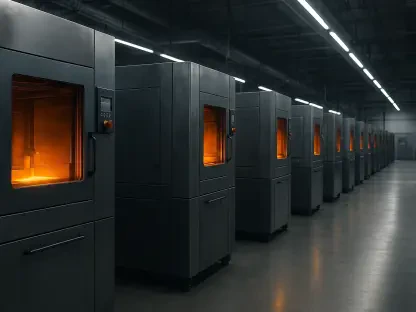
Central to the hub’s operational success is the relocation of Project DIAMOnD, which stands as one of the most significant distributed manufacturing networks in the United States. This initiative links over 500 manufacturers through a sophisticated fleet of nearly 500 industrial 3D printers distributed across the state of Michigan. While the network was originally conceived to address critical supply chain vulnerabilities identified in recent years, it has since matured into a formidable powerhouse for on-demand production and digital agility. By centralizing its headquarters within the university-hosted innovation center, Project DIAMOnD can now leverage deep academic expertise to refine its processes while offering students an unprecedented look into a massive, interconnected industrial grid. This synergy allows for the rapid dissemination of technical knowledge across hundreds of small and medium-sized enterprises, effectively democratizing access to high-end manufacturing technology.
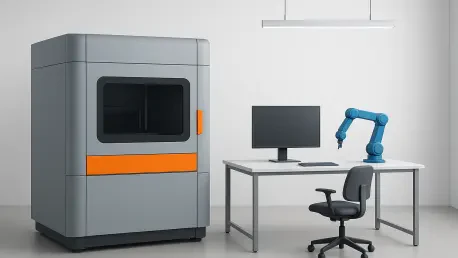
The collaboration aims to push the boundaries of additive manufacturing, moving beyond the production of simple plastic prototypes and toward the creation of high-quality, durable metal components for heavy industry. This evolution is critical for sectors like aerospace and defense, where material integrity and precision are non-negotiable. Within the center, researchers are exploring how to optimize metal 3D printing to compete with traditional casting and machining in terms of both speed and cost-effectiveness. By utilizing the distributed power of the DIAMOnD network, a breakthrough in metal additive techniques at the Rochester Hills site can be tested and implemented across dozens of other nodes simultaneously. This capability creates a resilient manufacturing infrastructure that can pivot production almost instantly to meet changing market demands or emergency requirements. The focus remains on durability and precision, ensuring that the components produced meet the rigorous standards of modern engineering.
Technological Frontiers and Research Infrastructure
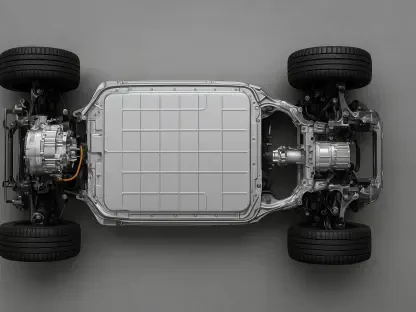
Beyond its extensive 3D printing capabilities, the facility operates as a multidisciplinary research powerhouse, hosting specialized laboratories that tackle the most pressing challenges in modern transportation. The center features dedicated spaces for the testing of autonomous vehicle systems, high-capacity battery performance, and complex wireless radio-frequency technologies. This broad technological reach is supported by a substantial foundation of approximately $8 million in federal funding, which has been secured and utilized over the five-year period leading up to 2026. These resources have enabled the center to acquire state-of-the-art machinery that would be cost-prohibitive for individual small firms, effectively serving as a shared resource for regional innovation. The focus on electrification and vehicle connectivity ensures that Michigan remains a central node in the global automotive shift, providing the data and testing environments necessary to bring safe, connected cars to the public.
The development of Smart Product Recipes represents another major technological milestone achieved within the walls of the research hub. These recipes are standardized digital instructions that encapsulate every variable of the manufacturing process, from material specifications to precise machine settings, into a single, portable file. This innovation allows a part that has been perfected in a laboratory setting to be replicated with perfect consistency across the entire statewide network of printers, eliminating the variability that often plagues distributed production. This digital standardization ensures that quality control is maintained regardless of where the physical object is actually printed. Furthermore, the center’s philosophy emphasizes that these advanced digital tools are intended to augment, rather than replace, the human workforce. By integrating artificial intelligence to handle repetitive data tasks, the center empowers human operators to focus on high-level decision-making and creative problem-solving.
Economic Resilience and Talent Integration
From an economic perspective, the partnership functions as a vital anchor for Oakland County and the broader Michigan industrial landscape. By integrating the rigor of university-led research with the agility of a commercial industrial network, the hub significantly strengthens domestic supply chains against global volatility. Local government officials and economic developers view this center as a cornerstone of the region’s long-term growth strategy, as it creates an environment where intellectual property can be rapidly commercialized and manufactured locally. This prevents the brain drain of innovative ideas leaving the state to be produced elsewhere. The hub fosters a climate of regional self-reliance, where small manufacturers can compete on a global scale by leveraging the collective power of the network. This collaborative model demonstrates how public-private partnerships can drive meaningful economic evolution by aligning the interests of education, government, and private industry.
The initiative successfully established a blueprint for future industrial development by prioritizing actionable skill sets and technological agility over theoretical isolation. Stakeholders focused on creating a sustainable pipeline of talent and technology that addressed immediate supply chain gaps while laying the groundwork for long-term manufacturing dominance. By moving forward, industry leaders recognized the necessity of investing in shared infrastructure to democratize access to expensive automation tools. The center demonstrated that a localized, distributed production model reduced the risks associated with global shipping delays and material shortages. Furthermore, the integration of students into professional industrial environments ensured that the workforce remained prepared for the rapid shifts in digital manufacturing standards. Ultimately, the hub provided a clear path for regional businesses to adopt metal 3D printing and smart manufacturing recipes, ensuring Michigan remained at the vanguard of the global industrial revolution.