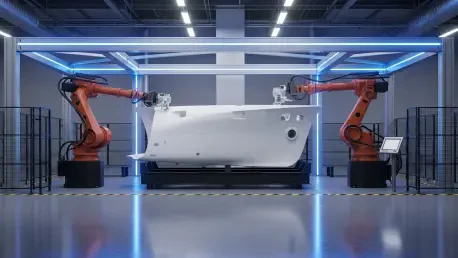

The traditional constraints of industrial production are rapidly dissolving as robotic additive manufacturing moves beyond the experimental phase into the heart of heavy-duty factory operations across the globe. For decades, the additive sector remained tethered to the production of small-scale prototypes, limited by the rigid movements of conventional three-axis gantry systems that lacked the dexterity required for complex geometry. Today, the integration of six-axis industrial robotic arms has redefined these boundaries, enabling the fabrication of functional components exceeding one meter in size with unprecedented precision. This evolution is driven by a sophisticated synergy between high-output extrusion heads, proprietary automation software, and advanced composite materials tailored for high-performance environments. By moving away from restricted build volumes, manufacturers are now capable of producing large, organic shapes that were previously impossible to manufacture without extensive assembly. This shift marks a fundamental change in how heavy industries approach design, allowing for the consolidation of parts and the realization of lightweight yet structurally robust architectures that meet the rigorous demands of modern transportation systems.
Refining the Process: Real-World Validation and Proving Grounds
Before these advanced robotic platforms achieved widespread adoption as turnkey industrial solutions, they underwent extensive validation within specialized service bureaus that acted as real-world proving grounds. This period of internal testing allowed engineers to manufacture critical components for tier-one clients while simultaneously identifying the unique challenges inherent to large-format printing on a factory floor. By functioning as both a technology developer and an end-user, companies gained invaluable insights into the practical requirements of aerospace and automotive production lines. These efforts focused on refining the user interface and the underlying control algorithms to ensure that the transition from a digital CAD model to a physical part was as seamless as possible. This dual perspective ultimately led to the creation of certified manufacturing ecosystems that prioritize reliability and ease of use, bridging the gap between complex robotics and the daily needs of industrial operators who require consistent results without needing an expert-level understanding of robotic kinematics.
One of the most disruptive advantages of this robotic approach is the implementation of toolless manufacturing, which effectively bypasses the traditional reliance on expensive and time-consuming molds. In high-velocity sectors like motorsports, where design iterations occur almost weekly, the standard process of milling molds from massive blocks of material represents a significant financial and logistical bottleneck. Robotic additive manufacturing solves this by printing the near-net shape of a component directly, which can then be finished with traditional lamination or carbon fiber wrapping to achieve the necessary structural properties. This hybrid workflow retains the mechanical strength of high-end composites while slashing lead times from months to days and drastically reducing the volume of waste material generated during production. By eliminating the need for rigid tooling, manufacturers have gained the flexibility to produce bespoke, low-volume parts with the same economic efficiency as mass-produced items, fundamentally altering the financial landscape of specialized engineering projects.
Mastering Regulatory Compliance: Success in Heavy Industries
The practical utility of robotic additive manufacturing is vividly illustrated in the maritime sector, where structural components must endure extreme environmental stresses such as saltwater corrosion and high-impact waves. Modern shipbuilders have successfully integrated certified, 3D-printed air-grid structures and functional yacht components into their production workflows, proving that advanced composites can replace traditional metal parts without sacrificing safety. These applications demonstrate that the technology has moved far beyond the phase of simple visual mock-ups, becoming a reliable method for creating critical infrastructure that meets international maritime standards. The ability to print large-scale, corrosion-resistant parts on demand allows for greater design freedom in hull architecture and internal systems, which contributes to overall vessel efficiency and weight reduction. As these printed components continue to perform reliably in harsh marine environments, they provide a powerful precedent for other heavy industries looking to modernize their legacy manufacturing processes through the adoption of flexible robotic systems.
In the rail industry, achieving regulatory compliance is an incredibly difficult hurdle due to the stringent safety and fire-resistance standards required for passenger transport. Recent collaborations with major rail giants have proven that robotic additive manufacturing can meet these complex legal frameworks by producing both interior and exterior components that satisfy rigorous certification protocols. This success was achieved through long-term qualification programs that tested the fire, smoke, and toxicity levels of 3D-printed composite materials, ensuring they were fit for use in public infrastructure. By utilizing robotic platforms to create large rail parts without traditional molds, manufacturers have effectively shortened their supply chains and reduced the capital expenditure associated with low-volume projects. This shift toward certified additive production enables rail operators to maintain aging fleets more efficiently by printing replacement parts on demand, thereby avoiding the high costs and long wait times typically associated with sourcing legacy components from original equipment manufacturers.
Scaling Toward a Digital Future: AI and Sustainability Integration
The ongoing evolution of large-scale fabrication is increasingly defined by the integration of artificial intelligence and Internet of Things connectivity, creating a truly smart manufacturing environment. Modern robotic platforms now utilize sophisticated sensor arrays to monitor the printing process in real-time, feeding data into AI-driven modules that can detect potential errors before they compromise the integrity of a part. This capability allows the system to make autonomous adjustments to extrusion temperatures, speeds, and toolpaths on the fly, which is essential for ensuring that large, expensive components are completed successfully on the first attempt. Furthermore, the transition toward digital twins and cloud-based monitoring has paved the way for the concept of digital warehouses, where physical inventory is replaced by a library of digital files ready for on-demand production. This data-centric approach not only minimizes the physical footprint of storage facilities but also supports a more sustainable manufacturing model by ensuring that material is only consumed when a specific part is needed.
The successful integration of robotics into additive manufacturing established a new benchmark for industrial production, proving that traditional constraints were no longer insurmountable. This transformation required a coordinated effort between hardware designers, software engineers, and regulatory bodies to ensure that printed components could meet the highest standards of safety and performance. To fully capitalize on these advancements, organizations should now prioritize the digitization of their legacy part catalogs and invest in staff training for robotic operation and composite design. Future efforts should focus on expanding these processes into the even more demanding realms of orbital space exploration and high-altitude aerospace, where the benefits of toolless production are most profound. By adopting a proactive stance toward localized, on-demand manufacturing, companies can insulate themselves from global supply chain disruptions while simultaneously reducing their environmental impact. The transition to a decentralized production model represented a critical turning point that empowered engineers to move directly from a digital concept to a functional reality.