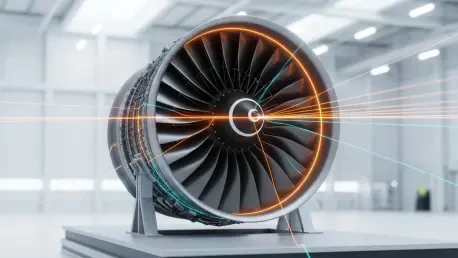

The competitive landscape of modern aviation is undergoing a radical shift as the demand for extreme velocity and fuel efficiency pushes traditional engineering methodologies to their absolute breaking point. In an era where strategic defense capabilities and global connectivity depend on the rapid deployment of high-speed propulsion, the traditional multi-year development cycle has become a significant bottleneck for innovation. GE Aerospace has effectively shattered these conventional timelines by successfully utilizing generative artificial intelligence to complete comprehensive design studies for a hypersonic ramjet engine. This breakthrough, achieved at the GE Aerospace Research Center in Upstate New York, demonstrates an unprecedented ability to condense months of manual iterative engineering into just a few seconds of computational processing. By achieving these results, the organization has proven that the marriage of historical proprietary data and advanced algorithmic synthesis can solve the most complex fluid dynamics and thermal challenges known to modern science.
Accelerated Engineering Through Algorithmic Synthesis
Rapid Prototyping and Design Compression
The integration of specialized generative AI applications into the aerospace design workflow represents a fundamental departure from the linear engineering processes that have dominated the industry for decades. Traditionally, designing a hypersonic ramjet requires a painstaking series of manual adjustments where engineers must balance the volatile requirements of air intake, combustion stability, and thermal management across a wide range of Mach speeds. However, the new AI-powered system utilized by GE Aerospace is capable of generating a preliminary design layout almost instantaneously by analyzing millions of potential configurations simultaneously. This capability allows the engineering team to bypass the exhaustive trial-and-error phases that typically consume the majority of a project’s early budget and timeline. By shifting the focus from manual drafting to high-level system optimization, the company is now able to move from a conceptual vision to a viable physical testing phase with an agility that was previously considered impossible in the high-stakes field of hypersonic propulsion.
Building on this foundational shift in speed, the AI’s primary value lies in its ability to satisfy a massive array of performance requirements without the need for human intervention at every step. This specific application is not merely a drafting tool; it is an intelligent optimization engine that understands the fundamental physics of high-speed flight. When tasked with designing a ramjet, the software accounts for structural integrity, weight distribution, and aerodynamic efficiency while ensuring the engine can withstand the extreme temperatures generated at speeds exceeding Mach 5. The result is a highly refined design that meets or exceeds all rigorous military and commercial standards within a fraction of the time required by human-led teams. This level of design compression is essential for maintaining a technological edge in a global environment where speed of innovation is just as critical as the speed of the aircraft itself, ensuring that development remains ahead of emerging threats and market demands.
Data Synthesis and Predictive Accuracy
The success of this generative AI model is deeply rooted in its access to decades of proprietary engineering data and historical test results held within the GE Aerospace archives. Unlike general-purpose AI models that may hallucinate or produce unviable structures, this specialized tool leverages specific, high-fidelity data points from past engine programs to inform its current decisions. This synthesis of historical expertise and modern algorithms allows the AI to predict how certain design choices will perform under real-world stress before a single physical component is ever manufactured. By training the model on actual flight data and experimental results, GE has created a system that possesses a practical “intuition” for aerospace engineering. This ensures that the generated layouts are not only aesthetically optimized but are also robust enough to survive the punishing environment of hypersonic travel, where even the smallest deviation in geometry can lead to catastrophic failure.
Moreover, the AI’s ability to process multiple flight conditions and operational scenarios simultaneously provides a level of depth that traditional linear analysis cannot match. In standard engineering practices, variables such as altitude, humidity, and ambient temperature are often analyzed in silos, leading to designs that might perform well in one scenario but fail in another. The generative AI avoids this pitfall by conducting holistic simulations that account for diverse environmental factors all at once, leading to a more balanced and resilient propulsion system. This comprehensive approach to design ensures that the resulting ramjet is capable of maintaining stable combustion across a wide operational envelope. As the software continues to learn from each successive design iteration, its predictive accuracy increases, creating a virtuous cycle where every new project benefits from the collective intelligence of all preceding engineering efforts, further solidifying the company’s lead in high-speed flight technology.
Expanding Applications for Sustainable Aviation
Transitioning From Defense to Commercial Efficiency
While the immediate success of the hypersonic ramjet highlights significant implications for the defense sector, GE Aerospace is already pivoting this technology toward the broader challenges of commercial aviation. The organization is actively expanding the use of this generative AI application to support the CFM International RISE (Revolutionary Innovation for Sustainable Engines) program. This initiative is focused on developing the next generation of narrowbody engines, where the primary objective is to achieve a step-change in fuel efficiency and carbon emission reduction. By applying the same AI-driven design principles used for hypersonics, engineers can explore radical architectures, such as open fan designs, which require complex aerodynamic modeling that would be too time-consuming for traditional methods. The AI allows for the rapid exploration of unconventional blade geometries and nacelle structures that maximize airflow while minimizing weight, directly contributing to more sustainable flight.
This transition illustrates the versatile nature of generative AI as a tool for solving diverse engineering problems regardless of the specific speed regime. In the commercial sector, the pressure to innovate is driven by environmental regulations and the rising costs of fuel, necessitating a faster transition to more efficient engine architectures. By utilizing the AI app to iterate on the RISE program’s components, GE is able to evaluate thousands of variations of fan blades and core components in the time it would normally take to test a single prototype. This approach not only speeds up the development of more sustainable engines but also reduces the physical resources required during the prototyping phase. The ability to simulate and refine these designs digitally ensures that when a physical engine is finally built, it is already optimized for maximum performance, thereby reducing the risks associated with introducing revolutionary new technologies to the global commercial aviation market.
Integrating Embedded Knowledge Into Software
The core strategy behind GE Aerospace’s digital transformation involves the deep integration of embedded industry know-how directly into the software development process. By treating AI as a practical engine for innovation rather than a theoretical curiosity, the company is reshaping the internal culture of aerospace engineering to favor digital-first solutions. This involves a collaborative environment where veteran engineers work alongside software developers to refine the AI’s parameters, ensuring that the software reflects the nuanced reality of jet engine manufacturing. This human-in-the-loop approach ensures that the generative tools are grounded in practical constraints, such as material limitations and manufacturing tolerances. Consequently, the AI does not just produce a design that works on a computer screen; it produces a design that can be realistically manufactured using current additive or subtractive production techniques, bridging the gap between digital ideation and physical reality.
Furthermore, this methodological shift allows for a more agile response to shifting market trends and evolving customer requirements. As global air travel demands continue to rise through 2026 and beyond, the ability to quickly adapt engine designs for different aircraft frames or performance specifications will become a decisive competitive advantage. The AI-powered design environment provides a flexible platform where existing models can be quickly modified to meet new criteria, such as increased thrust for longer-range flights or reduced noise profiles for urban environments. This level of precision and agility ensures that the next generation of jet engines is perfectly tailored to the specific needs of the operator. By merging cutting-edge software with a century of propulsion expertise, GE Aerospace is not just building faster engines; it is building a more responsive and intelligent industrial ecosystem that can sustain the future of flight across both the military and civilian landscapes.
Future Considerations for Autonomous Design
The successful demonstration of generative AI in hypersonic engine design was a pivotal moment that proved the viability of autonomous engineering workflows. Moving forward, the industry must prioritize the establishment of standardized verification and validation protocols to ensure that AI-generated designs remain safe and reliable as they become increasingly complex. Engineering teams should focus on developing “explainable AI” frameworks that allow designers to understand the specific logic behind an algorithm’s structural choices, ensuring that human oversight remains a central component of the certification process. Furthermore, organizations must invest in the continuous expansion of high-fidelity data sets, as the quality of the AI’s output is directly dependent on the richness of the information it consumes. By fostering a collaborative environment where digital tools and human expertise operate in tandem, the aerospace sector can navigate the complexities of high-speed, sustainable travel with newfound confidence and technical precision.