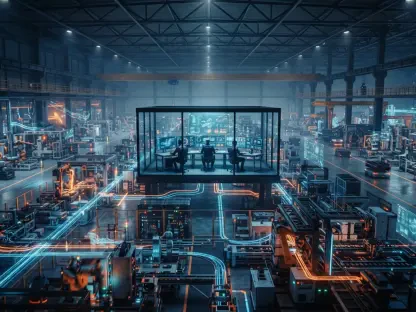
A massive fourfold increase in revenue related to Physical AI over the past year highlights a growing industrial demand for robots that can manage complex, varied movements. This surge in market interest indicates that the era of simple, repetitive automation is giving way to a more sophisticated need for machines that understand the physical world. Vention has responded to this shift by launching a specialized Physical AI research lab in Montreal, Quebec, a city already recognized as a global hub for artificial intelligence expertise. This new facility is designed to bridge the persistent gap between high-level AI theory and the practical, often unpredictable demands of industrial applications. By focusing on Physical AI, the company ensures that software intelligence is not developed in a vacuum but is deeply integrated with the mechanical realities of the modern factory floor. This initiative aims to move robotics beyond the safety of controlled laboratory settings, addressing the complex dynamics of production lines.
Bridging the Gap: Research and Production
Specialized Focus: Real-World Utility
Led by Jimmy Li and supported by the expertise of advisor Joelle Pineau, the new lab employs a unique “closed-loop” development strategy that prioritizes real-world utility over isolated research experiments. The team utilizes direct customer feedback and actual industrial data to drive their breakthroughs, ensuring that every innovation meets the rigorous standards for cost-efficiency and reliability required by global manufacturers. This methodology significantly reduces the traditional “translation gap” that has historically prevented promising pilot projects from ever becoming successful production-line implementations. By involving clients directly in the development process, Vention creates a clear and efficient path from the research bench to the factory floor, allowing for rapid iteration based on real-world constraints. This approach ensures that the AI models developed are not only intelligent but also resilient enough to handle the daily wear and tear of a functioning industrial environment.
Core Research: Perception and Real-Time Awareness
The lab’s research efforts center on mastering less-structured tasks where environments and objects change frequently between cycles, a common challenge in modern manufacturing. Key areas of focus include sophisticated robotics control and motion planning, which allow machines to react to sensory data in real-time while avoiding collisions with humans or other equipment. Additionally, the team leverages advanced computer vision and perception models to help robots identify diverse objects and interpret complex spatial surroundings with high precision. These technologies are essential for creating machines that can navigate and interact with their workspace with a level of awareness that mimics human intuition. To move beyond manual programming, the lab utilizes Learning from Demonstration and Reinforcement Learning to train robots through human examples and trial-and-error. This combination of techniques allows machines to refine complex behaviors that are traditionally difficult to code, making automation more versatile.
Industrial Impact: Systems and Scalability
Technical Tools: The GRIIP Pipeline and SDK
A major milestone for the Montreal lab is the development of the GRIIP software pipeline, which breaks down robotic manipulation into logical stages such as scene digitization and collision-free motion planning. GRIIP integrates advanced foundation models from industry leaders like NVIDIA with Vention’s own architecture to streamline complex tasks that were previously too difficult to automate. To encourage broader industry adoption and foster a wider ecosystem of AI-driven automation, Vention is also releasing a public software development kit. This allows external engineers to customize the GRIIP pipeline for their own niche applications, providing the flexibility needed for specialized production environments. By offering these developer tools, the company is enabling a community of innovators to build upon their foundation, accelerating the overall pace of robotic advancement. This move democratizes access to Physical AI, ensuring that even smaller firms can benefit from high-end research.
Market Demand: Industrial Impact and Evolution
High demand from Fortune 500 companies, particularly in the automotive sector, highlighted a significant shift toward automating final-assembly tasks that previously required human dexterity. Manufacturers successfully leveraged these new AI-driven tools to tackle global production bottlenecks and make automation more accessible to mid-sized operations. The strategic move to Montreal positioned Physical AI as an essential tool for modern industrial efficiency, proving that intelligent machines could thrive in varied environments. To capitalize on these advancements, businesses should have audited their existing assembly lines for tasks requiring high variability and applied modular AI solutions to those specific points. The integration of such technology was not merely a technical upgrade but a necessary step for long-term resilience. By adopting a developer-centric approach to automation, companies ensured their systems remained adaptable to future market shifts. This practical application of Physical AI effectively bridged the gap between digital potential and mechanical execution.