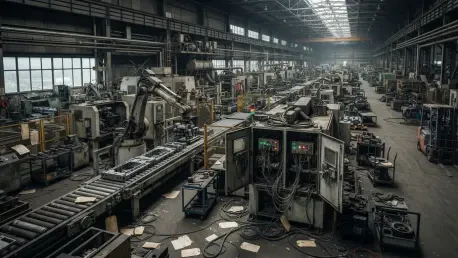

Many organizations struggle to bridge the gap between generating digital alerts and executing the physical work orders necessary to prevent catastrophic equipment failure. Despite the widespread availability of high-fidelity sensors and advanced analytics, industrial facilities often find themselves drowning in data while remaining starved for actionable insights. Recent industry surveys indicate that nearly 70% of predictive maintenance initiatives fail to deliver a measurable return on investment within the first 18 months of deployment. This stagnation occurs because the implementation process frequently focuses too heavily on the “predictive” aspect—the software and algorithms—while ignoring the “maintenance” aspect, which involves real-world logistical coordination. When a system flags a potential bearing failure, the notification is only valuable if there is a clear, automated pathway to dispatch a technician with the correct tools and spare parts. Without this end-to-end integration, the technology remains a costly novelty rather than a transformative tool for operational efficiency.
Technical Foundations: Data Integrity and System Integration
A significant hurdle in the expansion of predictive programs is the pervasive issue of poor data quality, which currently affects approximately 72% of industrial operations. When telemetry systems capture inconsistent or noisy data from machine sensors, the resulting algorithms often produce a high volume of false positives. These inaccurate alerts do more than just waste time; they actively erode the trust of seasoned maintenance teams who rely on the system to guide their daily tasks. For instance, a vibration sensor that is improperly mounted might trigger an emergency shutdown alert when no mechanical fault exists, leading to expensive and unnecessary production downtime. This lack of reliability forces supervisors to double-check every digital notification manually, effectively defeating the purpose of an automated monitoring system. Ensuring data integrity requires rigorous standardization of sensor calibration and the implementation of robust data cleansing protocols before any predictive modeling begins.
Another technical bottleneck involves the integration of legacy machinery that predates the era of interconnected industrial ecosystems. Many manufacturing plants operate with equipment that lacks native digital interfaces or standardized communication protocols, creating isolated islands of information. Connecting these older assets necessitates significant capital investment in external gateways and specialized hardware to translate analog signals into formats compatible with modern asset management platforms. Without a unified data stream, maintenance managers are forced to navigate multiple disparate software dashboards, which complicates the decision-making process. This fragmentation prevents the creation of a comprehensive digital twin of the factory floor, making it nearly impossible to scale predictive models across different production lines. Successful scaling depends on the ability to harmonize telemetry from both modern and legacy machines into a centralized repository, allowing for a holistic view of asset health across the entire organization.
Organizational Dynamics: Cultural Readiness and Strategic Audits
Technological sophistication often outpaces the cultural readiness of the workforce, creating a friction point that stalls the growth of maintenance programs. Veteran technicians, who have spent decades diagnosing equipment issues through sound and touch, may feel skeptical of mathematical algorithms that claim to see problems before they manifest physically. This skepticism is frequently compounded by a shortage of specialized talent capable of bridging the gap between data science and mechanical engineering. As the workforce ages, the departure of experienced personnel leaves a void that digital tools cannot immediately fill if the remaining staff lacks the training to interpret complex data visualizations. Overcoming this cultural barrier requires more than just technical tutorials; it demands a strategic effort to involve frontline employees in the design and testing phases of the program. By demonstrating how predictive tools can reduce the burden of emergency repairs and overtime, organizations can foster a sense of ownership and trust among the crew.
Effective scaling of predictive maintenance was achieved by those who prioritized organizational alignment and data governance over the mere procurement of advanced software. These organizations addressed the human element by providing continuous education and integrating data-driven insights into the existing workflows of their maintenance teams. They successfully mitigated the risks associated with legacy equipment by investing in modular hardware solutions that bridged the gap between old and new systems. The most impactful programs moved away from a reactive mindset and instead treated equipment health as a strategic asset. By conducting detailed reliability audits, managers identified the most critical failure points and applied targeted interventions that maximized operational uptime. Ultimately, the successful organizations recognized that digital transformation was a journey of incremental improvements rather than a single event. They built a foundation of high-quality data and transparent communication, which allowed them to navigate the complexities of modern industrial environments.