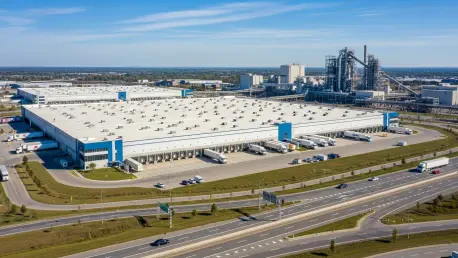

The industrial landscape across North America is currently demonstrating a remarkable degree of resilience, as recent data from July indicates a stabilization in manufacturing investments despite a slight cooling in project numbers. This shift suggests that the market is moving away from the frantic pace of recovery and into a reliable baseline of growth, where consistency in core sectors like food processing and pharmaceuticals provides a much-needed anchor for the broader economy. Rather than facing a widespread downturn, regional players are focusing their financial resources on a strategic mix of ground-up expansions and the modernization of existing infrastructure to ensure long-term viability. This transition indicates that manufacturers are becoming increasingly selective, prioritizing projects that offer high operational efficiency and technological integration over simple footprint expansion. By focusing on these core areas, the industry is creating a foundation that can withstand fluctuations and provides a clear path forward for sustainable expansion.
Sector Expansion: Food and Beverage Infrastructure
The food and beverage industry remains the most active segment of the manufacturing landscape, with dozens of new projects initiated mid-summer to meet rising consumer demand. These initiatives are strategically split between constructing new processing facilities and expanding logistics hubs like industrial warehouses designed for rapid fulfillment. A significant portion of this investment is also being funneled into renovating existing sites, showing that manufacturers are prioritizing operational efficiency and equipment upgrades to maximize the value of their current footprints. By integrating advanced automation and energy-efficient systems into older plants, companies can significantly reduce their overhead while increasing throughput without the need for additional land. This balanced approach ensures that the industry remains agile, allowing firms to pivot quickly in response to changing market tastes or new regulatory requirements without excessive risk.
Sector Expansion: Large-Scale Capital Investments
Large-scale investments are particularly prominent in the food sector, with several recent project announcements comfortably exceeding the one hundred million dollar mark. Major players like Archer Daniels Midland are investing heavily in upgrading legacy infrastructure in the Midwest to process higher volumes of plant-based proteins and specialized oils. At the same time, specialty manufacturers like Monin are building massive distribution hubs in the Southeast to expedite deliveries to growing metropolitan areas. These high-value projects underscore a strategic commitment to both regional expansion and the revitalization of older facilities to meet modern production standards. Such substantial capital outlays are indicative of a long-term vision that looks beyond immediate economic indicators to prioritize future market share. By investing in these high-capacity facilities, corporations are securing their roles in the global supply chain while bolstering the domestic manufacturing ecosystem through the decade.
Growth Hubs: Regional and Geographic Expansion
Manufacturing activity is currently spreading across diverse geographic hotspots, with states like Mississippi, Texas, and Ohio seeing significant gains from both domestic and international firms. This expansion includes everything from specialized commercial bakery facilities to large-scale poultry processing plants, often involving long-term planning with completion dates set for 2028 or 2029. Such multi-year timelines indicate that companies are looking past immediate economic fluctuations toward sustained long-term market demand for essential goods. The move into these regions is often driven by favorable tax environments, access to skilled labor pools, and proximity to primary transportation corridors. For international firms, establishing a presence in these states offers a way to mitigate risks associated with transoceanic shipping while tapping into the high purchasing power of North American consumers. This regional diversification provides a buffer against local economic shifts and ensures a steady pipeline.
Growth Hubs: Supply Chain and Logistics Networks
A strong emphasis on supply chain optimization has also led to the development of massive distribution centers by some of the largest corporations in the world. In states like Tennessee and Texas, companies are either building million-square-foot facilities or repurposing existing large-scale square footage to expedite their market entry and enhance delivery speeds. This trend reflects a strategic move to bolster logistics capabilities and ensure that production increases are supported by robust distribution networks capable of handling high-volume traffic. These centers are increasingly utilizing autonomous mobile robots and cloud-based warehouse management systems to streamline operations and reduce manual errors. By locating these hubs near major rail lines and highways, manufacturers can ensure that their products move seamlessly from the factory floor to the consumer’s doorstep without delays. This focus on logistical infrastructure is a critical component of the overall stabilization.
Industrial Future: Pharmaceutical Sector Outlays
Although the pharmaceutical sector saw fewer individual projects recently, the scale of those investments is immense, reflecting the high cost and complexity of modern medicine production. Global firms are currently planning multi-billion dollar campuses in the American South, focusing on long-term development cycles that stretch into 2028 to ensure a steady supply of critical drugs. These projects highlight a trend of international companies seeking expansive footprints in business-friendly regions to secure their future production capacity for complex biologics and medications. The construction of these facilities requires specialized cleanroom environments and sophisticated HVAC systems, which drives demand for highly skilled technical contractors. By establishing these large-scale manufacturing bases, pharmaceutical companies are effectively reducing their reliance on foreign production sites and strengthening the domestic healthcare supply. This strategic shift is a response to the need for greater security in medical product delivery.
Industrial Future: Metal Production and Resilience
The mining and metals industry established a firmer footing through heavy-industry expansions and comprehensive equipment overhauls that fortified the domestic industrial base. Major steel and aluminum producers across Alabama and Mississippi completed facilities that utilized advanced smelting technologies and automated processing lines to increase output. These capital-intensive projects demonstrated a clear and enduring confidence in the demand for primary materials, creating a future where industrial stability was underpinned by these financial commitments. To build upon this progress, industry leaders prioritized the integration of renewable energy microgrids to reduce long-term operational costs and meet environmental standards. They also initiated strategic partnerships with technical colleges to develop specialized training modules for the next generation of industrial workers. By implementing these forward-looking solutions, manufacturers ensured that the current stabilization was not merely a pause, but a launching pad for a more resilient era of industrial growth.