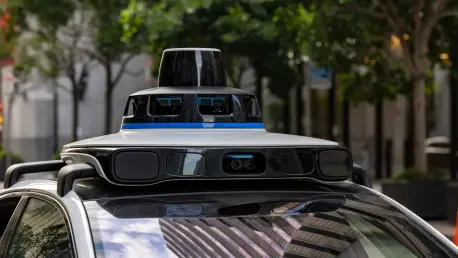

A preemption clause within Senate Bill 17-213 effectively stripped Denver and other local municipalities of the power to set their own rules for autonomous driving. This legislative barrier has created a complex environment as the city navigates the official launch of Waymo’s autonomous fleet, which began in September of the current year. While these vehicles have become a frequent sight on the streets, they represent a significant shift in how urban mobility is managed. The absence of a human driver challenges traditional notions of traffic enforcement and public safety, leaving local officials to manage a technology that they cannot directly regulate. As these driverless taxis weave through the high-traffic corridors of the city, they highlight a growing disparity between technological advancement and the existing legal frameworks. Residents and policymakers alike are now forced to confront the reality that the safety protocols of 2026 were largely written a decade ago, long before these vehicles became a commercial reality in the metro area.
The Jurisdictional Stalemate and Moving Violations
The primary obstacle for the Denver Police Department involves the physical delivery of citations for moving violations. Currently, the law allows the Department of Transportation and Infrastructure to issue parking tickets because these are affixed to the vehicle’s exterior. However, a moving violation, such as speeding or failing to yield at a red light, typically requires an officer to serve the citation to a person. Since no human is present in a Waymo vehicle, there is no designated entity to receive a ticket during a traffic stop. This loophole has created a scenario where autonomous vehicles can technically violate traffic laws without the immediate repercussions faced by human drivers. Officers who encounter a driverless vehicle committing a moving infraction find themselves in a stalemate, as the Colorado Revised Statutes do not currently recognize a corporate entity as a “driver” for the purpose of on-scene ticketing. This lack of accountability raises serious concerns for public safety.
Beyond the immediate problem of ticketing, the lack of a human operator complicates the standard interaction between law enforcement and motor vehicles. While autonomous systems are programmed to pull over for sirens and emergency lights, the aftermath of such a stop remains legally ambiguous. In traditional stops, an officer verifies a driver’s license and sobriety, but with a robot at the helm, these standard safety checks are rendered obsolete. The legal gap essentially permits a fleet of thousands of vehicles to operate under a different set of consequences than the general public. While the software is designed to prioritize safety, the occasional mechanical or logic error can lead to hazardous situations that the current legal system is ill-equipped to handle. This creates a perception of corporate immunity that local leaders are desperate to rectify as they look toward the next legislative cycle. Bridging this gap will require a fundamental rewrite of how traffic laws define the operator of a motor vehicle.
State-Level Friction and Representative Willford’s 2027 Proposal
State Representative Jenny Willford has taken a proactive stance by outlining a comprehensive legislative package for the 2027 session to address these issues. Her proposal centers on four primary pillars: creating enforcement mechanisms for corporate owners, establishing licensure categories under the Public Utilities Commission, clarifying state-level regulatory oversight, and mandating strict data transparency for accident investigations. By targeting the corporate entities rather than a non-existent human driver, the bill aims to restore a sense of accountability to the streets. Willford has been a vocal critic of the current vacuum, arguing that the protection of the public should outweigh the desire for rapid corporate experimentation. Her roadmap is designed to provide the Denver Police Department and other local agencies with the administrative tools necessary to treat autonomous vehicles as equal participants in the traffic ecosystem. This legislative push is expected to be one of the most debated topics in the coming year.
The success of this legislative effort is likely to be influenced by the ongoing ideological conflict between the legislative branch and the executive office. Governor Jared Polis has consistently championed an innovation-first approach, which was evident when he vetoed House Bill 26-1286. That specific bill would have required human drivers in heavy commercial autonomous vehicles, a move the Governor argued would stifle the development of technology that could eventually reduce human-error-related fatalities. His office has emphasized that human error remains the leading cause of road accidents and that over-regulation could drive tech companies to other states with more favorable environments. Critics, however, label the current lack of oversight as a byproduct of this hands-off approach, suggesting that safety is being compromised for the sake of technological prestige. With the Governor being term-limited, the political landscape in 2026 is shifting, and the outcome of the 2027 bill may depend on the next administration.
Operational Challenges and Urban Navigation Errors
Despite the advanced sensor suites and multi-million-dollar software powering these vehicles, the first few months of operation in Denver have revealed several operational glitches. Locally referred to as “Waymo whoopsies,” these incidents have seen driverless taxis entering restricted areas like the South Pearl Street Farmers Market. In several documented cases, the vehicles became confused by the presence of pedestrians and temporary structures, requiring manual intervention from market staff or remote technicians to navigate out of the crowd safely. These events highlight a significant limitation in current artificial intelligence: the inability to adapt to temporary, high-density pedestrian zones that may not be updated in real-time mapping data. While no injuries occurred, the presence of a two-ton vehicle moving unpredictably in a pedestrian zone creates a significant public nuisance. These interactions serve as a reminder that even the most sophisticated systems can struggle with the unpredictable nature of urban life.
Construction zones across the metro area have provided another set of challenges for the autonomous fleet. On Colfax Avenue and other major thoroughfares, vehicles have been observed performing erratic U-turns or nearly driving onto freshly laid asphalt after failing to recognize temporary signage. In one instance, a vehicle became trapped between construction fencing and a curb, requiring a recovery team to be dispatched. These failures occur because construction zones often change the geometry of the road in ways that contradict the vehicle’s internal maps. When the physical world does not match the digital blueprint, the software can sometimes default to illogical maneuvers. While human drivers can easily interpret a construction worker’s hand signals or a crudely placed orange cone, autonomous systems sometimes struggle to distinguish between a minor obstacle and a major hazard. This operational friction has led to increased calls for companies to provide better real-time monitoring and quicker physical response times for recovery.
The Path Forward: Strategic Recommendations for Future Legal Integration
To maintain a balanced perspective, it is necessary to examine the actual safety data and the comparative regulatory trends seen in other jurisdictions like California. Since the launch, there has been only one significant collision involving a Waymo in Denver, and investigators determined that the autonomous vehicle was not at fault. Nationally, while Waymos have been involved in over 1,600 police-reported incidents, the majority are minor and result in lower severe accident rates than those attributed to humans. This performance mirrors the early struggles in California, where it took until mid-2024 for state laws to finally allow police to cite driverless vehicles. Until Colorado passes similar measures in the 2027 session, the Denver Police Department has had to implement makeshift protocols involving dedicated communication lines for corporate recovery. This historical pattern suggests that while the technology is global, the oversight remains local and consistently trails behind the pace of software development.
The evaluation of Denver’s current situation showed that the integration of autonomous vehicles required more than just technical readiness; it necessitated a total revision of the state’s preemption laws. Analysts suggested that the state move toward a tiered licensing system where autonomous companies paid higher registration fees to fund specialized training for local officers. Furthermore, the development of a real-time data-sharing agreement became a critical recommendation to ensure investigators could access telemetry immediately following any incident. The implementation of these steps was seen as vital for rebuilding public trust and ensuring that corporate entities remained responsible for their software’s behavior. Ultimately, the transition was framed not as an attempt to stifle progress, but as a necessary maturation of the law to match the speed of the street. As Denver moved forward, the lessons learned from the initial rollout provided a clear roadmap for other cities to follow.