
The global automotive landscape has shifted from a battle of mechanical engineering to a high-stakes digital war where software integration and battery chemistry dictate the winners of the next decade. As the industry moves away from internal combustion engines, legacy manufacturers in Detroit face a formidable challenge from Chinese firms like BYD and Xiaomi. These companies have leveraged massive state support and a head start in battery technology to redefine what consumers expect from an electric vehicle.
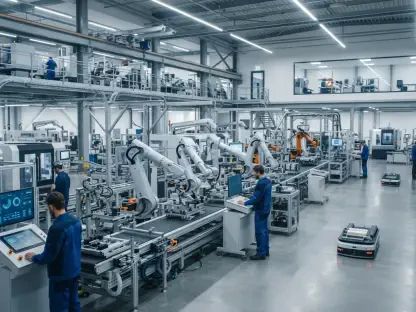
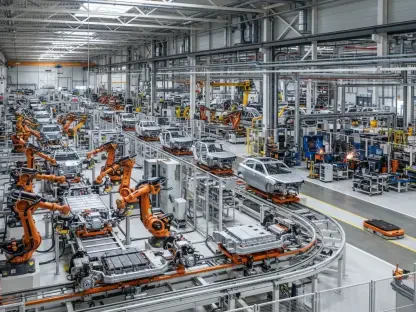
Manufacturing supremacy in China stems from a highly vertically integrated supply chain that allows for rapid iteration and lower production costs. Ford has recognized this shift and is currently pivoting its entire business model to focus on electrification and software-defined platforms. This transition is not merely about changing the engine but involves a total overhaul of how a vehicle is designed and sold in a global market that is increasingly favoring efficiency over tradition.
The Global Automotive Shift and the Chinese EV Juggernaut
Legacy dominance is being tested as the software-defined vehicle era prioritizes digital ecosystems over mechanical complexity. While Detroit long relied on the brand loyalty of truck and SUV buyers, the rapid ascent of Chinese manufacturing has introduced a level of competition that targets both cost and technology. BYD and Xiaomi have shown that they can produce vehicles at a pace that traditional Western assembly lines find difficult to match.
The role of vertical integration and state-backed incentives has created a manufacturing environment in China that is almost impossible to replicate elsewhere. Ford is now navigating this environment by assessing the U.S. market and identifying where it can maintain a foothold. The pivot toward electrification is the central component of this survival strategy, as the company seeks to avoid becoming obsolete in a world that no longer values the gasoline engine as the primary driver of mobility.
Dominant Trends Shaping the Future of Mobility
A unique model of competition and cooperation has emerged as Ford partners with rivals like CATL and Geely while simultaneously fighting for global market share. This co-opetition strategy allows Ford to access advanced battery technology and European EV platforms that would otherwise take years to develop independently. Consumer behavior is clearly shifting toward affordable and tech-heavy vehicles, forcing a total reconsideration of the current product lineup.
Europe serves as a stark warning for the American market, as a late regulatory response there allowed Chinese imports to dominate the electric vehicle sector. This surge in market share was driven primarily by China’s control over the battery technology supply chain, which remains the most expensive and critical part of any modern vehicle. Innovation in this area is moving at a pace that requires Ford to be more agile than it has ever been in its century-long history.
Performance Indicators and the Surge in Global Exports
Chinese vehicle exports reached an annual volume of 12 million units in 2026, representing a massive shift in the global trade balance. This high volume allows Chinese manufacturers to achieve economies of scale that significantly undercut the profit margins of Western companies. Ford is currently evaluating its capital efficiency to determine how it can compete against these high-volume, low-cost entities without sacrificing its financial stability.
Market saturation in China has forced these manufacturers to look abroad, leading to a downward pressure on global vehicle pricing. Domestic market share projections suggest that if Ford cannot close the cost gap, it may face a shrinking footprint even within its home territory. Historical data points to several scenarios where incumbent leaders lost ground because they failed to anticipate the speed of a disruptive technological transition.
Navigating Structural Obstacles and the Technology Gap
An innovation deficit in Western battery production continues to be a major hurdle for domestic manufacturers. While China has spent years refining its supply chain logistics, American companies are still playing catch-up in securing the raw materials and refining capacity needed for mass-market EVs. Overcoming the cost advantages of state-subsidized competitors requires more than just better engineering; it requires a radical rethinking of the entire manufacturing process.
Internal conflict between the profits generated by internal combustion engines and the massive investments required for electric vehicles complicates this transition. Ford is attempting to solve this by developing low-cost EV platforms that can neutralize the price advantage held by overseas manufacturers. Success in this area is essential for maintaining the company’s independence and ensuring that it does not become purely dependent on foreign technology for its future fleet.
The Geopolitical Fortress: Tariffs, Software Bans, and Compliance
The implementation of 100 percent tariffs on Chinese-made vehicles entering the United States has created a temporary protective barrier. These trade measures are designed to give domestic companies time to retool their factories and secure their supply chains. However, the long-term sustainability of such high tariffs is a point of constant debate among policymakers who worry about the impact on consumer prices and international trade relations.
Security concerns regarding Chinese software have led to federal bans on certain connected vehicle technologies. These regulations add a layer of complexity to Ford’s international partnerships, as every piece of technology must be vetted for compliance with national security standards. Political scrutiny of joint ventures, particularly those involving state-backed enterprises, has forced a more cautious approach to global collaboration and technical exchange.
The Inflation Reduction Act plays a critical role in shaping how Ford sources its materials and builds its cars. By providing incentives for domestic manufacturing, the government is attempting to force a decoupling from the Chinese supply chain. Navigating these requirements while remaining competitive on price is a delicate balancing act that defines the current operational environment for the American automotive sector.
The Road Ahead: Disruption, Innovation, and Survival
Long-term viability will likely be determined by advancements in autonomous driving and next-generation battery chemistries. Ford is betting heavily on these technologies to differentiate its products from the flood of standard electric vehicles entering the market. Market disruptors that can bypass traditional trade barriers through localized manufacturing in neutral countries remain a constant threat to the established order.
Protectionist policies provide a shield, but they do not eliminate the underlying need for innovation. Ford is strategically pivoting toward its Ford Pro commercial fleet business and its most iconic brands to maintain high margins during this volatile period. By focusing on areas where it has a clear brand advantage and deep customer relationships, the company hopes to build a sustainable moat against the rising tide of foreign competition.
Final Verdict: Ford’s Blueprint for Resilience in a Sinocentric Era
Legislative shields provided the necessary window for Ford to accelerate its domestic retooling and supply chain independence. The focus shifted toward high-margin commercial fleets and the preservation of iconic branding, which allowed the company to maintain a distinct identity. Stakeholders observed that the successful navigation of this transition required a radical departure from the slow-moving corporate structures of the past.
The strategy proved that technological gaps were bridged through selective partnerships rather than total isolation. Investors recognized that the volatility of the EV market necessitated a balanced approach between protectionist support and aggressive internal innovation. Ford moved toward a future where agility became its most valuable asset, ensuring its survival as a global automotive powerhouse despite the immense pressure from the East.