
Before entering public traffic, the autonomous MAN bus underwent rigorous electromagnetic compatibility checks and hazardous scenario simulations at private testing facilities. This meticulous preparation paved the way for the MINGA research project to transition from laboratory concepts to the bustling streets of Munich. As of early 2026, the city has successfully moved into a live testing phase that integrates a 12-meter electric bus into the local transit fabric. This collaborative effort involving MAN Truck & Bus, Stadtwerke München, and Münchner Verkehrsgesellschaft represents a sophisticated merger of automotive engineering and public policy. Supported by a 13 million euro grant from the German Federal Ministry of Transport, the initiative reflects a national priority to solve urban congestion through high-tech automation. The project effectively positions Munich as a primary testing ground for the global shift toward sustainable, driverless public transportation systems that could soon redefine metropolitan travel.
Advanced Engineering: The Foundation of Autonomy
The Hardware: MAN Lion’s City 12 E
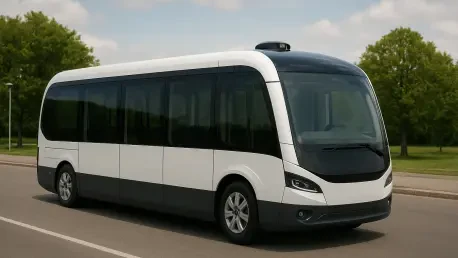
The centerpiece of this technological leap is the MAN Lion’s City 12 E, an all-electric bus that serves as a platform for Level 4 autonomous driving. In partnership with ADASTEC, this vehicle has been outfitted with a specialized software stack capable of handling complex urban maneuvers without direct human intervention. While the hardware remains physically grounded in the familiar aesthetic of a modern city bus, the underlying digital architecture is anything but traditional. Level 4 automation signifies that the vehicle can manage accelerating, braking, and steering across designated routes, provided specific environmental parameters are met. This capability is crucial for transforming the role of public transit from a labor-intensive service to a data-driven utility. By utilizing electric propulsion, the bus also aligns with the city’s broader decarbonization goals, ensuring that the future of autonomous travel is as environmentally responsible as it is technologically advanced.
Despite the advanced nature of the autonomous software, current legal frameworks and safety protocols require a trained safety driver to remain in the cockpit throughout the trial. This human oversight ensures that the vehicle adheres to the strict requirements of the German regulation for autonomous operation, providing a failsafe mechanism during this critical trial period. The interaction between the automated system and the safety driver offers invaluable data on how human operators can eventually transition into fleet supervisors rather than active drivers. The bus itself operates with a level of precision that human drivers often struggle to maintain consistently, particularly regarding energy conservation and braking smoothness. These characteristics suggest that once the transition to full autonomy is finalized, the maintenance costs and operational lifespans of these electric fleets will likely improve significantly. The trial serves as a practical demonstration that the technology is ready for real-world application.
Sensory Inputs: The Eyes of the Vehicle
Navigating a dense urban environment requires a level of environmental awareness that surpasses human biological capabilities, a feat achieved through a comprehensive sensor suite. The bus utilizes five LiDAR sensors that emit light pulses to create a detailed three-dimensional map of its immediate surroundings in real time. This is supplemented by six radar units specifically designed to detect moving objects, which provide reliable data even in adverse weather conditions like heavy rain or fog that might obscure visual cameras. These sensors allow the bus to identify obstacles with centimeter-level precision, ensuring that the software can calculate safe paths and stopping distances instantaneously. By integrating these diverse data streams, the vehicle develops a holistic view of the road, identifying everything from parked cars and moving cyclists to pedestrians waiting at crosswalks. This redundant sensory array is fundamental to achieving the high safety standards required for public street deployment.
Complementing the LiDAR and radar units are eight high-definition cameras that provide the visual context necessary for interpreting the rules of the road. These cameras are specifically tuned to recognize traffic light phases, road signs, and lane markings, which are then cross-referenced with a high-resolution digital map. This HD map acts as a digital twin of the physical route, containing detailed information about curb heights, pedestrian crossings, and intersection layouts that standard GPS systems lack. Furthermore, satellite-based positioning ensures the bus knows its exact location within the city grid at all times. This synergy between onboard sensors and pre-mapped digital infrastructure allows the bus to predict traffic patterns and react to changing light signals with a degree of foresight that improves traffic flow. The result is a vehicle that doesn’t just react to its environment but understands its place within it, facilitating a smoother and more predictable ride for passengers and surrounding drivers alike.
Strategic Implementation: Navigating Urban Complexity
Safety Standards: Validation and Approval
The transition of the autonomous bus from controlled environments to Route 178 was the culmination of a multi-stage validation process designed to mitigate every conceivable risk. Before the vehicle was granted access to public roads, it had to undergo a series of rigorous evaluations by organizations like the Federal Authority for Road Traffic and TÜV. These assessments focused on the integrity of the automated driving software and the vehicle’s ability to maintain safe operations in the event of sensor failure or unexpected road obstructions. The approval process is a testament to the high regulatory standards maintained in Germany, ensuring that innovation does not come at the expense of public safety. By adhering to these protocols, the MINGA project has established a blueprint for other cities looking to implement similar autonomous systems. The successful completion of these trials provides a necessary layer of institutional credibility that is essential for long-term project viability.
Route 178, stretching between Petuelring and Freimanner Hölzl, was selected for its diverse and challenging driving conditions, making it an ideal microcosm of the city’s wider transit network. The route forces the bus to navigate high-traffic thoroughfares where speed and merging are critical, as well as quiet residential zones with 30-km/h speed limits and frequent pedestrian activity. It also includes complex underpasses and various parking scenarios that test the vehicle’s spatial awareness and maneuvering capabilities. This specific selection ensures that the data gathered is representative of the challenges the bus would face anywhere in Munich. By mastering this route, the autonomous system demonstrates its versatility and readiness for broader deployment across the metropolitan area. The diversity of Route 178 serves as a stress test for the AI, pushing it to handle both the mundane aspects of scheduled stops and the unpredictable nature of urban traffic for future routes.
Digitizing the Route: Real-Time Data
A critical component of the current phase is the continuous digitization of the physical environment as the bus traverses its assigned path. Every journey allows the onboard systems to collect massive amounts of data, which are used to update and refine the high-resolution digital twin of Route 178. This iterative process ensures that any changes in the physical infrastructure, such as new road markings or shifted construction barriers, are immediately reflected in the vehicle’s navigational data. This learning phase is vital for achieving the fluidity required for public transport, as it allows the bus to optimize its driving behavior for maximum efficiency and passenger comfort. By constantly comparing real-time sensor data with the existing HD map, the system can identify discrepancies and adapt its pathing accordingly. This high-fidelity mapping approach minimizes the likelihood of navigational errors and provides a stable foundation for the eventual removal of the safety driver in future.
Looking ahead to the end of the year, the project will enter a pivotal milestone by opening the bus to a closed user group comprised of selected members of the public. This phase is designed to simulate regular scheduled service while providing researchers with direct feedback on the passenger experience. Participants will be able to ride the autonomous bus and evaluate factors such as ride smoothness, perceived safety, and the convenience of the automated stops. Their insights will be instrumental in identifying potential friction points in the user interface and the overall journey. Evaluating how real people interact with a driverless vehicle in a service capacity is just as important as the technical performance of the bus itself. This transition from technical validation to user-centric testing marks the final stage of the pilot program, where the focus shifts toward social acceptance and the practicalities of day-to-day operations. The data harvested during this period will inform the future operational strategies.
Shaping the Future: Insights and Integration
Public Trust: Cautious and Predictable Operations
One of the most significant hurdles for the widespread adoption of autonomous transit is the cultivation of public trust, a challenge the MINGA project addresses through radical transparency and safety. The project coordinators have emphasized a cautious and restrained driving style, ensuring the bus prioritizes safety and predictability over aggressive maneuvers. This approach is intended to demonstrate to pedestrians, cyclists, and other motorists that autonomous systems can be more reliable than human drivers, who are often prone to distraction or fatigue. By operating in a manner that is consistently safe and rule-abiding, the bus serves as a rolling advertisement for the benefits of automation. Furthermore, the presence of the safety driver during the initial phases provides a psychological bridge for passengers who might be hesitant to board a vehicle without a human in control. Building this confidence is essential for the long-term success of the initiative, as public sentiment will drive the support for changes.
Beyond public perception, the move toward automation is a strategic response to the severe and worsening shortage of qualified bus drivers affecting transit agencies globally. As urban populations continue to grow, the demand for frequent and reliable public transport increases, yet the workforce required to meet this demand is shrinking. Autonomous buses offer a scalable solution that can maintain high service levels without being limited by labor availability. By automating the most repetitive and labor-intensive routes, transit authorities can redirect their human staff to more complex tasks or routes that still require manual intervention. This shift doesn’t just fill a gap; it creates a more resilient transit ecosystem capable of adapting to the demographic shifts of the 21st century. The MINGA project demonstrated that automation was not about replacing workers, but about ensuring that public transit remains a viable and robust option for citizens even in the face of significant labor market challenges.
Long-Term Vision: Connectivity and Decarbonization
The motivations behind Munich’s autonomous bus trial extended into the broader issues of urban congestion and environmental sustainability. As cities became more densely populated, the traditional model of private car ownership became increasingly unsustainable, leading to gridlock and high levels of pollution. Autonomous electric buses provided a high-capacity, zero-emission alternative that could navigate the city with greater efficiency than private vehicles. By optimizing acceleration and braking through AI, these buses consumed less energy and contributed to a reduction in the overall carbon footprint of the city’s transport sector. The ability of autonomous vehicles to communicate with urban infrastructure also held the potential to reduce traffic jams by smoothing out the stop-and-start nature of traditional bus lines. This initiative was a core part of Munich’s strategy to modernize its infrastructure, making the city more livable and less dependent on fossil fuels.
In the long term, the insights gained from the testing on Route 178 provided a framework for how autonomous fleets could be integrated into the existing transit network to solve the last-mile problem. These vehicles were uniquely suited to provide frequent, on-demand connections between major transit hubs and residential areas that were previously underserved. By making the transition from a train station to a final destination seamless and reliable, autonomous buses made public transport a much more attractive alternative to driving a personal car. The project researchers explored various operational models, including bus platooning and ridepooling, to maximize the utility of the autonomous fleet. These findings suggested that a flexible, automated network could significantly increase the reach of public transit without requiring massive new infrastructure projects. By addressing these connectivity gaps, Munich designed a smarter, more efficient urban future where mobility was accessible.