
The quiet whirring of robotic arms in a Midwestern warehouse now signals a profound transformation in the global industrial hierarchy that few experts predicted only a few short years ago. This technological evolution has reached a fever pitch as 2026 begins, marking a year where the American industrial base has redefined its relationship with high-end machinery. The latest industrial reports suggest a significant realignment of power, as the United States has successfully claimed the position of the second-largest market for industrial robots, displacing Japan in a historic shift. This transition is not merely a change in ranking but a testament to how domestic economic policy and technological ingenuity have converged to create a new manufacturing reality.
The global landscape for automation is currently more vibrant than ever, with total installations reaching a record 603,000 units in the past year alone. This 11% increase across the globe has pushed the total operational stock of industrial robots past the five-million-unit threshold for the first time. While China remains the dominant leader in terms of sheer volume, the American surge of 38,400 new installations represents a 12% jump that has fundamentally altered the competitive landscape. This momentum indicates that the American market is no longer content with being a secondary player, as it aggressively integrates these systems to modernize its domestic capabilities.
The Changing Face: Global Manufacturing Leadership
For decades, Japan stood as the undisputed titan of industrial robotics, defined by its high-tech assembly lines and dominant manufacturers that supplied the rest of the world. However, the latest data from the International Federation of Robotics (IFR) reveals a stunning reversal: the United States has officially overtaken Japan to become the world’s second-largest market for industrial robots. With 38,400 new installations in a single year—a 12% jump—the US is no longer just a consumer of technology; it is a primary engine of the global automation revolution. This growth is a powerful rebound, marking the third-strongest year on record for American demand and highlighting a renewed focus on industrial resilience.
The decline of Japan to the third-place spot, with a 19% contraction to 36,219 units, serves as a stark contrast to the American trajectory. This downward trend in the Japanese market is deeply intertwined with the massive restructuring of its domestic automotive giants, which have traditionally been the primary drivers of robotic adoption. While the Japanese industrial sector manages internal corrections and plant closures, the American sector has capitalized on this period of transition to modernize its facilities. This shift signifies a broader trend where the Western hemisphere is reclaiming industrial relevance through the strategic deployment of advanced automation.
The Reversal: Why the US-Japan Shift Matters Today
This shift is far more than a statistical anomaly; it represents a fundamental change in how global powers manage labor and production. While Japan faces industrial contractions and major automotive restructuring, the US is aggressively leveraging automation to solve domestic problems. This transition matters because it highlights a new era of “reshoring,” where Western nations use robots to bring manufacturing back home, mitigating the risks of fragile global supply chains and a shrinking workforce. By reducing the reliance on distant production hubs, the American market is building a self-sustaining ecosystem that can weather geopolitical storms and logistical disruptions.
The implications of this reversal extend beyond the factory floor, affecting national economic stability and global trade dynamics. In a world where supply chain reliability has become a primary concern, the ability to automate production locally provides a massive competitive advantage. Japan’s contraction, exemplified by the restructuring of legacy brands, suggests that even the most established leaders must continuously innovate to maintain their standing. Meanwhile, the American focus on high-growth sectors and diversified applications has allowed it to leapfrog traditional manufacturing hubs, proving that adaptability is the most valuable currency in the modern industrial age.
Key Drivers: Behind the American Automation Surge
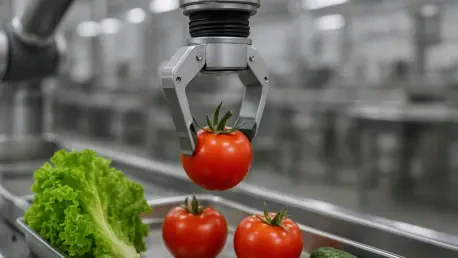
The US ascent is fueled by a strategic pivot away from traditional heavy industry toward versatile, high-growth sectors. While automotive manufacturing remains a staple, the food and beverage sector saw a massive 30% surge in robot installations. Robots are now handling complex processing and packaging tasks that were once exclusively human, ensuring that the food supply chain remains robust even in the face of labor shortages. This diversification into non-traditional sectors is a cornerstone of the American strategy, as it spreads the benefits of automation across a wider array of industries than ever before.
A major factor in the US surpassing Japan is the adoption of the Robots-as-a-Service (RaaS) business model. Instead of paying millions in upfront capital, US companies are increasingly using subscription-based models to integrate the latest technology. This shift from capital expenditure (Capex) to operating expenditure (Opex) allows smaller firms to automate without the financial risk of equipment obsolescence, democratizing access to high-end technology. Simultaneously, the transport and logistics sectors have seen a significant rise in demand, with American warehouses adopting autonomous mobile robots at record speeds to keep up with the relentless requirements of modern e-commerce.
Expert Insights: Economic Catalysts and Global Dynamics
Industry leaders and researchers point to a “perfect storm” of factors that have accelerated American adoption of these technologies. Data from Deloitte and The Manufacturing Institute suggests the US faces a looming gap of 1.9 million unfilled manufacturing jobs by 2033. For American companies, automation is no longer a luxury for efficiency—it is a survival mechanism that addresses the critical lack of incoming skilled labor. Robots are filling the void left by a retiring workforce, allowing companies to maintain production levels that would otherwise be impossible given current demographic trends.
Technological breakthroughs are making robots smarter and easier to deploy, which has lowered the barrier to entry for many firms. Advanced sensors and AI-driven machine vision allow robots to handle non-repetitive tasks in medical services and specialized food preparation, moving them off the factory floor and into everyday business operations. While the American market expands, other regions are seeing varied results; for instance, India and Brazil are witnessing rapid growth driven by automotive investments, whereas Germany and Mexico have seen contractions. These global shifts underscore the importance of aligning automation strategies with local economic needs and technological availability.
The Strategy: Navigating the New Automation Landscape
As the US continues its upward trajectory, businesses are following a specific framework to integrate these technologies effectively. Successful firms are moving away from rigid, single-purpose machines and toward flexible automation. The current strategy focuses on collaborative robots, or “cobots,” and modular systems that can be reprogrammed for different tasks as market demands shift. This flexibility is what allows the US food and logistics sectors to outpace more traditional manufacturing hubs, as these systems can be quickly adapted to handle a wide variety of products and packaging formats.
The United States is utilizing automation as a cornerstone of its reshoring strategy to bring production closer to the consumer. By deploying high-speed robotics, companies can offset the higher labor costs associated with domestic production, ensuring that the US remains competitive against low-cost manufacturing hubs. This approach not only secures the domestic supply chain but also fosters a culture of innovation where technology and human labor work in tandem. By prioritizing modularity and reshoring, American industry has created a roadmap for long-term growth that emphasizes stability and high-tech competency over traditional low-cost models.
The global industrial sector learned that the transition to a robot-dense economy required far more than just the purchase of new equipment; it demanded a total rethink of industrial strategy and labor management. The American market thrived because it recognized that automation was a necessity for survival rather than a mere efficiency gain. By embracing subscription models and diversifying into food and logistics, firms managed to mitigate the risks that previously hindered small-scale adoption. The successful integration of AI and machine vision ensured that robots could handle the complexities of a modern, fast-paced economy. As production relocated to high-wage regions, the focus shifted toward building resilient, domestic supply chains that could operate independently of global volatility. This era of transformation proved that the nations which successfully bridged the gap between labor shortages and technological potential were the ones that ultimately defined the future of global manufacturing. Strategies implemented during this period provided a clear path toward a more stable and automated industrial landscape.