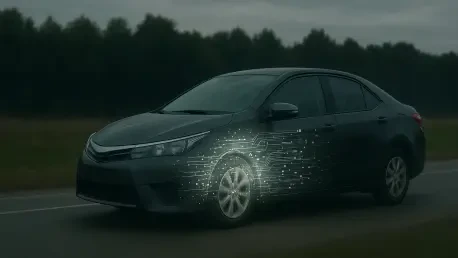

General Motors applications have been identified as linking specific vehicle identification numbers directly with user email addresses and location history. This revelation stems from a comprehensive study by researchers at Northeastern University, which exposes how the transition from mechanical transport to mobile computing has turned vehicles into sophisticated surveillance tools. By examining 21 different car models and 30 companion smartphone applications from late 2024 through mid-2025, investigators discovered a persistent and quiet funneling of sensitive information to third-party entities. The research highlights that while drivers may believe they are simply operating a machine, they are actually navigating a data-collection node that operates often without explicit user awareness. This shift represents a fundamental change in the automotive business model, where a vehicle’s value is found in the granular behavioral data it can extract from its occupants on every single trip.
Technical Infrastructure: The Rerouting of Vehicle Data
To uncover the hidden pathways of this data transmission, researchers utilized a controlled environment at an Auto Test Center in Connecticut. The methodology involved monitoring network traffic across various states, including periods of idling and active driving at speeds up to 45 mph. For electric vehicles, the team employed specialized car-sized Faraday enclosures to completely block cellular signals. This rigorous approach revealed a surprising level of persistence; when primary cellular connections were severed, the vehicles actively sought out and rerouted data through available Wi-Fi networks to maintain communication with external servers. Of the 21 vehicles tested, 19 were found to be contacting at least one third-party entity. This behavior was not localized to a single segment but was observed across legacy brands and modern EV innovators alike, proving that data monetization is now an industry-wide standard rather than a niche practice.
The sheer scale of the recipients involved in these transmissions demonstrates the depth of the automotive-tech alliance. Data packets were observed traveling to a “who’s who” of global technology conglomerates, including Amazon, Google, Meta, and Microsoft. While manufacturers frequently defend these practices by pointing to contractual agreements that supposedly limit how these third parties use the information, researchers noted a significant lack of transparency and a total absence of evidence regarding the enforcement of these privacy clauses. This leaves the consumer in a vulnerable position where their personal habits and movements are handed over to companies whose core revenue models depend on data exploitation. The lack of public oversight means that once data leaves the vehicle’s computer, its ultimate destination remains opaque to the owner, turning the dashboard into a gateway for the digital advertising ecosystem without meaningful restriction.
Data Points: The Intersection of Telemetry and Identity
A crucial finding of the analysis is the blurring line between technical telemetry and deeply personal identifiers. Telemetry traditionally refers to mechanical data—such as engine temperature, tire pressure, or sensor health—which manufacturers use for maintenance and safety improvements. However, the study found that this technical stream is increasingly intertwined with data collected via the “app layer” of the modern driving experience. Out of the 30 companion smartphone apps analyzed, 28 were found to transmit data to outside advertising or analytics firms. This connection point is where the most invasive harvesting occurs, as the apps bridge the gap between the car’s hardware and the driver’s digital life. This integration ensures that the vehicle is no longer an isolated mechanical tool but a participant in a broader network of surveillance that tracks not just the health of the machine, but the behaviors and routines of the human behind the steering wheel.
The sensitivity of the information being shared is particularly alarming for privacy advocates and consumers alike. Approximately 25% of the analyzed companion apps were found to share personally identifiable information, which includes full names and precise GPS coordinates. When these data points are combined with a Vehicle Identification Number, it creates a permanent digital fingerprint that is unique to the owner. This allows third parties to track a driver’s movements with surgical accuracy, documenting everywhere from medical clinics to places of worship. Such granular tracking creates a detailed map of an individual’s life that was previously inaccessible to corporate entities without a warrant. The permanence of the VIN as a static identifier means that even if a user changes their phone or email, the historical data remains linked to the car, providing a continuous trail of behavior that spans the duration of the vehicle’s ownership and beyond.
Financial Implications: Navigating Future Privacy Standards
Beyond the loss of privacy, the financial implications of this data harvesting are becoming increasingly concrete for the average driver. There is a growing trend of automakers sharing driving behavior data—such as hard braking incidents, rapid acceleration, and average speeds—with insurance providers. This creates a scenario where a consumer’s financial standing is directly impacted by the data collected by their own vehicle. Insurance companies can use this information to adjust premiums in real-time or deny coverage based on perceived risk factors that the driver may not even be aware are being monitored. This ecosystem transforms the car into a mobile risk-assessment tool that prioritizes corporate profitability over consumer transparency. As these data-sharing partnerships become more integrated, the cost of driving becomes tied to an opaque algorithm that rewards specific behaviors while penalizing others without a clear mechanism to dispute the results.
Consumers must adopt a proactive stance to regain some level of control over their digital footprint in the automotive space. Practical next steps included reviewing the privacy settings within both the vehicle’s head unit and the companion smartphone application, as many “opt-out” features are hidden deep within sub-menus. Drivers were encouraged to limit the permissions granted to vehicle apps, specifically restricting access to location services and contacts whenever possible. Looking forward, the industry required more robust legislative frameworks that mandated clear disclosures and decoupled basic vehicle functionality from data-sharing requirements. Future considerations for car buyers involved researching a manufacturer’s data privacy reputation as a primary factor in the purchasing process, much like safety ratings or fuel efficiency. By demanding higher standards, the public began to signal that privacy should not be a luxury feature but a standard component of every car.