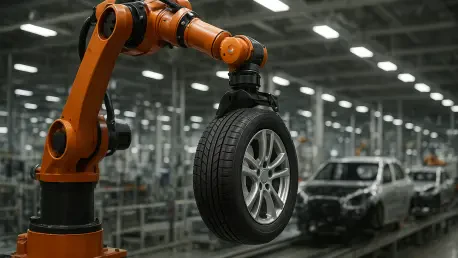

The shift toward autonomous humanoid labor relies on massive datasets acquired through simulated factory environments that mirror actual Hyundai production lines. This foundational strategy bridges the transition of Boston Dynamics’ Atlas from a viral sensation known for parkour into a pragmatic, high-output asset within Hyundai Motor Group’s operations. The Robotics Metaplant Application Center in Georgia has become the epicenter for this metamorphosis, where Atlas is no longer performing stunts but is instead mastering the complexities of automotive assembly. By focusing on heavy-lifting duties like hoisting tires alongside delicate component manipulation, engineers transformed a research project into a viable workforce solution. This pivot highlights a fundamental shift in the robotics landscape, where the extreme precision and safety standards of a car factory serve as the ultimate proving ground for humanoid labor in high-stakes manufacturing scenarios without compromising efficiency.
Integrating Physical AI for Dynamic Assembly
The technological core of this advancement is Physical AI, which represents a stark departure from the rigid, pre-programmed routines that defined previous industrial eras. Unlike traditional robots that follow static code, Physical AI allows Atlas to interpret high-level commands and navigate complex environments with sophisticated spatial awareness. This capability enables the robot to process sensory input in real-time, allowing it to adjust its grip or footing if a specific part is not in its expected position. By moving away from deterministic programming, developers created a machine that understands the context of its actions rather than just repeating a set of coordinates. This fluidity is essential for modern manufacturing lines, where small variations in part placement or lighting can often stall traditional automated systems. The integration of this intelligence turned Atlas into a dynamic participant on the factory floor, capable of solving minor physical discrepancies.
To facilitate this level of autonomy, the Georgia-based facility serves as a massive data collection hub, feeding information into the robot’s learning models. Physical AI requires vast amounts of real-world experience to improve, and by operating within a simulated environment that mirrors actual production lines, Atlas is gaining the insights needed for full autonomy. Each interaction with a piece of machinery or a vehicle component is logged and analyzed, refining the robot’s ability to balance and manipulate objects. This data-driven approach ensures that the robot is not just following a script but is actually learning the physics of its environment. As these datasets grow, the machine’s reliability increases, reducing the error rate in complex assembly tasks. The facility acts as a bridge between digital simulation and physical reality, allowing the humanoid platform to encounter and overcome edge-case scenarios before it reaches a live production line.
Overcoming Economic Hurdles through Mass Production
Transitioning from a laboratory prototype to a global workforce requires more than just advanced software; it necessitates a complete overhaul of the economic model behind humanoid hardware. Boston Dynamics and Hyundai focused intensely on reducing the prohibitive costs historically associated with these machines. Through rigorous supply chain optimization and design refinements, they successfully slashed the price of critical components by up to 80% compared to previous iterations. This move toward cost-effective mass production differentiates Atlas from other experimental platforms that remain stuck in the research phase. By treating the humanoid robot as a standard piece of industrial equipment rather than a boutique technological marvel, the companies made the large-scale deployment of thousands of units a realistic financial goal. This economic feasibility is a prerequisite for any technology aiming to disrupt a multi-billion-dollar industry like automotive manufacturing and adjacent industrial sectors.
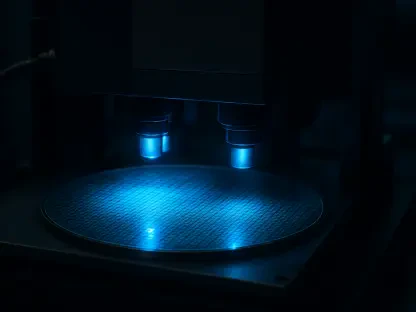
The transition of bipedal platforms into the workforce demonstrated that humanoid robots were ready for high-stakes industrial applications beyond the automotive sector. By proving reliability in Hyundai’s factories, the project established a blueprint that prepared the semiconductor and food processing industries for similar robotic integration. These sectors benefited from the robot’s ability to navigate environments designed for humans, which avoided the costs of structural overhauls. Stakeholders recognized that the next logical step involved the deployment of specialized software updates to handle cleanroom protocols and fast-paced logistics. This evolution showed that maintaining a unified AI-driven ecosystem allowed for seamless cross-industry scaling. Companies that invested in these humanoid workforces secured a competitive edge by automating tasks that were previously too complex for traditional machinery. Ultimately, the partnership proved that the convergence of Physical AI and mass production was the definitive solution.