
A smart factory is not a product available for purchase but rather a complex state achieved through the strategic development of custom software architecture. Despite the rapid proliferation of digital tools across the industrial landscape, a significant integration gap remains a primary obstacle for many organizations attempting to modernize their operations. Recent findings from the 2026 UK Business Data Survey highlight this challenge, revealing that while a vast majority of manufacturers have experimented with artificial intelligence, only a meager twelve percent have successfully woven these advanced technologies into their core business systems. This situation stands in stark contrast to more digitally native sectors, such as information and communication, where integration rates are more than triple those found on the factory floor. Bridging this gap requires a fundamental shift in how leadership views technology, moving beyond the simple acquisition of hardware toward the creation of a unified, intelligent operational ecosystem that connects every facet of production.
Transitioning from Traditional Automation to Cognitive Manufacturing
The first step in bridging the integration gap involves recognizing the critical distinction between traditional automation and true industrial intelligence. For decades, the manufacturing sector has led the global economy in the adoption of robotics, with the international workforce of factory robots more than doubling between 2026 and 2030 based on current projections. However, the presence of robotic arms or automated assembly lines does not inherently mean a facility has achieved smart status. Traditional automation is designed to execute repetitive, manual tasks with high speed and consistency, yet it often operates within rigid, siloed workflows. These systems are highly efficient under stable conditions but typically lack the flexibility to adapt to unexpected disruptions without significant human intervention. A robot following a fixed script is a powerful tool, but it remains a “dumb” asset until it is linked to a broader network that can interpret environmental data and adjust workflows in real-time.
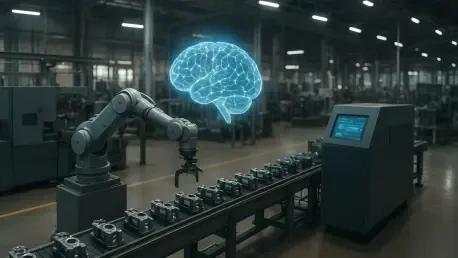
In contrast to isolated automation, a true smart factory functions as a cohesive, data-driven ecosystem where artificial intelligence serves as the central nervous system. This transformation is made possible through the comprehensive implementation of the Industrial Internet of Things and cloud computing platforms, which facilitate a continuous, bidirectional flow of information. By establishing these digital pathways, manufacturers can bridge the historical divide between floor-level machinery, known as Operational Technology, and high-level management platforms, known as Information Technology. When these two layers work in tandem, systems like Manufacturing Execution Systems and Enterprise Resource Planning platforms can receive real-time updates from individual sensors. This level of connectivity transforms a collection of high-tech machines into an adaptive network that can anticipate needs, optimize energy consumption, and respond dynamically to changes in production demand across the entire enterprise.
Navigating the Technical Obstacles of Legacy Systems
The transition toward a fully integrated industrial environment is frequently hindered by the pervasive presence of legacy infrastructure and the technical complexities of the OT/IT divide. Many established factories continue to rely on aging management platforms that, while highly reliable for basic operations, lack the native capacity to communicate with modern, cloud-based artificial intelligence applications. Bridging the gap between the programmable logic controllers that govern machinery and the sophisticated application programming interfaces used by modern software requires a level of architectural expertise that is often missing from traditional internal engineering departments. Without a strategy to modernize these legacy connections, the data generated on the factory floor remains trapped in a localized environment. This technical debt acts as a ceiling on innovation, preventing manufacturers from scaling their digital initiatives beyond small-scale pilots into enterprise-wide solutions.
Beyond physical infrastructure, data fragmentation and high operational risks create a culture of conservatism that slows the pace of integration. Industrial data is notoriously noisy, meaning it is often inconsistent, unstructured, and stored in disconnected silos across different departments. Before an artificial intelligence model can provide any meaningful value, this data must be meticulously cleaned, standardized, and contextualized to ensure accuracy. If the underlying data architecture is flawed, the resulting insights will be unreliable, leading to a loss of trust in the technology. Furthermore, the high-stakes nature of manufacturing means that any system failure can result in catastrophic financial losses or physical safety hazards. Unlike the consumer software industry, where a minor bug might be acceptable, industrial systems require rigorous testing and validation. This necessity for absolute reliability often leads to a more cautious approach to adopting integrated intelligence layers.
Implementing Custom Software as a Foundation for Growth
To overcome these hurdles, the industry is increasingly shifting its focus toward custom software development as the essential backbone of the modern factory. Rather than attempting to find a universal, off-the-shelf product that fits every operational nuance, manufacturers are turning to strategic technology partners to build bespoke data pipelines and integration layers. These tailored ecosystems are specifically designed to process vast streams of real-time data from diverse sources and translate them into actionable insights for human operators. By prioritizing a custom architectural approach, companies can ensure that their new intelligence tools are fully compatible with their existing hardware and business processes. This strategy not only de-risks the digital transformation process but also allows for greater scalability as the organization grows. Custom software acts as the connective tissue that allows disparate systems to communicate, enabling the factory to evolve from a series of tasks into a learning organism.
When artificial intelligence is successfully woven into the operational fabric, the resulting performance benefits are both transformative and measurable across various departments. One of the most significant advantages is the shift from reactive to predictive maintenance. Instead of following a rigid maintenance schedule or waiting for a component to fail, integrated systems analyze vibration, temperature, and acoustic data to identify potential issues before they cause unplanned downtime. Additionally, artificial intelligence-powered vision systems can monitor production lines with a level of precision and speed that far exceeds human capabilities, identifying microscopic defects early in the process to reduce material waste. These systems also enable dynamic production scheduling, allowing for real-time adjustments based on shifting variables such as new orders, resource availability, or supply chain delays. Ultimately, this level of integration ensures that the factory remains competitive in an increasingly volatile global market.
Strategic Pathways: Moving toward an Integrated Industrial Future
The path forward for the manufacturing sector involved a fundamental reassessment of how digital tools were integrated into the physical world. Successful organizations moved beyond viewing artificial intelligence as a collection of isolated experiments and instead treated it as a core architectural priority. They invested in robust data governance frameworks and sought out partnerships that could bridge the gap between legacy hardware and modern intelligence layers. By focusing on the creation of a unified software ecosystem, these manufacturers were able to unlock the full potential of their existing assets while laying the groundwork for continuous innovation. The most effective strategies prioritized long-term scalability and operational safety, ensuring that every technological addition contributed to a more resilient and responsive production environment. Moving forward, the true competitive advantage resided in the ability to turn raw industrial data into a strategic asset through deep, meaningful system integration.