
Jintou Zhiyuan’s investment in Nayuan highlights growing confidence in the company’s ability to create differentiated technical barriers within the polyanion material sector. Nayuan New Materials Technology (Wuxi) Co., Ltd. has successfully closed a Series A financing round, raising tens of millions of yuan to solidify its position as a frontrunner in the rapidly evolving sodium-ion battery market. This injection of capital is specifically designated for the construction of a sophisticated, terminal-integrated intelligent manufacturing base situated in the Ma’anshan Economic Development Zone. Beyond physical infrastructure, the funds will accelerate research and development into next-generation anode-free battery architectures and support the company’s aggressive push into international markets. Founded in 2022, the firm has quickly distinguished itself through a leadership team comprised of high-level scientific talent, many of whom are returnees from prestigious German research institutions. Dr. Liu Zhongqing, the company’s founder, brings an exceptional pedigree from Forschungszentrum Jülich and the University of Oxford, where he studied under the world-renowned academician Martin Winter. This deep academic foundation allows Nayuan to bridge the gap between complex laboratory breakthroughs and the practical requirements of industrial-scale energy storage, positioning the company as a pivotal player in the transition away from lithium dependency.
The Strategic Roadmap: Navigating the Phases of Material Evolution
The development of sodium-ion battery technology is not a singular event but rather a series of evolutionary steps that require a nuanced understanding of chemical stability and market dynamics. The initial phase of this journey, which occurred between 2022 and 2023, was heavily focused on layered oxides. During that period, the skyrocketing price of lithium made layered oxides an attractive alternative because they could be processed using equipment and techniques similar to those used for ternary lithium batteries. However, as lithium prices stabilized and corrected, the economic incentive for layered oxides weakened, and the industry began to confront the inherent safety risks and voltage stability issues associated with these materials. This realization prompted a shift toward more robust chemical systems that could offer a sustainable competitive advantage regardless of fluctuations in the lithium market. By recognizing these limitations early, Nayuan was able to pivot its focus toward polyanion-based materials, which provide a more stable and predictable path for large-scale commercialization in the coming years.
We have now entered a critical transition phase where the industry is prioritizing Sodium Iron Phosphate Pyrophosphate, commonly referred to as NFPP. This material has emerged as a favorite among manufacturers because its structural characteristics and production requirements are remarkably similar to Lithium Iron Phosphate. This compatibility allows for a seamless integration into existing battery production lines, significantly lowering the barrier to entry for mass-market adoption. Looking forward through the 2026 to 2028 period, the technological frontier is shifting toward Sodium Iron Sulfate, or NFS. While NFS presents a higher level of technical difficulty due to its moisture sensitivity and potential for gas generation at high voltages, it represents the ultimate goal for cost-effective energy storage. Nayuan anticipates that as these engineering hurdles are cleared, NFS will become the dominant choice for budget-conscious applications, offering a performance-to-price ratio that layered oxides simply cannot match. This phased approach ensures that the company remains at the cutting edge of innovation while simultaneously providing reliable solutions for today’s market demands.
Technical Mastery: Engineering Solutions for Polyanion Systems
Nayuan New Materials has achieved a significant technical breakthrough by mastering the complexities of the NFS material system through its proprietary “skeleton building” technology. Traditionally, NFS has been viewed as a difficult material to handle because it is inherently soft and prone to absorbing moisture, which leads to degradation and gas production within the battery cell. To counter these issues, the engineering team developed a specialized “AB material system” that combines a primary material matrix with hard additives to reinforce the structure. This innovation has successfully addressed the problems of low compaction density and poor high-temperature cycle life that previously plagued sodium-based sulfate materials. Because NFS does not require expensive phosphorus, its Bill of Materials remains exceptionally low, often staying below 10,000 yuan per ton. This cost advantage makes it a perfect replacement for traditional lead-acid batteries in light power applications, such as electric two-wheelers and smaller energy storage units, where affordability is the primary driver of consumer behavior.
In parallel with its work on NFS, the company has perfected the production of NFPP using an advanced ultra-fusion synthesis process. This method is specifically designed to reduce powder resistance and enhance the compaction density of the cathode material, which is vital for high-performance applications. NFPP is positioned as a premium solution for sectors that demand long-cycle stability and high safety standards, such as large-scale energy storage systems for the power grid and data centers optimized for artificial intelligence. While the raw material cost for NFPP is slightly higher than that of NFS, ranging between 15,000 and 18,000 yuan per ton, its superior durability and efficiency justify the investment for industrial users. The ability to manage both NFS and NFPP allows Nayuan to offer a diversified product portfolio that can be tailored to the specific energy density and budgetary requirements of a wide range of clients. By maintaining this dual focus, the company ensures it can capture multiple segments of the energy market simultaneously, from low-cost consumer goods to high-end infrastructure projects.
The Frontier: Anode-Free and Solid-State Innovation
The pursuit of next-generation battery architecture represents a core pillar of Nayuan’s long-term competitive strategy, with a specific focus on anode-free technology. The company views the removal of the traditional anode as a necessary evolutionary bridge that will eventually lead to the widespread adoption of full solid-state sodium-ion batteries. This transition is aimed at dramatically increasing energy density, with target goals currently set between 250 and 320 Wh/kg. Achieving such high density would fundamentally change the utility of sodium batteries, making them viable not just for stationary storage, but for demanding mobile applications like electric vehicles and low-altitude aircraft. However, moving to an anode-free design introduces significant safety challenges, particularly because sodium metal has a low melting point of roughly 90 degrees Celsius. To mitigate these risks, the company is focusing on interface optimization and the development of specialized coatings that can maintain stability during rapid charge and discharge cycles, ensuring that performance gains do not come at the cost of operational safety.
A critical component of this advanced research is the strategic partnership with German specialty glass and materials giant Schott AG. This collaboration combines Nayuan’s expertise in cathode materials with Schott’s industry-leading capabilities in solid electrolytes. Together, the two entities are working to move away from liquid-state batteries toward semi-solid and eventually full-solid-state structures. This technological shift involves applying nanoscale coatings to the cathode and performing sophisticated treatment on the anode interface to manage the Solid Electrolyte Interphase more effectively. By replacing flammable liquid electrolytes with stable solid alternatives, the partnership aims to create a battery that is both highly energetic and inherently safe. Onboard verification for these advanced systems is already underway, with the goal of integrating these high-density packs into commercial vehicle systems by the end of the current development cycle. This collaborative approach highlights the global nature of energy innovation and Nayuan’s ability to attract world-class partners to solve the most pressing challenges in battery science.
Global Expansion: A Dual-Curve Business Model
Nayuan has adopted a sophisticated dual-curve business model designed to maximize its reach in both the domestic Chinese market and the international arena. In China, the company functions primarily as a high-tier material supplier, providing cathode powders to established cell manufacturers. This strategy leverages existing, robust battery manufacturing infrastructure within the country, allowing Nayuan to scale quickly without the need to build its own cell production lines for every project. By focusing on the supply of high-quality NFS and NFPP materials, the company can capitalize on the massive demand for energy storage and electric mobility in the domestic market. This approach maintains the firm’s identity as a specialized material science enterprise while ensuring a steady stream of revenue from long-term supply contracts with major industrial players. This domestic stability provides the financial and technical foundation necessary to pursue more complex and potentially more lucrative opportunities beyond China’s borders.
For international markets, the company has recognized that a simple material-supply strategy is often insufficient because many regions lack a localized battery supply chain. Consequently, Nayuan is implementing a terminal-integration model for its overseas business, offering complete battery packs and systems rather than just raw materials. This strategy allows the company to export its entire technological stack to regions such as Southeast Asia, Europe, and Central Asia, where customers require “plug-and-play” energy solutions. By providing integrated battery packs, Nayuan can ensure the performance and reliability of its materials while capturing a larger portion of the value chain. This model is particularly effective in emerging markets where demand for solar-plus-storage projects is growing rapidly. Whether it is supporting distributed energy projects in Indonesia or providing specialized power supplies for recreational vehicles in Europe, the integrated approach allows the company to act as a full-service technology partner. This flexibility is key to navigating the diverse regulatory and industrial landscapes of the global energy sector.
Scaling Production: Building an Industrial Powerhouse
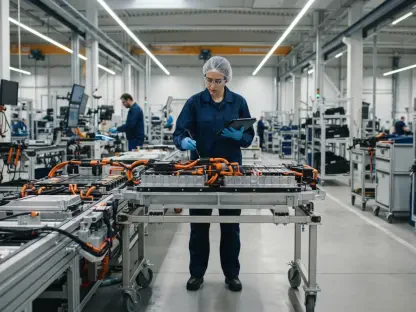
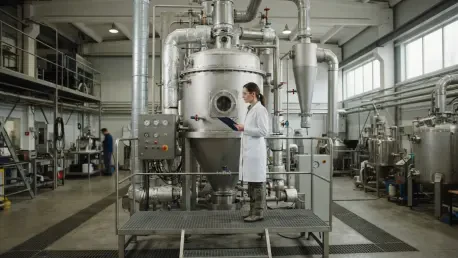
The roadmap for scaling Nayuan’s manufacturing capacity is a meticulously planned, phased process that moves from research and development to massive industrial output. The current year marks a significant turning point as the company moves beyond its 100-ton engineering technology center in Wuxi and its 1,000-ton pilot line in Jiangxi. The focus is now on the construction and launch of a 10,000-ton “double-stack” production line in Anhui, which will utilize advanced second-generation spray processes to ensure consistent quality at high volumes. Looking further ahead toward 2028, the company has set an ambitious target of reaching an annual capacity of 100,000 tons. Scaling to this magnitude requires not only technical expertise in material synthesis but also a mastery of supply chain logistics and environmental sustainability. By increasing production in these increments, Nayuan can refine its manufacturing techniques and ensure that each new facility is more efficient and cost-effective than the last, ultimately driving down the price of sodium-ion technology for the end user.
The selection of the Ma’anshan Economic Development Zone for the new intelligent manufacturing base was a tactical decision influenced by the region’s mature new energy industrial ecosystem. By positioning itself within this hub, Nayuan gains immediate access to a network of downstream customers, integrated manufacturing capacity, and local government support through parent funds. This geographical proximity is expected to significantly shorten product verification cycles and improve delivery speeds, which are critical factors as the industry enters a period of rapid commercial growth. The Ma’anshan facility will serve as a blueprint for future expansions, demonstrating how localized industrial clusters can foster innovation and reduce the overall cost of production. As this facility comes online and reaches full capacity, it will provide the volume necessary to meet the increasing demand from both domestic battery manufacturers and international system integrators. This robust production framework is the engine that will drive the company’s transition from a promising startup to a dominant leader in the global energy transition.
Next-Generation Steps: Solidifying a Market Leadership Position
The successful acquisition of Series A funding by Nayuan New Materials demonstrated a clear market recognition of the company’s technical depth and strategic foresight. By focusing on polyanion materials like NFS and NFPP, the organization addressed the critical need for safer and more cost-effective alternatives to lithium-ion batteries. The construction of the Ma’anshan manufacturing base represented a tangible commitment to scaling these innovations for the global stage. Throughout the development process, the leadership team utilized its extensive background in German and British battery research to solve long-standing engineering problems, such as gas generation and moisture sensitivity. This scientific rigor, combined with a practical business model that balanced domestic material supply with international system integration, allowed the firm to navigate the complexities of the global energy landscape with agility. The company effectively bridged the gap between laboratory-scale breakthroughs and the rigorous demands of industrial energy storage, ensuring that sodium-ion technology moved closer to widespread commercial viability.
Looking forward, the industry must now focus on the long-term sustainability of the supply chain and the continued optimization of energy density to compete with evolving lithium technologies. Nayuan’s collaboration with international partners like Schott AG serves as a model for how cross-border cooperation can accelerate the development of solid-state architectures. The next phase of growth will likely involve the refinement of anode-free designs and the further reduction of production costs to penetrate deeper into the electric vehicle and high-altitude aircraft markets. Companies should prioritize the creation of integrated ecosystems that include recycling and material recovery to minimize environmental impact and secure raw material supplies. As the global energy transition gathered momentum, the lessons learned from Nayuan’s journey highlighted the importance of technical differentiation and regional synergy in building a resilient energy future. The focus remained on moving beyond theoretical performance to deliver reliable, high-volume solutions that met the urgent needs of a decarbonizing world.