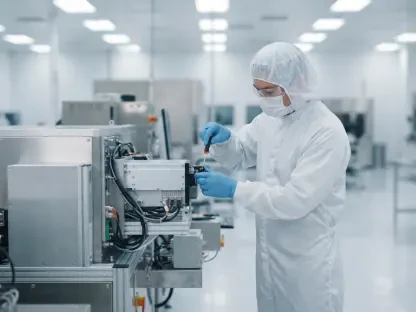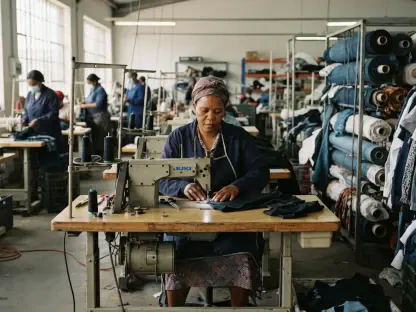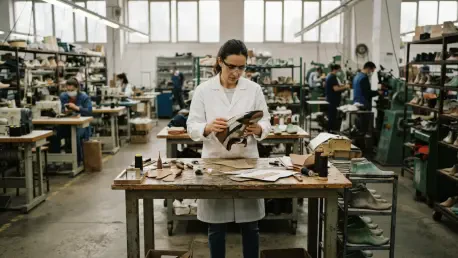

A high-tech sneaker might traverse three continents and dozens of human hands before it ever touches the pavement, but the real journey now begins inside a silicon brain. The global footwear industry is moving past the era where design and production exist as separate worlds. For decades, a shoe’s journey from a digital sketch to a physical box involved a fragmented chain of handoffs, often leading to manufacturing errors and wasted materials. Today, a new technological shift is bridging this gap by integrating autonomous agents into the production line, creating a nervous system for the factory floor that can think, predict, and communicate back to the designers.
This transformation represents more than just a software update; it is a fundamental restructuring of how consumer goods are realized. As brands face mounting pressure to reduce environmental impact and respond to rapid fashion cycles, the traditional disconnect between the creative studio and the assembly line has become an expensive liability. Agentic AI serves as the corrective mechanism, ensuring that what is envisioned on a screen is physically viable and sustainable. This technology turns raw data into a competitive advantage, allowing manufacturers to move from reactive troubleshooting to proactive optimization.
The End of the Factory-Studio Divide
The historical separation between designers and factory workers has long resulted in a “translated” product that rarely matches the original vision perfectly. In the past, a designer in Portland or Seoul might create a complex aesthetic that proved nearly impossible to stitch efficiently in a plant in Vietnam. This friction caused delays, increased material scrap, and forced expensive redesigns mid-production. However, the introduction of agentic AI is finally dissolving these boundaries by creating a shared digital language that both designers and machines understand.
By embedding intelligence into the development phase, manufacturers ensure that every digital stitch carries instructions that are compatible with specific factory machinery. This means the “development context” is preserved throughout the entire lifecycle of the product. When a designer makes a change to a shoe’s silhouette, the AI immediately calculates the impact on the assembly line, providing instant feedback on material requirements and labor time. This creates a fluid, unified workflow where the factory floor effectively begins at the designer’s desk.
Why the Digital Shift Is Non-Negotiable
The sheer scale of modern footwear production makes traditional management styles increasingly obsolete in the current market. Industrial leaders like Changshin, which produce millions of pairs for global brands, manage tens of thousands of workers across multiple countries and time zones. The complexity of these massive networks, combined with a rising demand for hyper-customization, has made standard automation insufficient. Without a way to synthesize massive amounts of data from different continents, manufacturers face recurring bottlenecks and supply chain blindness that jeopardize their profit margins.
Furthermore, the economic landscape of 2026 requires a level of agility that human oversight alone cannot sustain. With raw material costs fluctuating and global logistics networks facing constant shifts, the ability to pivot production schedules in real-time is a necessity. Manufacturers who fail to adopt these cognitive systems risk falling into a cycle of reactive management, where every minor delay cascades into a major operational failure. The shift toward agentic systems allows for a proactive stance, where the factory anticipates market changes and adjusts its own internal logic to maintain peak efficiency.
Building the Brain of the Smart Factory
At the heart of this transformation is the creation of a digital twin of the entire business ecosystem. Using sophisticated platforms such as Palantir Foundry, manufacturers build an ontology—a comprehensive map that connects every piece of leather, every stitching machine, and every labor hour into a single, unified dashboard. This replaces isolated spreadsheets with a living, breathing representation of the factory. Unlike basic AI that simply summarizes information, agentic AI is built to execute tasks and navigate this data map to identify machine failures before they occur.
These AI agents utilize large language models to provide real-time recommendations to human engineers, acting as a cognitive layer that bridges the digital and physical realms. For example, if a material shortage is detected in one region, the AI can suggest alternatives based on historical performance and current inventory across the entire global network. The ultimate goal is to create a closed-loop system where feedback from the production line flows back to the design studio. This ensures future models are inherently optimized for less waste and faster assembly, making the manufacturing process a continuous conversation between creators and builders.
The Evolution of Lean Manufacturing through AI
The tradition of lean manufacturing, famously pioneered by Toyota, focuses on continuous improvement and the elimination of waste. By embedding AI into this philosophy, manufacturers are achieving visibility at a scale impossible for human managers to replicate manually. Expert analysis suggests that AI does not replace the lean mindset; it scales it, allowing for the simultaneous monitoring of production standards across several countries. This digital version of the Kaizen philosophy ensures that even the smallest inefficiencies are identified and corrected before they impact the final product quality.
The success of these systems relies on practical application through methodologies like AgentCamps. In these environments, engineers test AI agents under high-pressure scenarios to ensure they can handle the messy, real-world data of a busy factory floor. This process addresses specific production pain points, validating the technology before a full-scale global rollout. By subjecting these systems to rigorous stress tests, companies ensure that their digital agents provide tangible value in the chaotic environment of high-volume assembly, effectively digitizing decades of manufacturing wisdom into an actionable, automated framework.
Strategies for Implementing Agentic AI in Production
Successfully deploying these systems requires a foundational shift in how data is utilized across the organization. The first step involves establishing a unified data ontology to break down departmental silos, connecting ERP systems and inventory logs into a single digital architecture. This ensures the AI has a single source of truth, preventing the conflicting reports that often plague large-scale operations. Once this foundation is set, companies must identify specific manufacturing use-cases, such as predictive maintenance or material scrap reduction, to ensure the technology addresses high-impact areas.
Furthermore, it is essential to maintain human-in-the-loop oversight to ensure that AI agents provide recommendations rather than autonomous commands. Experienced factory managers must have the final authority to approve or adjust suggestions, blending human intuition with algorithmic precision. Finally, manufacturers should integrate design feedback loops that connect manufacturing insights directly to product development teams. This allows designers to understand which materials or shapes cause the most frequent assembly issues, leading to a more resilient and efficient production cycle from 2026 to 2028 and beyond.
The integration of agentic AI proved to be the decisive factor in stabilizing global footwear supply chains during a period of high volatility. Manufacturers that prioritized a unified data architecture observed significant reductions in material waste and an accelerated speed-to-market. Industry leaders realized that the path forward required a cultural shift toward data literacy alongside the technical implementation of digital agents. By closing the loop between the designer’s intent and the factory’s output, the industry moved toward a more sustainable and responsive production model that empowered its workforce.