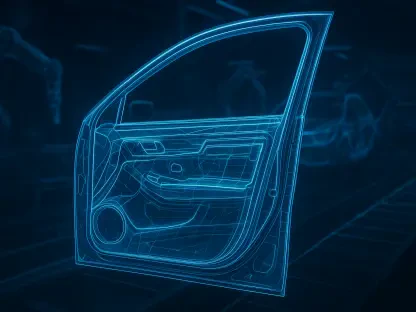

The unprecedented transition from traditional mechanical door latches to sleek electronic handles has finally triggered a massive regulatory intervention to address critical safety vulnerabilities during vehicle accidents. This shift toward minimalist, “hidden” door systems was initially celebrated by modern electric vehicle (EV) manufacturers as a way to reduce aerodynamic drag and provide a futuristic aesthetic. However, the move away from physical levers has created a dangerous barrier between passengers and survival when a vehicle’s electrical system fails.
The State Administration for Market Regulation (SAMR) has stepped in to manage the largest safety-driven recall in the country to date, signaling a major turning point for the industry. This intervention highlights the gravity of the situation as regulators prioritize human life over the streamlined design choices that have come to define the electric era. By forcing millions of vehicles back into service centers, the Chinese government is setting a precedent that high-tech features must never compromise basic accessibility.
This article explores how aesthetic preferences led to significant vulnerabilities and how the resulting regulatory crackdown is reshaping the global EV landscape. From the technical failures of electronic latches to the upcoming 2027 mandate for mechanical safety, the industry is now facing a mandatory “back to basics” movement. This roundup synthesizes insights from safety experts and manufacturing reports to examine the implications for the future of vehicle design.
The Intersection of Minimalism and Public Safety in the Electric Age
The automotive industry’s pivot from traditional mechanical handles to aerodynamic electronic systems has been driven by the need for maximum efficiency and range. By making handles flush with the car’s body, manufacturers can significantly reduce wind resistance, which is a critical factor for heavy battery-powered vehicles. However, this aesthetic evolution has come at a cost, as the complexity of electronic latches often bypasses the intuitive mechanical reliability that has been a safety standard for over a century.
China’s SAMR intervention serves as a stark reminder that innovation cannot occur in a vacuum without considering emergency scenarios. As the largest EV market globally, China’s decision to recall millions of units demonstrates that even the most technologically advanced cabins are subject to rigorous safety scrutiny. The scale of this action reflects a growing consensus that “hidden” door mechanisms have become a liability rather than a feature, especially when power loss renders them inoperable from the outside.
Aesthetic design choices that prioritize a clean, button-free look have inadvertently created life-threatening traps. When doors are controlled entirely by software and electric actuators, a simple battery failure can turn a vehicle into a sealed chamber during a fire or flood. The current regulatory environment is now forcing manufacturers to re-evaluate the balance between cutting-edge technology and the fundamental ergonomic requirements necessary for a safe and rapid exit during a crisis.
Examining the Critical Vulnerabilities of “Hidden” Door Mechanisms
The Fatal Flaw: When High-Tech Aesthetics Impede Emergency Exit
The primary technical failure of electronic latches occurs during a total power loss, which is a common outcome of severe vehicular collisions. Without a consistent low-voltage power supply, the sensors and motors that release door handles fail to activate, leaving occupants dependent on manual overrides. Many passengers remain unaware of where these overrides are located, as they are often color-matched to the interior or hidden beneath decorative trim to maintain a minimalist appearance.
Design choices by prominent manufacturers have drawn significant regulatory scrutiny for being unintuitive under duress. For example, Tesla vehicles often require passengers to find hidden release cables inside door pockets, while BAIC has been criticized for a lack of instructional prompts. When a passenger is in a panicked state, the cognitive load required to find a non-obvious release mechanism can lead to fatal delays in exiting a vehicle that may be compromised by smoke or flame.
There is a palpable tension between the engineering goal of reducing drag and the human necessity of survival. While manufacturers argue that hidden handles provide a sleek user experience and minor efficiency gains, safety experts emphasize that ergonomics must remain the priority. A door handle that requires a manual to operate is a fundamental design failure, and the industry is now being forced to reconcile these conflicting priorities.
A Domino Effect Across the Global Supply Chain and Chinese Markets
The scale of the recall is immense, involving millions of vehicles that are central to the current automotive market. Tesla is at the center of this action with roughly 2.9 million units affected, but domestic giants such as Xiaomi, XPeng, and Geely are also facing significant corrective requirements. This widespread recall highlights that the issue of door safety is not isolated to a single brand but is an industry-wide trend that emerged from a collective desire to appear futuristic.
These recalls have disrupted the prevailing narrative of Chinese EV technological superiority, which was largely built on high-tech interiors and digital integration. For emerging startups that have marketed their sleek designs as a competitive edge, the financial implications of retrofitting thousands of vehicles are substantial. Beyond the immediate costs, there is a risk that consumer trust in “smart” vehicle features could be eroded if those features are perceived as safety hazards.
Brands that have heavily invested in the “futuristic cabin” aesthetic are now facing competitive risks. If luxury EVs are seen as less safe than traditional vehicles due to their door mechanisms, the premium associated with these designs may vanish. The industry is watching closely to see how manufacturers adapt their marketing and engineering to maintain their innovative image while satisfying the new, rigorous safety expectations of the public.
Redefining the Regulatory Standard: The 2027 Mandate for Mechanical Safety
A major policy shift is underway with the upcoming 2027 mandate that will effectively ban door systems that lack visible, mechanical release points. By January 1, 2027, all vehicles sold in the region must feature both interior and exterior manual overrides that are easy to locate and operate. This regulation marks the end of the “electronic-only” era and forces a return to physical safety hardware that does not rely on the vehicle’s electrical grid.
This new policy directly challenges the minimalist design philosophy pioneered by Tesla and subsequently adopted by almost every major EV startup. Manufacturers from 2026 to 2027 must scramble to redesign their upcoming models to incorporate these mandatory physical release points without sacrificing the aerodynamic gains they have achieved. This shift represents a significant victory for safety advocates who have long argued against the over-digitization of critical vehicle entry and exit systems.
The regional influence of China’s safety standards is expected to have a profound impact on international automotive manufacturing and export protocols. Because many global brands manufacture their EVs in China or target the Chinese market, these mechanical requirements will likely become a global standard. International manufacturers will need to align their global production lines with these rules to ensure their vehicles remain compliant in the world’s most influential electric vehicle market.
Immediate Mitigation Strategies: Software Patches vs. Physical Fixes
In the short term, automakers are attempting to mitigate risks through over-the-air (OTA) software updates. These patches are designed to automatically lower windows if a crash is detected, providing an alternative escape route if the door handles fail to function. While this is a clever use of existing technology, it still relies on the vehicle’s electrical system being somewhat functional, which is not always a guarantee in high-impact scenarios where the battery pack is damaged.
Industry experts remain divided on whether software updates and physical warning stickers are sufficient for hardware that is inherently flawed. While a sticker can highlight the location of a manual release, it does little to help a passenger in a dark, smoke-filled cabin. Critics argue that these measures are merely stop-gap solutions and that true safety can only be achieved through a physical redesign of the door mechanism itself to ensure it is visible and intuitive.
The future of “smart” doors will likely involve a hybrid approach that integrates redundant mechanical backups without significantly impacting vehicle range. We may see the development of more ergonomic handles that remain flush for aerodynamics but pop out mechanically when a safety threshold is met. This would allow manufacturers to keep their sleek designs while providing the physical reliability that is now required by law and expected by consumers.
Strategic Takeaways for the Future of Automotive Design and Compliance
The recent recalls have forced a strategic pivot from a “high-tech at all costs” mentality to a “safety-first” engineering mindset. Manufacturers are learning that while digital innovation is a powerful marketing tool, it cannot come at the expense of mechanical reliability. Moving forward, the industry must adopt a more balanced approach that ensures every high-tech feature has a foolproof mechanical fallback that is accessible even in the worst-case scenario.
Best practices for manufacturers now include the early integration of safety regulators into the design process to avoid the financial disaster of mass recalls. By standardizing emergency signage and creating intuitive interfaces, brands can protect their reputations and their customers. Clear, physical overrides are becoming as important as the battery technology itself, as they represent the final line of defense for occupants in semi-autonomous and autonomous vehicles.
The transition toward more transparent safety standards is also creating an opportunity for brands to differentiate themselves through engineering excellence. Companies that can seamlessly blend aerodynamic efficiency with visible safety features will likely emerge as the new leaders in the next phase of the electric transition. The focus is shifting away from who has the largest screen or the fewest buttons to who can provide the most secure and reliable environment for passengers.
Prioritizing Human Survival in the Next Era of Mobility
The critical lesson from the current wave of recalls is that safety features must remain foolproof, regardless of how advanced a vehicle’s technology becomes. As cars become more like computers on wheels, the industry must remember that they are still physical objects that operate in high-risk environments. The long-term implications of these recalls will likely be a more grounded approach to vehicle architecture, where human ergonomics are never sacrificed for the sake of a digital interface.
Consumer trust is the most valuable currency in the automotive world, and the SAMR’s role as a global safety watchdog has been reinforced by these actions. By holding both domestic and international manufacturers to the same high standard, the regulator is ensuring that the transition to electric mobility does not compromise public safety. This oversight is essential for the continued growth of the sector, as it provides a framework for responsible innovation and protects the interests of the driving public.
The recent regulatory actions demonstrated that the industry was prepared to pivot back to basics when safety was at stake. Manufacturers recognized that the pursuit of minimalist aesthetics had overstepped the boundaries of practical emergency preparedness. The industry adopted a more cautious approach to electronic entry systems, ensuring that the next generation of electric vehicle architecture remained focused on human survival. Ultimately, these changes ensured that the futuristic vision of mobility was grounded in the timeless necessity of occupant protection.