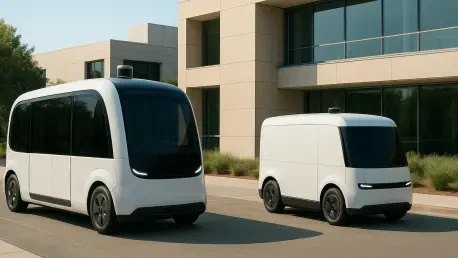

By integrating three light-industrial units and office spaces, the Roads and Transport Authority has created a complete lifecycle hub for driverless vehicle development. This facility, known as Dubai Mobility Labs, represents a decisive leap toward redefining the relationship between citizens and the urban environment. Located in the heart of Dubai Silicon Oasis, the laboratory serves as an essential nexus where high-tech innovation meets practical application, bridging the gap between theoretical research and the realities of city streets. The partnership between the Roads and Transport Authority and the Dubai Integrated Economic Zones Authority underscores a commitment to transforming Dubai into a premier destination for intelligent transit solutions. By providing a centralized location for testing and development, the emirate is effectively removing the traditional barriers that often stall the progress of automated driving technologies, ensuring a seamless transition from experimental lab results to real-world deployment on the busy metropolitan roads.
Strategic Integration: The Smart Mobility Vision
The establishment of this laboratory is a fundamental pillar of the broader Dubai Smart Self-Driving Transport Strategy, which dictates that one-quarter of all individual trips should be conducted via autonomous means by 2030. This initiative is not merely a technological experiment but a strategic economic move aligned with the Dubai Economic Agenda, also known as D33. By fostering a knowledge-based economy, the emirate is securing its position as a global leader in future industries, attracting international investment and specialized talent to the region. The goal is to create a self-sustaining ecosystem where technological advancements drive economic growth and improve the quality of life for residents. This vision requires a robust framework where government regulators and tech companies can collaborate effectively. Through this facility, the city is setting a global benchmark for how urban centers can integrate artificial intelligence into their infrastructure while maintaining economic resilience.
Moreover, the transition from prototype development to full-scale commercial operation is accelerated through this specialized environment. By identifying the specific needs of the local market, the labs allow developers to tailor their solutions to the unique climatic and social conditions of the region. This localized approach ensures that when autonomous vehicles eventually hit the public roads in significant numbers, they are already optimized for the environment they will serve. The focus remains on creating a scalable model that can be replicated across different districts of the city, eventually expanding to cover the entire emirate. This systematic rollout is designed to build confidence among stakeholders and the general public, proving that driverless technology is a reliable and efficient alternative to traditional transport. As a result, Dubai is not just adopting new technology but is actively shaping the future standards of global mobility through its various strategic investments.
Advanced Testing Scenarios: Infrastructure and Safety
A standout feature of Dubai Mobility Labs is its comprehensive testing protocol, which utilizes a dual-layered approach combining controlled environments with public road interactions. The testing network spans from Dubai Silicon Oasis toward Al Qudra, offering a diverse array of driving conditions that challenge every aspect of an autonomous system. Technicians can simulate 248 distinct testing scenarios, which are categorized into nearly two hundred controlled situations and dozens of public road interactions. These scenarios include everything from basic mechanical maneuvers to high-stakes encounters with pedestrians and erratic human drivers. By subjecting vehicles to such rigorous stress tests, the facility ensures that the sensing and decision-making capabilities of the software are flawless. This granular level of testing is essential for identifying edge cases—rare but dangerous situations that might not occur on standard test tracks—thereby significantly increasing the overall safety profile.
To support the physical demands of these vehicles, the infrastructure includes specialized light-industrial units designed for indoor installations and technical maintenance. These units allow engineers to work on vehicle hardware in a climate-controlled setting before moving to the outdoor tracks. Furthermore, the facility is equipped with high-capacity 60kW electric vehicle chargers, reflecting the inextricable link between autonomous technology and sustainable energy. This integration ensures that the next generation of transport is not only driverless but also eco-friendly, aligning with global climate goals and the emirate’s sustainability targets. The design of the tracks themselves mimics complex urban layouts, complete with various traffic features and signage to provide the most realistic simulation possible. By providing such an all-encompassing environment, the Roads and Transport Authority has created a space where the hardware and software of future transit systems can mature in tandem.
Future Pathways: Scaling Global Driverless Networks
The successful inauguration of Dubai Mobility Labs established a new global standard for the integration of driverless technology into existing urban frameworks. It proved that a proactive regulatory stance, combined with world-class testing infrastructure, could drastically reduce the time required to bring safe autonomous solutions to the public. Stakeholders focused on the immediate implementation of shared mobility data, which allowed for a more synchronized approach between different modes of transport. This rigorous certification process, managed by international experts like DEKRA, provided the objective validation needed to move past experimental phases. By the end of the initial testing cycles, the lab demonstrated that autonomous systems were capable of handling the complexities of a modern city while maintaining a level of safety that met or exceeded human-operated standards. This achievement marked the beginning of a broader rollout of driverless shuttles across several key districts.
Moving forward, planners identified the necessity of expanding these specialized zones to create a city-wide mesh of autonomous corridors. This progression suggested that future efforts should concentrate on the standardization of communication protocols between vehicles and city infrastructure. By prioritizing the development of these digital twins and sensor networks, the emirate secured its role as a blueprint for other global cities seeking to modernize their transit systems through automation. Actionable next steps included the deployment of mobile testing units to gather data from diverse environmental conditions and the creation of a unified regulatory sandbox for international startups. These measures ensured that the lab remained a dynamic environment capable of evolving with technological shifts. Ultimately, the focus shifted toward empowering local developers to export their validated solutions to international markets, turning the city into a global exporter of mobility technology.