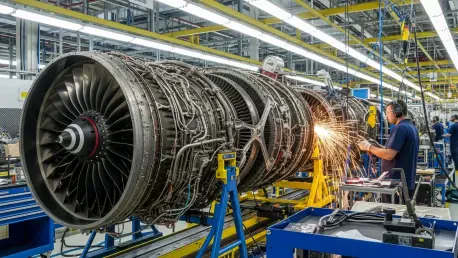

Kwame Zaire is a veteran manufacturing expert whose career has been defined by a deep fascination with the intricate intersection of high-end electronics and heavy industrial equipment. As a prominent thought leader in production management, Zaire specializes in the delicate balance of predictive maintenance, safety protocols, and quality control within the aerospace sector. His unique perspective on the evolving partnership between GE Aerospace and Hindustan Aeronautics Ltd (HAL) provides a rare look into the gritty reality of building world-class jet engines in new territories.
Technical discussions for the F414 engine have concluded, shifting the focus to commercial negotiations. How do rising global component costs impact this next phase, and what specific milestones must be met to ensure the final contract is signed by the end of this fiscal year?
The shift from technical alignment to commercial negotiation is always the most sensitive part of the process because we are dealing with a volatile global supply chain. Rising component costs act as a heavy anchor, forcing both parties to find a middle ground where the 99-engine order remains economically viable despite inflationary pressures. To hit the signing deadline by the end of this fiscal year, we must finalize the price-per-unit structures and lock in the specific investment contributions for the manufacturing facility. It is a high-stakes environment where the excitement of a “landmark agreement” meets the cold reality of budget constraints and long-term procurement risks.
Once the contract is finalized, a manufacturing facility must become operational within two years. What logistical hurdles do you anticipate in setting up this specialized infrastructure, and how will it scale to meet the projected demand for over 130 Tejas Mk2 fighter jets?
Setting up a shop capable of producing the F414 within a 24-month window is an aggressive sprint that requires immediate synchronization between GE and HAL. The primary hurdle is the installation of specialized equipment and the certification of local staff to handle these “extraordinarily capable machines.” Scaling is the next mountain to climb; while the initial plan covers 99 engines, the projected demand for up to 130 Tejas Mk2 jets means the facility must be built with modularity in mind. We are talking about high-precision machining and assembly lines that cannot afford a single millimeter of error, all while under the pressure of a ticking clock.
GE holds 80 percent of the engine’s intellectual property, with the remainder held by various US suppliers. What does the transfer of this complex manufacturing technology look like on the ground, and how will mastering these processes fundamentally change domestic aerospace capabilities over the long term?
On the ground, this transfer looks like an intense period of knowledge exchange where Indian engineers work side-by-side with GE experts to decode the DNA of the F414. Since GE owns 80 percent of the IP and the rest belongs to other US suppliers, the paperwork alone is a masterclass in international defense cooperation. Mastering these processes means India is joining a group of countries you can “count on one hand” that possess the capability to build such advanced propulsion systems. This isn’t just about assembling parts; it’s about absorbing the metallurgical and thermodynamic secrets that will define the country’s self-reliance in aerospace for decades.
The F414 is slated to power the initial squadrons of the Advanced Medium Combat Aircraft. Beyond this, what are the technical requirements for developing a 120 kN class engine, and how would this collaboration evolve to support next-generation fighter platforms currently under development?
Moving from the current F414 thrust levels to a 120 kN class engine is a massive leap that requires significant advancements in core engine temperatures and materials science. GE has already expressed openness to discussing these higher-thrust requirements for next-generation platforms like the AMCA. This evolution would likely see the partnership shift from “co-production” to “co-development,” where both nations contribute to the design of the engine’s hot section. It transforms a buyer-seller relationship into a true strategic alliance that can sustain the needs of a modern, fifth-generation air force.
Establishing an in-country depot for F404 engines aims to streamline maintenance for existing fighter fleets. Given recent global supply chain challenges that have delayed engine deliveries, how will this depot improve fleet readiness, and what steps are being taken to stabilize the component pipeline?
The in-country depot is a game-changer because it moves the maintenance hub closer to the flight line, significantly reducing the downtime caused by shipping engines back and forth across the globe. By providing training, support staff, and a steady supply of spares directly to the IAF-owned facility, GE is helping to insulate the Tejas Mk1 fleet from the broader supply chain delays that recently slowed F404 deliveries. We have already seen the sixth engine arrive in India, which is a tangible sign that the pipeline is starting to move again. This localized support system ensures that even if global logistics falter, the Indian Air Force can keep its birds in the air with minimal delay.
What is your forecast for the future of India–US defense co-production?
My forecast for India–US defense co-production is one of rapid acceleration and deepening complexity that goes far beyond simple assembly lines. Within the next decade, I expect to see the successful manufacturing of the 99 F414 engines act as a blueprint for other high-tech sectors, such as semiconductors and advanced materials. The conclusion of these technical talks has broken a long-standing “glass ceiling” in technology transfer, and I believe we will soon see joint ventures aimed at the 120 kN class engine and beyond. As both nations align their national security interests against shared regional challenges, this partnership will likely become the primary engine of aerospace innovation in South Asia.