
The once-unquestioned trajectory toward a fully electric automotive landscape has encountered a significant period of recalibration as global market volatility and shifting consumer preferences dictate a more pragmatic approach. Manufacturers are no longer viewing the transition as a linear path from fossil fuels to lithium-ion batteries; instead, they are forced to integrate diverse technologies to maintain economic stability. This shift is characterized by a resurgence in hybrid demand and a tactical retreat from aggressive all-electric deadlines that were established only a few years ago. While environmental objectives remain a priority, the immediate survival of major automotive hubs now depends on their ability to navigate a landscape defined by rising protectionism and regional trade barriers. The resulting environment is one where agility is prioritized over ideological purity, leading to a fragmented global market where local manufacturing requirements and consumer purchasing power dictate the pace of innovation rather than centralized governmental mandates.
Divergent Regional Strategies and Market Adjustments
Asian Stability: The American Strategic Shift
China has maintained its status as the world’s primary driver of electric vehicle innovation, but even this dominant market is seeing a noticeable shift toward extended-range systems and hybrid solutions to capture a wider demographic. While domestic leaders like BYD and Geely continue to export high volumes of pure electric models, they have also expanded their portfolios to include advanced hybrids that address range anxiety in developing regions. In contrast, Japan has remained steadfast in its commitment to hybrid technology, a decision that now appears prescient as other nations struggle with the high capital costs of full grid electrification. India and South Korea are similarly focusing on a diverse manufacturing base, ensuring that their factories can produce traditional engines alongside new energy vehicles. This balanced approach allows Asian manufacturers to mitigate the risks of a volatile global supply chain while maintaining a competitive edge in markets where the transition to electric power remains in its early stages.
In the United States, the once-rapid expansion of the purely electric market has experienced a significant cooling period, leading major domestic automakers to rethink their long-term production schedules and capital investments. Companies like Ford and Honda have actively transitioned facilities originally designed for exclusive battery production toward the creation of hybrid components and localized energy storage solutions to better match actual consumer demand. This movement is not a retreat from innovation but a tactical realignment that acknowledges the practical challenges of total electrification in a geographically vast nation. Even the Hyundai Motor Group’s massive production hub in Georgia has been modified to support a mix of hybrid and gasoline-powered vehicles alongside its electric offerings. By abandoning the “EV-only” ambition, American manufacturers are prioritizing fiscal health and operational flexibility, ensuring they can pivot as infrastructure improves and consumer preferences eventually stabilize.
Consumer Realities: Manufacturing Flux in Europe
The European automotive sector is currently navigating a period of significant flux as it attempts to reconcile strict environmental regulations with a consumer base that remains wary of high initial purchase prices. While government mandates have pushed for a zero-emission future, the lack of affordable entry-level electric models has driven many buyers toward more cost-effective hybrid alternatives that offer lower operating costs without the need for private charging access. In response, several of the continent’s largest manufacturers have begun to scale back their exclusive battery electric factory plans in favor of flexible architectures that can produce multiple powertrain types. This shift is particularly evident in the way capital is being allocated toward maintaining existing internal combustion production lines while simultaneously integrating modular electric assembly. This dual-track strategy protects European firms from the financial risks of a slow-moving market while keeping them compliant with the evolving legislative requirements.
Volkswagen has exemplified this new pragmatism by adapting its future vehicle architectures to support a variety of energy sources, effectively ending the era of dedicated, single-use electric platforms. At the same time, major battery joint ventures that were once aggressive in their expansion are now consolidating their operations and focusing on sourcing high-quality cells from established Asian partners to reduce overhead. This move toward strategic sourcing over internal manufacturing allows European brands to remain price-competitive against an influx of cheaper international imports while they refine their own proprietary technologies. By scaling back their factory footprints and focusing on high-margin luxury segments or popular hybrid crossovers, these companies are attempting to build a sustainable business model that does not rely solely on government subsidies. This period of consolidation is crucial for the survival of the traditional European industrial base as it faces unprecedented competition.
The Impact of Protectionism and Future Adaptation
Legislation: The Made in Europe Mandate
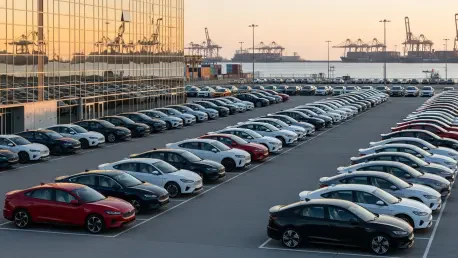
A rising tide of protectionism is fundamentally altering the global automotive trade as the European Union implements the Industry Accelerator Act to favor domestic manufacturing. This policy, often referred to as the “Made in Europe” mandate, restricts financial incentives and tax breaks to vehicles and batteries that are largely produced within the trade bloc’s borders. By excluding products that rely heavily on outside supply chains, the policy creates a significant barrier for manufacturers in the United Kingdom, Turkey, and South Korea who have traditionally used these regions as export hubs. This legislative shift is designed to revitalize the European industrial sector and reduce its dependence on foreign technology, but it also increases the complexity of global production. Automakers are now forced to navigate a patchwork of regional requirements that dictate where a car must be built to be economically viable, leading to a localized manufacturing model that prioritizes political alignment over simple cost efficiency.
The resulting fragmentation of the industry is dismantling the concept of a global car platform, as manufacturers are forced to tailor their supply chains specifically to the regulatory demands of each major trade zone. This has led to a radical restructuring of global partnerships, as companies seek to establish local joint ventures to avoid the penalties associated with high import tariffs. Previously, free trade agreements allowed manufacturers in regions like the UK or South Korea to export vehicles with minimal friction, but the new focus on “Made in Europe” status threatens to leave these facilities on the outside of critical incentive programs. This environment is forcing a shift toward a more localized value chain, where the proximity of raw material processing, component manufacturing, and final assembly is a prerequisite for market access. Consequently, the automotive industry is moving away from the efficiency of globalized sourcing in favor of a more secure, albeit more expensive, regionalized production system.
Strategic Adaptation: The Growth of Modular Manufacturing
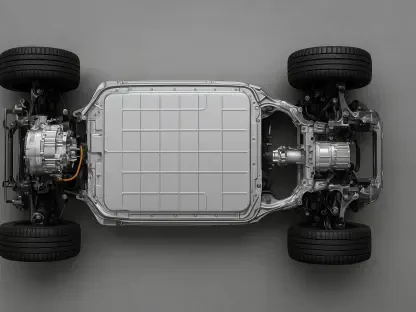
Interestingly, these protectionist barriers have triggered a strategic counter-move from Chinese manufacturers who are now investing directly in European factory space to maintain their market share. As domestic European brands reduce their output and leave manufacturing capacity unused, companies like Leapmotor and Geely are establishing assembly lines in countries like Spain, Italy, and Poland. By utilizing local labor and sourcing a portion of their components within the European Union, these firms can effectively bypass high import tariffs and qualify for local green incentives. This localized strategy not only allows Chinese firms to remain competitive in a protected market but also creates a unique synergy where foreign capital supports the continuation of European industrial sites. The transition toward modular manufacturing represents the final piece of this puzzle, as companies prioritize flexible systems that can switch between internal combustion, hybrid, and electric drivetrains within a single facility to reduce the risk.
The global automotive industry successfully adapted to these challenges by embracing a more diverse and pragmatic approach to vehicle manufacturing. Rather than pursuing a singular path toward electrification at the expense of fiscal stability, companies integrated hybrid systems and modular production techniques to maintain a steady market presence. This period of recalibration allowed manufacturers to build localized supply chains that complied with new protectionist mandates while still benefiting from global innovation in battery chemistry and engine efficiency. The focus eventually shifted toward creating a sustainable and resilient industrial base that could survive the unpredictability of international trade relations and varying regional infrastructure. By prioritizing functional agility and responding to the genuine needs of consumers, the sector ensured its long-term viability in a fragmented global economy. These strategic adjustments laid the groundwork for a future where sustainable mobility is defined by a variety of efficient technologies.