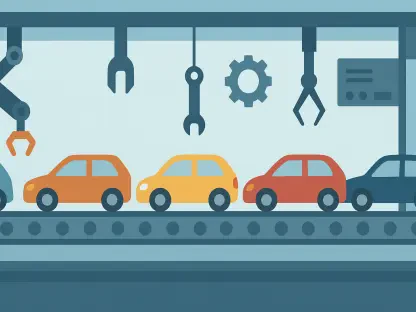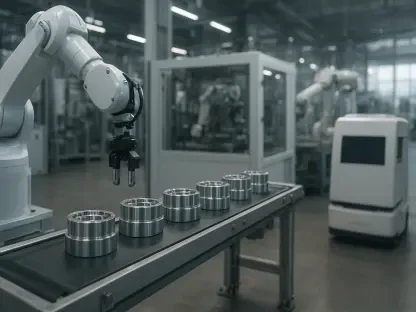

Modern industrial facilities are no longer isolated islands of mechanical production but have evolved into hyper-connected nodes within a global digital nervous system. As the 2026 landscape unfolds, manufacturers face the daunting reality that a single breach in a peripheral sensor can cascade into a complete operational shutdown, costing millions in lost revenue and reputational damage. The traditional focus on defensive perimeters is rapidly giving way to a more comprehensive philosophy known as cyber resilience, which prioritizes the ability to withstand and recover from inevitable disruptions. This shift is driven by the increasing sophistication of ransomware-as-a-service and state-sponsored actors targeting critical infrastructure with unprecedented precision. While the sprint toward full automation offers immense efficiency gains, it also creates an expanded attack surface that requires a fundamental reimagining of how security is woven into the very fabric of the production floor and the supply chain.
Bridging the Divide: Integrating Information and Operations
Converging Systems: The Risk of Interconnectedness
The convergence of Information Technology and Operational Technology has bridged the gap between the corporate office and the factory floor, yet this integration brings significant vulnerabilities. Traditionally, OT environments relied on air-gapping—physical isolation from the internet—to maintain security, but the demand for real-time data analytics and remote monitoring has rendered this method obsolete. In the current 2026 environment, legacy hardware often runs on outdated protocols that were never designed to face modern internet-borne threats, making them easy targets for lateral movement within a network. When an attacker gains access to a business system, they can often pivot into the industrial control systems that manage everything from temperature sensors to robotic arms. This interconnectedness means that a breach is no longer just a data privacy issue but a physical safety hazard. Consequently, manufacturers are adopting micro-segmentation strategies that isolate critical processes.
AI Implementation: Real-Time Detection and Response
Artificial intelligence has moved from a speculative tool to a central pillar of industrial defense strategies, providing the speed necessary to counter automated attacks. Traditional signature-based detection methods are largely ineffective against the polymorphic malware and zero-day exploits that characterize the current threat landscape in 2026. Instead, manufacturers are deploying advanced behavioral analytics that establish a baseline of normal operations for every machine and user on the network. When an anomaly occurs—such as a programmable logic controller attempting to communicate with an external server—the AI can instantly flag the activity or automatically quarantine the affected device. This proactive stance reduces the dwell time of attackers from months to minutes, preventing them from establishing a permanent foothold. Furthermore, these AI systems are being integrated with automated response playbooks that can reset configurations without requiring human intervention.
Strategic Defense: Implementing Resilient Frameworks
Zero Trust: Securing Every Digital Interaction
Adopting a Zero Trust architecture represents a fundamental pivot in how manufacturing security is conceptualized, moving away from the trust but verify model to one that assumes no user or device is inherently safe. This approach requires rigorous identity verification for every access request, regardless of whether it originates inside or outside the corporate firewall. In 2026, the proliferation of Internet of Things devices across the warehouse floor has made this level of scrutiny essential, as each smart tool represents a potential entry point for malicious actors. By implementing strict least-privilege access controls, companies ensure that employees and automated systems only have the permissions necessary to perform their specific tasks. For instance, a maintenance contractor might only be granted temporary, monitored access to a specific piece of machinery. This granular control limits the blast radius of an incident, ensuring that even if a credential is stolen, the attacker remains trapped.
Recovery Protocols: Ensuring Continuous Production
Robust disaster recovery and business continuity planning transformed how organizations viewed the inevitable reality of a digital compromise. Rather than aiming for an impossible state of perfect security, leadership focused on the speed and efficiency of restoration efforts to minimize downtime. In 2026, successful manufacturers established redundant backups and isolated clean rooms where systems could be rebuilt and verified before being reintegrated into the live environment. Engineering teams conducted regular blackout simulations to test the resilience of their fallback protocols, ensuring that staff remained proficient in manual overrides and offline production methods. These proactive measures allowed firms to maintain essential outputs even while under active duress, shifting the narrative from crisis management to strategic endurance. By prioritizing the ability to bounce back quickly, the industry moved toward a future where cyber events were treated as manageable operational hiccups.