
The traditional pace of scientific discovery, often characterized by years of painstaking trial and error in a manual laboratory setting, is currently undergoing a radical transformation as Lawrence Livermore National Laboratory integrates high-level artificial intelligence and modular robotics. This shift away from legacy methodologies represents a broader commitment to maintaining national security by ensuring that material innovations move from the conceptual stage to industrial application with unprecedented speed. By merging physical hardware with sophisticated software architectures, the laboratory is effectively building a bridge between the digital and the physical, allowing for a seamless flow of data that informs every step of the manufacturing process. The goal is not merely to speed up existing tasks but to fundamentally redefine how materials are discovered, tested, and certified for use in critical environments. This evolution is necessitated by a global landscape where technological superiority is directly tied to the ability to iterate rapidly on complex hardware challenges. As these systems become more integrated, the traditional boundaries between the workshop and the computer lab continue to blur, creating a unified environment where autonomous agents and human experts work in tandem to solve problems that were once considered insurmountable within a reasonable timeframe. This structural overhaul serves as a model for the next generation of advanced manufacturing, where intelligence is embedded into the very fabric of production and research.
The Transition to Autonomous Research Environments: Speed and Strategy
The primary driver behind this systemic overhaul is the immediate requirement for extreme agility in a geopolitical environment that no longer allows for the luxury of decade-long development cycles. In the past, the journey from identifying a needed material to deploying it in a defense or energy application involved countless hours of manual pipetting, mixing, and physical testing, often leading to dead ends that consumed years of funding and effort. To circumvent these bottlenecks, researchers at the laboratory have moved toward a model where the experimentation process itself is digitized and accelerated through machine learning algorithms. This shift allows the laboratory to respond to emerging threats or technological gaps with a level of responsiveness that mimics software development rather than traditional heavy industry. By creating a system that can iterate on high-performance materials in weeks rather than years, the facility ensures that national interests are protected by a technological edge that is constantly being refreshed. This environment demands a departure from the batch processing of the past, favoring instead a continuous stream of discovery that leverages high-performance computing to predict outcomes before a single physical sample is even created. The result is a more resilient and proactive approach to scientific inquiry that anticipates future needs through rapid digital and physical prototyping.
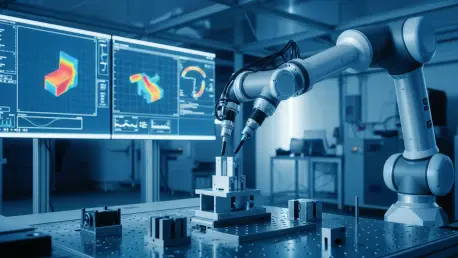
A vital component of this transition is the sharp distinction between simple automation and true autonomy within the laboratory setting. While automation typically handles repetitive, low-complexity tasks like moving samples from one station to another, autonomy introduces a reasoning layer that allows the system to make decisions based on the data it generates. This is achieved through a closed-loop system where AI analyzes the results of an experiment in real-time and determines the optimal parameters for the next test without requiring a human to intervene and interpret the findings. This design, build, test, and learn cycle operates at machine speeds, effectively mimicking the scientific method while removing the human-induced delays that traditionally slow down the process. By implementing these autonomous laboratories, the institution is capable of exploring a much wider range of experimental variables than would be possible for a human team. This capability is particularly useful when dealing with multi-faceted problems where small changes in chemical composition or temperature can lead to vastly different material properties. The autonomous system can navigate these complexities with a level of precision and consistency that ensures every experiment contributes valuable data back into the central model, creating a self-improving loop of scientific knowledge.
Bridging the Physical and Digital Divide: Project ARMOR and Project APEX
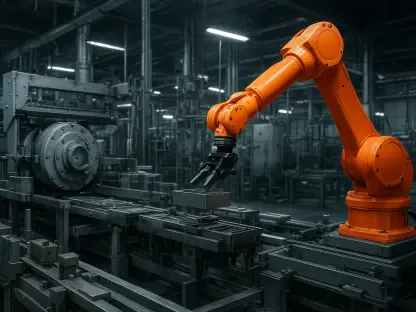
Overcoming the physical and intellectual hurdles of advanced manufacturing requires a new generation of robotic systems that can operate outside of the rigid constraints of a factory floor. Project ARMOR at the laboratory focuses on developing robots capable of navigating unstructured environments where the placement of tools and materials may change from day to day. Traditional industrial robots are often programmed for static environments where every movement is pre-defined, but scientific research requires a degree of flexibility that standard automation cannot provide. The robotic systems within Project ARMOR use advanced computer vision and tactile sensors to adapt to their surroundings, allowing them to manipulate delicate laboratory equipment and navigate cluttered spaces with the same dexterity as a human technician. This flexibility ensures that the AI’s digital insights can be translated into physical actions without the need for a total redesign of the laboratory layout. By creating robots that can learn and adapt to their physical context, the laboratory has bridged the gap between digital simulation and real-world execution, ensuring that the physical limitations of hardware do not become a bottleneck for the speed of the software.
On the intellectual side of this technological marriage, Project APEX utilizes machine learning to master the nearly infinite possibilities of metallic alloy combinations. Identifying the ideal blend of chemicals for a specific high-performance application is a hyper-dimensional challenge that far exceeds the cognitive limits of even the most experienced human metallurgists. There are billions of potential combinations of elements, and traditional trial-and-error methods can only scratch the surface of this vast chemical space. Project APEX addresses this by using AI to scan these possibilities and identify “islands” of high performance that would likely be overlooked by human researchers. The system can predict the structural and thermal properties of a theoretical alloy with high accuracy, allowing researchers to focus their physical testing on only the most promising candidates. This targeted approach significantly reduces the waste of materials and time, as the AI acts as a sophisticated filter that refines the search space down to a manageable number of high-value experiments. Through this synergy of robotics and intelligent search, the laboratory is capable of uncovering novel materials that possess the specific durability and heat-resistance characteristics required for next-generation aerospace and defense technologies.
Reimagining the Professional Landscape: Collaboration and Connectivity
The introduction of these advanced technologies does not signal the displacement of human expertise but rather a fundamental redefinition of the scientist’s role within the research ecosystem. By offloading the more tedious and repetitive aspects of laboratory work, such as fluid handling, data entry, and routine monitoring, researchers are liberated to focus on high-level strategy and the generation of new hypotheses. In this updated framework, the scientist acts as a manager of autonomous systems, directing the AI toward complex problems and providing the critical scientific context that machines still lack. This partnership allows for a more ambitious scope of research, as human intuition and machine processing power are combined to tackle projects that were once deemed too labor-intensive to be practical. The transition requires a shift in mindset, where the ability to design an autonomous workflow becomes as important as the ability to conduct a manual experiment. This evolution in professional practice ensures that the laboratory remains an attractive environment for the world’s top scientific talent, as researchers can spend more of their time on the creative and analytical aspects of their work that lead to major breakthroughs.
One of the more persistent challenges in this digital evolution is the integration of legacy laboratory equipment with modern, high-speed digital networks. Many of the most specialized tools in the scientific arsenal were originally designed for manual operation and lack the native connectivity required to participate in an autonomous experimental loop. To solve this, engineers at the laboratory are actively working on custom software interfaces and hardware retrofits that “digitize” these older instruments, allowing them to communicate with the central AI coordinator. This process of creating a fully connected digital thread across the entire production workflow is essential for ensuring that data is captured accurately and consistently at every stage. When every piece of equipment, from the smallest centrifuge to the largest 3D printer, is part of a unified network, the system can monitor its own health and performance with a high degree of granularity. This connectivity also facilitates a more transparent and reproducible scientific process, as every variable and measurement is recorded in a digital ledger that can be audited and analyzed long after the experiment is complete. This focus on digital integration ensures that the laboratory’s entire infrastructure is responsive to the needs of the autonomous systems that now drive its core mission.
Quality Assurance and Security: The Path to Industrial Readiness
The practical benefits of integrating AI into the manufacturing pipeline are perhaps most visible in the field of additive manufacturing, where inspection has traditionally been a significant hurdle. In standard 3D printing processes, the quality of a part is often only determined after the build is finished, which can lead to the wasting of expensive materials and precious time if a defect is discovered during post-processing. By applying machine learning to the printing process, the laboratory has implemented a system of real-time qualification where every layer of a part is inspected as it is being formed. High-speed cameras and sensors capture data during the build, and AI algorithms analyze this information in milliseconds to detect any deviations from the design. If a potential flaw is identified, the system can adjust the printing parameters on the fly or stop the build before more resources are wasted. This level of in-process monitoring ensures that every part meets the rigorous standards required for mission-critical applications, effectively moving the quality control process into the production phase itself. This development not only increases the reliability of 3D-printed components but also accelerates the timeline for certifying new parts for use in the field.
The laboratory established a framework where security protocols were integrated from the inception phase, ensuring that the transition to autonomy did not compromise safety or data integrity. Human oversight remained the primary guardrail, while the system optimized its own workflows through constant feedback loops that prioritized the protection of sensitive information. This approach successfully balanced the need for rapid material discovery with the necessity of rigorous accountability in high-stakes environments. The integration of “secure by design” principles meant that the digital infrastructure was fortified against external threats, while internal processes remained transparent and verifiable. Moving forward, the focus shifted toward scaling these autonomous capabilities across broader categories of manufacturing and material science, effectively cementing the laboratory’s position as a leader in the digital industrial revolution. By refining these systems, the institution demonstrated that the fusion of physical expertise and high-performance computing provided a definitive advantage in solving the most complex challenges of national security. The lessons learned during this period of rapid integration provided a roadmap for future industrial efforts, highlighting the importance of building resilience and intelligence into every level of the technological stack.