
The global automotive landscape is currently undergoing a radical shift as manufacturers race to overcome the energy density limitations of traditional lithium-ion cells. While liquid electrolytes have served the industry well, the demand for longer range and faster charging speeds has pushed existing chemistry to its absolute physical limits. This pressure catalyzed a significant partnership between SK On, a global leader in battery manufacturing, and Factorial, a pioneer in solid-state technology. By combining SK On’s massive manufacturing infrastructure with Factorial’s proprietary Factorial Electrolyte System Technology, the duo aims to solve the scalability issues that historically kept solid-state batteries in the laboratory. This collaboration represents a critical turning point for the electric vehicle market, shifting focus from theoretical energy breakthroughs to the practical realities of high-volume production. As consumer expectations for range and safety grow, the success of this joint venture could define the next decade of mobility and accelerate the global transition away from internal combustion engines while establishing a new standard for performance.
Engineering High-Volume Solid-State Production
Optimizing Roll-To-Roll Assembly Lines
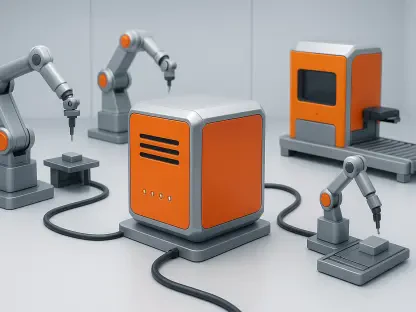
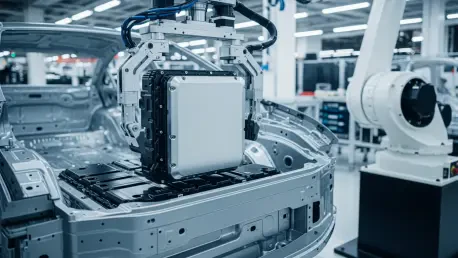
The transition from pilot-scale production to Giga-scale manufacturing requires a fundamental rethinking of how battery cells are layered and sealed. SK On brings decades of experience in pouch-cell manufacturing, which provides a robust framework for integrating Factorial’s solid-state components without discarding existing equipment. By leveraging existing production lines, the partners are reducing the capital expenditure typically associated with new technology rollouts, allowing for a faster transition to commercial availability. The primary challenge lies in maintaining the integrity of the solid electrolyte during high-speed coating and stacking processes, where even microscopic imperfections can lead to performance degradation. Engineers are currently refining the roll-to-roll manufacturing process to ensure that the solid electrolyte remains uniform across large surface areas, a feat that requires extreme precision and environmental control. This methodical approach ensures that the resulting batteries meet the rigorous quality standards required by major automotive manufacturers.
Beyond the mechanical assembly, the partnership focuses on the integration of smart manufacturing technologies to monitor cell quality in real-time. Utilizing advanced sensors and AI-driven analytics, the production lines can now detect variances in electrolyte thickness or electrode density before a cell even reaches the final assembly stage. This level of oversight is essential for solid-state batteries, as the lack of a liquid medium makes traditional diagnostic methods more difficult to implement. By identifying defects early, SK On can significantly reduce waste and improve the overall yield of high-quality cells, which is a major factor in driving down the cost per kilowatt-hour. Furthermore, the collaboration allows for a rapid feedback loop between Factorial’s research teams and SK On’s factory floor, ensuring that material improvements are quickly translated into production adjustments. This synergy is vital for scaling a technology that many previously thought would remain prohibitively expensive for the mass market.
Advancing Electrolyte Material Stability
The heart of this technological leap lies in the proprietary FEST platform, which utilizes a quasi-solid electrolyte that bridges the gap between traditional liquids and fully ceramic solids. This unique approach allows for significantly higher energy density because it enables the use of lithium-metal anodes, which can store far more energy than the graphite counterparts found in today’s vehicles. Factorial has demonstrated that this electrolyte can operate safely at higher temperatures and voltages, effectively removing the need for complex and heavy cooling systems. For SK On, integrating this material means they can offer automotive clients batteries that are not only lighter but also inherently safer against thermal runaway. The engineering teams are currently focused on optimizing the interface between the electrolyte and the electrodes to ensure efficient ion transport, which is critical for achieving the fast-charging capabilities that modern drivers demand for their primary vehicles.
In addition to energy density, the longevity of these cells is a major focus of the current development cycle between the two companies. Solid-state batteries often struggle with cycle life due to the mechanical stresses caused by the expansion and contraction of lithium metal during charge and discharge cycles. To address this, the partnership is investigating advanced binder materials and flexible electrolyte structures that can accommodate these physical changes without cracking or losing contact with the electrodes. By extending the operational life of the battery to match or exceed the life of the vehicle, the partners are creating a more sustainable value proposition for both consumers and fleet operators. This focus on durability is complemented by rigorous environmental testing, where cells are subjected to extreme cold and high-humidity scenarios to ensure reliability across diverse global climates. The resulting data provides a roadmap for further refinements to the chemistry and physical housing.
Strategic Implementation and Safety Protocols
Strengthening the Global Supply Chain
Establishing a secure and sustainable supply chain for specialized solid-state materials is as important as the technology itself. SK On’s extensive network of material suppliers provides a strategic advantage, allowing for the rapid sourcing of high-purity precursors needed for Factorial’s electrolyte. The two companies are working closely to localize production of key components, reducing the carbon footprint associated with long-distance shipping and mitigating the risks of geopolitical disruptions. This vertical integration strategy ensures that as demand for solid-state batteries increases, the production capacity can scale accordingly without hitting bottlenecks in raw material availability. Moreover, the partnership encourages the development of new recycling protocols specifically designed for solid-state architectures, which differ significantly from liquid-based systems. By planning for the end-of-life phase during the initial design process, the partners are positioning themselves as leaders.
Collaboration with automotive giants such as Hyundai Motor Company, Kia, and Mercedes-Benz further solidifies the market position of this venture. These relationships provide a direct path for vehicle integration, allowing for the co-development of battery packs that are tailor-made for specific vehicle platforms. By working with these OEMs, SK On and Factorial can align their production timelines with upcoming vehicle launches, ensuring that the supply of solid-state cells meets the projected market demand. This proactive engagement also allows for the refinement of battery management systems that are optimized for the unique discharge characteristics of solid-state chemistry. As these partnerships mature, the industry expects to see a standardizing effect where the FEST platform becomes a benchmark for safety and performance in the luxury and performance EV segments. The ability to demonstrate a clear path to commercialization through these high-profile alliances provides the necessary financial stability.
Establishing Validated Performance Benchmarks
Safety remains the paramount concern for both regulators and consumers when evaluating new battery technologies. The inherent stability of solid electrolytes significantly reduces the risk of fire, as they are non-flammable and do not leak like their liquid counterparts. SK On and Factorial are conducting extensive crash-simulation and puncture tests to prove that their solid-state cells remain stable even under extreme mechanical stress. These results are being shared with international safety organizations to help establish the new standards that will govern the next generation of electric vehicles. By being at the forefront of this safety revolution, the partnership is not just selling a product but also building public trust in electric mobility. This trust is essential for moving beyond early adopters and convincing the mass market that electric cars are a safe and reliable choice for families. The elimination of flammable liquid electrolyte also allows for simpler pack designs.
Beyond physical safety, the thermal stability of solid-state cells allows for significantly faster charging rates without the risk of overheating. Current fast-charging stations often have to throttle power delivery to protect liquid electrolytes from breaking down, but the FEST technology can handle higher current densities with ease. This capability is a game-changer for long-distance travel, as it brings the refueling experience closer to that of a traditional internal combustion engine vehicle. SK On is currently testing these cells with high-voltage charging infrastructure to determine the upper limits of speed and efficiency. The goal is to provide a seamless user experience where a ten-minute charge can provide hundreds of miles of range, effectively eliminating “range anxiety” as a barrier to EV adoption. As these cells move into final validation stages, the focus remains on ensuring that this high-performance capability does not come at the expense of long-term reliability or structural integrity.
Future Directions for Energy Storage
The collaboration between SK On and Factorial successfully demonstrated that the primary hurdles to solid-state battery adoption were not insurmountable when approached with a mix of innovative chemistry and industrial-scale manufacturing expertise. By prioritizing the compatibility of new materials with existing production infrastructure, the partners managed to shorten the timeline for market entry significantly. Moving forward, the industry should look to this model of cooperation as a blueprint for bringing other emerging technologies to fruition. Stakeholders must now focus on further diversifying the raw material supply chain and investing in the specialized workforce required to operate advanced solid-state production facilities. As the initial batch of vehicles equipped with this technology reaches the hands of consumers, the real-world data gathered will be invaluable for the next iteration of cell design. Continued investment in recycling infrastructure and standardized safety protocols will be necessary to ensure that this technology remains a sustainable and trusted pillar of the global transportation network.