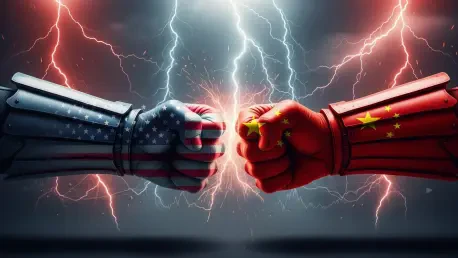

The delicate equilibrium of global commerce currently rests on a razor’s edge as the leaders of the world’s two most formidable powers gather in Beijing to negotiate a future that feels increasingly fractured. This roundup explores the multifaceted perspectives on the summit, examining how the meeting serves as a buffer against total economic decoupling. Analysts suggest that the primary goal is not a return to past cooperation but the establishment of a manageable friction that prevents a catastrophic rupture in the international order.
The High-Stakes Diplomacy of the Beijing Summit
Trade strategists observe that the Beijing summit is arriving at a critical juncture where neither Washington nor Beijing can afford an unmitigated disaster, despite their growing list of grievances. The atmosphere is thick with the necessity of managing a volatile economic landscape where traditional rules no longer seem to apply. Leaders are attempting to strike a balance between domestic political pressure for toughness and the cold reality of shared financial dependencies.
Experts argue that this summit acts as a vital safety valve, preventing a total breakdown of the world’s two largest economies. While the ideological chasm remains wide, the immediate need to prevent supply chain chaos and inflationary spikes provides a temporary floor for the relationship. This diplomatic engagement is less about long-term friendship and more about a strategic pause to recalibrate after years of intense tariff escalation and geopolitical maneuvering.
Observers are focusing on how the summit previews a deeper exploration of shifting trade data and institutional pivots. The meeting is expected to shed light on the clashing strategic visions for global dominance, particularly in sectors that will define the next decade of industrial growth. This gathering represents an attempt to move away from chaotic policy swings toward a more predictable, albeit competitive, framework for interaction.
Deconstructing the New Economic Architecture and Geopolitical Friction
The Growing Disconnect Between Political Rhetoric and Trade Data
Economic commentators point to a widening gap between official administration claims of immense profitability and the sobering reality reflected in recent trade figures. While political messaging often emphasizes the strength of domestic industries, recent data reveals a substantial $50 billion drop in American exports over a relatively short period. This decline highlights the difficulty of maintaining export momentum when access to major overseas markets becomes restricted by retaliatory measures.
The structural shift in American imports is becoming impossible to ignore, as manufacturing dominance moves away from the mainland. Taiwan, Vietnam, and India are rapidly displacing traditional centers of production, a transition driven by both security concerns and cost considerations. This diversification suggests that the era of relying on a single manufacturing hub is ending, replaced by a more fragmented and geographically dispersed network of suppliers.
Simultaneously, the collapse of agricultural trade and the race for AI chip supremacy have created new points of friction. The agricultural sector, once a cornerstone of bilateral agreements, is struggling as buyers seek alternative sources for commodities like soybeans. Meanwhile, the competition for advanced semiconductors has moved beyond simple trade and into the realm of national security, where every technological gain is viewed as a potential strategic threat.
Institutionalizing “Safe” Trade Through the Board of Trade
Trade specialists are closely evaluating a strategic pivot led by Jamieson Greer that aims to create a government-to-government framework for commodities. This “Board of Trade” model is seen as an attempt to institutionalize economic interactions, moving them away from the unpredictable nature of executive orders. By creating a structured platform for trade, the goal is to provide a level of stability for non-sensitive goods while maintaining strict controls on high-tech exports.
The legal necessity of this shift is underscored by recent domestic court rulings that have challenged the validity of unilateral tariff hikes. Strategists suggest that the administration is seeking more sustainable methods to manage trade tensions that can withstand judicial scrutiny. This move toward a more formal institutional framework represents an admission that the previous era of ad-hoc economic warfare was too legally and economically disruptive for long-term use.
The involvement of corporate heavyweights like Elon Musk and Tim Cook further signals a desire to stabilize the economic relationship through private-sector anchors. These leaders represent a stabilizing force, as their sprawling manufacturing and consumer networks require a degree of predictability that only high-level diplomacy can provide. Their presence suggests that while the political climate remains chilly, the commercial ties between the two nations are still deep enough to warrant a coordinated management effort.
Divergent Theories of Victory in the Quest for Global Influence
Geopolitical analysts contrast the American transactional approach to trade with a more systemic pursuit of dominance favored by Beijing. The United States often views trade through the lens of immediate deficits and specific deal-making, seeking quick wins that appeal to domestic constituencies. In contrast, China’s strategy appears more focused on long-term systemic influence, leveraging its industrial capacity to create global dependencies that are difficult to untangle.
The disruptive impact of a 21% growth in electric vehicle exports has sent shockwaves through Western markets. This surge in high-tech manufacturing capacity poses a direct challenge to established automotive industries in the United States and Europe. Experts argue that this is not just a trade issue but a fundamental shift in industrial power, where the race for green energy dominance is becoming the new frontline of global competition.
There is a growing skepticism regarding the assumption that trade truces can resolve these deep-seated rivalries. While temporary agreements might provide short-term relief, they do little to address the fundamental competition over high-tech sectors and the future of the global energy grid. The underlying friction suggests that even during periods of calm, both sides are working feverishly to secure advantages that will define the global order for the next generation.
The Energy Pivot and the Weaponization of Rare Earth Minerals
Energy strategists explore how regional conflicts in the Middle East are accelerating a move toward renewable energy monopolies. As instability threatens traditional oil supplies, the push for alternative energy sources has become a matter of national security. This transition, however, brings its own set of risks, as the supply chains for renewable technologies are increasingly concentrated in hands that may not always be friendly to Western interests.
The strategic risk posed by control over mineral supply chains is a recurring theme in defense and consumer electronics discussions. These materials are essential for everything from sophisticated defense systems to everyday smartphones, and any disruption in their availability could have catastrophic effects on modern infrastructure. Analysts warn that the weaponization of these resources is a real possibility that must be addressed through a combination of domestic mining and international partnerships.
Friction over international maritime norms and sanctions on Iranian oil further complicates the energy landscape. While some powers seek to enforce international standards and restrict the flow of resources to sanctioned entities, others view these measures as obstacles to their own economic growth. This disagreement over maritime conduct and resource management highlights the difficulty of establishing a common set of rules in a world where interests are increasingly at odds.
Strategic Takeaways for Navigating Managed Competition
Industry experts summarize the current shift as a transition from a cooperative economic model to a framework of “managed competition.” This new era is defined by risk mitigation and the recognition that the interests of the two superpowers are fundamentally incompatible in many key areas. Businesses are being urged to prepare for a world where economic efficiency is often secondary to national security considerations and supply chain resilience.
Recommendations for building domestic resilience often center on rare earth processing and high-end semiconductor manufacturing. The consensus among policymakers is that relying on overseas sources for critical technologies is no longer a viable long-term strategy. Efforts to bring these industries back to domestic shores are seen as essential for maintaining a competitive edge and ensuring that the national infrastructure remains secure against external shocks.
Market analysts suggest that businesses must adapt to a “dual-track” trade environment where sensitive technology is decoupled but commodities remain fluid. This requires a sophisticated understanding of which sectors are subject to intense political scrutiny and which are allowed to operate under more traditional market conditions. Navigating this landscape requires agility and a deep awareness of the shifting geopolitical winds that influence trade policy.
The Future of the Fragile Truce in a Polarized World
The Beijing summit was ultimately viewed by many observers as a superficial truce intended to prevent an immediate and catastrophic economic collapse. The discussions underscored that while both sides were willing to talk, the fundamental issues remained unresolved. The agreements reached were seen as temporary measures that provided a brief respite without addressing the root causes of the ongoing friction. This period of relative calm was characterized by a realization that the global economy was too integrated for a sudden break, yet too competitive for a lasting peace.
The technological “cold war” continued to exert a profound impact on global logistics and maritime influence. Control over the digital and physical pathways of commerce became the primary focus of strategic competition, as each power sought to secure its position in the evolving global order. These tensions were not confined to trade data but were reflected in the way international waters were navigated and how global supply chains were restructured to prioritize security over cost. The competition for influence extended into every corner of the technological landscape, from the depths of the ocean to the heights of satellite communications.
The meeting closed with a sobering perspective on whether these two superpowers could coexist while pursuing incompatible visions of the world. The interactions suggested that the path forward would be defined by a series of managed conflicts and strategic retreats rather than a comprehensive resolution. Leaders moved toward a future where the best possible outcome was a state of permanent competition that remained below the threshold of open hostility. The focus shifted to building internal strength and regional alliances, recognizing that the era of unfettered globalization was replaced by a more guarded and fragmented reality.