
A single mistyped digit on a loading dock or a misplaced pallet in a sprawling distribution center can trigger a catastrophic ripple effect throughout an entire global supply chain, costing enterprises millions in lost time and missed opportunities. In the current high-stakes environment of 2026, manual data entry has become an unacceptable liability that creates bottlenecks at every stage of fulfillment. The sheer velocity of global commerce requires a level of precision that human operators simply cannot maintain without technological assistance. Consequently, the focus of organizational leadership has shifted from retrospective analysis to maintaining an absolute, real-time awareness of every physical asset in motion. By implementing a sophisticated infrastructure of RFID and barcode technology, companies are effectively eliminating the operational friction that once defined the industrial age. This transition ensures that the digital record of an asset moves in lockstep with the physical item itself, providing a layer of transparency that is now a prerequisite for survival in any modern market.
Comparing Primary Scanning Technologies: Barcodes and Radio Frequency
Evaluating the Manual Interface: Limitations of Optical Scanning
Barcodes have served as the reliable backbone of global commerce for decades, prized primarily for their simplicity and low entry cost. These optical labels, whether in traditional linear formats or more complex two-dimensional codes, provide a universal language for tracking everything from consumer electronics to industrial raw materials. However, their reliance on a direct line of sight presents a significant hurdle in high-volume environments where speed is the primary objective. Each scan requires a manual interaction, forcing workers to pause their natural workflow to physically align a scanner with a label. In a warehouse processing thousands of items per hour, these small, repetitive interruptions add up to significant hours of lost productivity. Furthermore, barcodes are susceptible to environmental damage; a smudged or torn label can render an entire pallet “invisible” to the system, necessitating time-consuming manual intervention and increasing the likelihood of data entry errors.
Automating the Identification Process: Advantages of Radio Waves
Radio Frequency Identification technology represents a major evolutionary step by using radio signals to identify and track tagged items without the need for visual alignment. While traditional barcodes require a human to pull information through a manual scan, RFID pushes data to the system automatically as items pass through dock doors or designated checkpoints. This fundamental shift allows for bulk processing, where an entire truckload of goods can be inventoried in seconds rather than hours. The technology functions effectively even in harsh conditions where dust, grease, or obstructed views would compromise an optical scanner. By embedding data in small chips that communicate with overhead readers, companies can maintain a continuous stream of information regarding the location and status of high-value assets. This seamless flow of data requires significantly less human intervention, allowing the workforce to focus on strategic tasks rather than the tedious mechanics of data capture.
Optimizing Industrial Workflows: Practical Sector Applications
Enhancing Assembly Lines: Precision in Modern Manufacturing
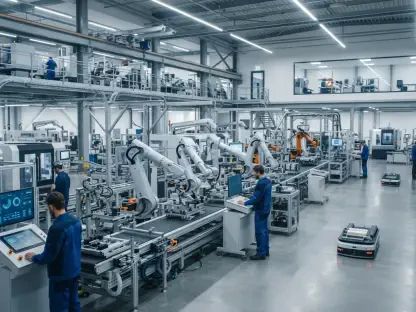
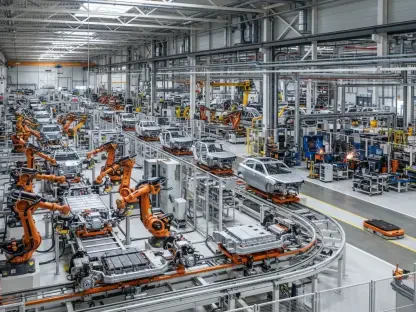
Transitioning to smarter tracking is a strategic necessity for manufacturers who want to remain competitive in an increasingly crowded global market. Within a complex assembly environment, RFID tags are used to track work-in-progress components through every stage of production, ensuring that the correct parts reach the right station at the precise moment they are needed. This level of granular visibility acts as a corrective lens for leadership, highlighting silent losses such as production downtime, inventory inaccuracies, and excess labor costs. When an assembly line can automatically verify that a component matches the specific requirements of a customized order, the rate of manufacturing defects drops precipitously. By aligning the digital inventory with the physical reality on the factory floor, managers can prevent out-of-stock scenarios and reallocate staff to higher-value responsibilities. This integrated approach transforms the factory from a series of disconnected tasks into a synchronized, data-driven engine.
Managing Critical Assets: High-Stakes Tracking in Healthcare
The versatility of these tracking tools allows for specialized applications across demanding sectors like healthcare, where asset visibility can literally be a matter of life or death. In a busy hospital environment, locating critical medical equipment such as ventilators, infusion pumps, or crash carts during an emergency is often a chaotic process if tracked manually. By equipping these assets with RFID tags, medical staff can instantly identify the location of the nearest available unit through a centralized digital interface. This efficiency directly translates to better operational outcomes and significantly improved asset utilization, as hospitals can maintain smaller, more efficient inventories when they know exactly where every device is located. Moreover, automated tracking helps in managing the sterilization cycles of surgical instruments and the expiration dates of pharmaceuticals. These real-world applications demonstrate how precise tracking provides a foundation for safety and reliability that manual logs could never achieve.
Scaling Global Logistics: The Power of Multi-Layered Tracking
Bridging Commercial Gaps: From Warehouses to Digital Storefronts
In the world of logistics, the ability to verify shipments automatically during the loading process ensures that orders reach their destinations without the need for a manual scan of every individual box. This level of precision is the essential foundation of modern retail fulfillment, allowing stores to confidently promise immediate item availability to online shoppers who expect instant gratification. By bridging the gap between digital storefronts and the physical shelves of a brick-and-mortar location, businesses can provide a superior, frictionless customer experience. When a customer places an order, the system knows with absolute certainty that the item is in stock and exactly where it is located within the warehouse. This eliminates the frustration of canceled orders and shipping delays, which are the primary drivers of customer churn in the current economy. Total transparency throughout the delivery cycle allows for a proactive approach to customer service that builds long-term brand loyalty.
Implementing Hybrid Strategies: Balancing Cost and Granularity
Sophisticated operations are moving away from a one-size-fits-all mentality in favor of hybrid tracking strategies that use the best tool for each specific job. By combining inexpensive barcodes for outbound parcels with RFID for internal movements and IoT sensors for environmental monitoring, companies can create a cost-effective visibility layer. This multi-layered approach ensures that every asset is tracked using the most appropriate technology for its specific value and journey. For example, a high-value electronic component might be tracked via RFID throughout the assembly process, while the final packaged product is shipped with a standard barcode for compatibility with third-party logistics providers. This strategy allows businesses to scale their tracking capabilities without incurring the prohibitive costs of a full-scale RFID rollout for low-margin items. By intelligently mixing these technologies, organizations achieve a balance between comprehensive visibility and fiscal responsibility.
Transforming Organizational Intelligence: Data Integration Strategies
Creating Centralized Systems: The Value of Unified Data Streams
The true power of these technologies lies not in the hardware tags themselves, but in the centralized data ecosystems that process and interpret the information. Integrating tracking data into a single platform or Enterprise Resource Planning system eliminates information silos and provides a single source of truth for the entire organization. This digital maturity allows managers to move from reactive record-keeping to proactive decision-making, such as predicting equipment failures before they occur or identifying bottlenecks in the supply chain before they cause a delay. When data from the warehouse floor flows directly into the financial and planning modules of a business, leadership can make adjustments based on facts rather than intuition. This integration ensures that every department, from procurement to sales, is operating with the same set of real-time data, which significantly reduces internal conflict and improves the overall speed of the organizational response to market shifts.
Developing Long-Term Resilience: Preparing for Scalable Growth
Investing in RFID and barcode integration is ultimately about building operational resilience and a foundation for scalable growth. Efficiency is not a happy accident; it is the result of intentional infrastructure designed to handle the dust, interference, and high-velocity movement of real-world industrial environments. By leveraging these solutions, businesses ensure they are no longer flying blind but are instead operating with total transparency and control over their assets. As a company expands its footprint, a robust tracking system allows for the seamless addition of new warehouses and production lines without a loss of oversight. This scalability is vital for businesses looking to enter new markets or handle seasonal spikes in demand without compromising on quality or delivery speed. A transparent supply chain is a resilient supply chain, capable of absorbing shocks and adapting to changes because the underlying data provides the clarity needed to navigate complex global challenges.
Executing the Strategic Transition: Next Steps for Success
Forward-thinking organizations successfully moved beyond the pilot phase of tracking implementation by prioritizing the integration of hardware with existing software ecosystems. Leaders recognized that the hardware was merely the sensory organ of the business, and the real value existed in the actionable intelligence derived from the data. These companies started by conducting a comprehensive audit of their current workflows to identify the most significant points of friction where manual entry caused the most frequent delays. They then deployed targeted RFID solutions for high-velocity areas while maintaining barcodes for lower-priority assets to manage costs effectively. This balanced approach allowed for a measurable return on investment within the first year of operation. Furthermore, management invested in workforce training to ensure that employees understood how to leverage the new tools to eliminate repetitive tasks. By treating the transition as a strategic overhaul rather than a simple hardware upgrade, these businesses secured a dominant position in an increasingly automated global marketplace.