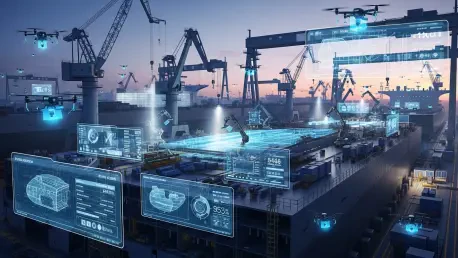

Shipyards across the globe are rapidly transitioning from manual labor to autonomous precision as the pressure to deliver sophisticated vessels meets a shrinking pool of specialized labor. This evolution is spearheaded by the collaboration between Novarc Technologies and Hanwha Ocean, who are integrating AI-powered welding solutions to redefine the standards of maritime engineering. By adopting these robotic systems, Hanwha Ocean is not merely automating a single task but is instead fundamentally restructuring its production workflow to accommodate the demands of Industry 4.0. This move addresses the precision required for complex piping systems while ensuring manufacturing timelines remain unaffected by traditional bottlenecks. As naval architecture becomes more intricate, the deployment of intelligent robotics has become an essential strategy for maintaining industrial dominance in a competitive global landscape where efficiency and reliability are primary.
Strategic Advancement: Robotic Integration in Yards
Part 1. Evolution of Autonomous Systems
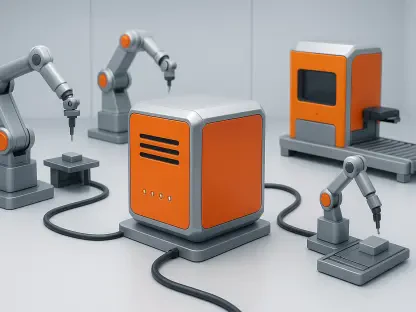
The primary technological driver of this transformation is the Spool Welding Robot, a specialized platform designed to handle the rigorous demands of high-volume pipe fabrication. Unlike standard industrial robots, this system utilizes advanced vision sensors and AI software to adjust to real-world variations in pipe alignment and material consistency without human intervention. This adaptability is vital in a shipyard, where large-scale components often exhibit minor geometric differences that would typically stall an automated process. By monitoring the weld pool in real time, the system ensures that every joint adheres to the highest safety and quality standards required for deep-sea operations. This level of technical oversight allows the yard to transition seamlessly between different project specifications, reducing the time spent on manual recalibration. Consequently, the yard achieves a level of consistency that is difficult to replicate through conventional welding methods.
Part 2. Digital Quality and Data Analytics
Beyond the mechanical benefits, the software ecosystem surrounding these robots provides a critical layer of data intelligence for shipyard management. Every weld performed is recorded and analyzed, creating a digital record that can be used for quality assurance and long-term performance tracking. The AI algorithms within the system learn from the data collected during each operation, continuously refining the welding parameters to minimize common defects such as porosity or incomplete fusion. This proactive approach to quality control significantly reduces the need for expensive post-construction rework and non-destructive testing. Furthermore, the data generated allows for a more robust predictive maintenance schedule, identifying potential equipment issues before they cause significant production delays. By digitizing the welding process, the partnership creates a transparent and highly efficient manufacturing environment that prioritizes precision and long-term structural integrity.
Global Impact: Shipbuilding Industry Transformation
Part 3. Solving Labor Shortages and Safety
The strategic implementation of these systems also serves as a critical response to the global shortage of skilled welders, which has threatened to slow down major shipbuilding projects. By augmenting the existing workforce with AI-driven robotics, Hanwha Ocean allows its highly skilled human operators to focus on complex oversight and logistical management rather than repetitive manual tasks. This shift not only stabilizes production capacity but also enhances workplace safety by removing personnel from environments characterized by extreme heat and toxic welding fumes. The integration of technology thus creates a more sustainable career path for maritime engineers, making the industry more attractive to a tech-savvy generation of workers. This human-centric approach to automation ensures that the workforce remains productive and safe while adapting to the rapid pace of technological change. Ultimately, the synergy between human expertise and robotic precision creates a more resilient industrial foundation.
Part 4. Future Efficiency and Growth
The successful integration of autonomous welding systems provided a clear roadmap for maritime organizations to modernize their operations and secure their market positions. To capitalize on these advancements, it was necessary for companies to invest heavily in the digital literacy of their workforce to ensure seamless human-robot collaboration. Stakeholders discovered that the transition required a comprehensive update to safety protocols and maintenance routines to account for the continuous operation of high-tech machinery. Future progress depended on the industry’s ability to standardize data sharing between different robotic platforms to create a truly unified manufacturing ecosystem. This shift toward a data-informed production model allowed shipbuilders to reduce waste and optimize material usage, aligning their economic goals with global sustainability standards. Organizations that prioritized these strategic adjustments were able to thrive in an era where technical precision became the differentiator.