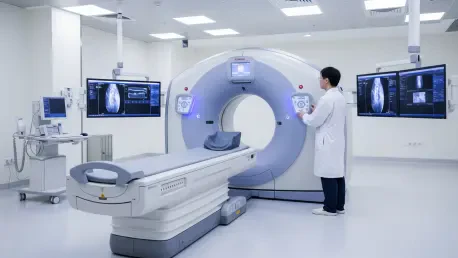

The recent acceleration of medical technology transfers from Beijing to Pyongyang marks a significant turning point for a domestic healthcare infrastructure that has struggled with systemic resource scarcity for decades. While the North Korean government has historically relied on humanitarian aid from international organizations, the current strategy emphasizes a commercial and strategic partnership with China to secure advanced medical hardware. This shift is visible in the arrival of sophisticated diagnostic equipment, such as computed tomography scanners and digital ultrasonic devices, which are now being installed in key urban facilities. The integration of these tools allows for a higher standard of care that was previously impossible due to the reliance on manual procedures and outdated analog machines. Furthermore, the push for modernization is deeply intertwined with the state’s domestic agenda to project an image of progress. By leveraging Chinese manufacturing, North Korea aims to bypass trade barriers and establish a more resilient, albeit dependent, technological foundation for its medical personnel.
Diagnostic Evolution: Integrating Advanced Imaging Systems
Modern diagnostic imaging has become the focal point of North Korea’s medical upgrade, with Chinese-made MRI and CT units replacing the unreliable X-ray equipment found in provincial hospitals. These machines provide clinicians with high-resolution data necessary for early cancer detection and complex surgical planning, which were previously luxury services available only to the elite in the capital. The adoption of these technologies signifies a move toward digital health, as many of these Chinese systems come equipped with software for image archiving and communication. This allows doctors in regional centers to share diagnostic results with specialists in Pyongyang via the national intranet, creating a more cohesive referral network. However, the reliance on these specific systems means that North Korean technicians must adapt to Chinese software interfaces and proprietary hardware standards. This creates a technical ecosystem where long-term functionality depends entirely on a steady flow of specialized components and technical documentation from across the northern border.
The physical environment of North Korean hospitals often presents significant challenges to the longevity of these high-tech imports, requiring a dual focus on equipment and infrastructure. Sensitive electronics from China require a stable power supply and controlled humidity, conditions that are not always guaranteed in remote facilities. To mitigate these issues, recent imports have frequently included voltage stabilizers and industrial-grade backup generators specifically designed to protect delicate medical circuitry from the country’s frequent power fluctuations. Beyond hardware, the need for sterile environments has led to the renovation of operating theaters using Chinese building materials and air filtration systems. This approach to modernization suggests that the state recognizes that diagnostic tools cannot function in isolation. Therefore, the successful integration of Chinese technology is as much about civil engineering and electrical stability as it is about the medical devices themselves. Ensuring these facilities remain operational requires a specialized workforce.
Supply Chain Resilience: Pharmaceuticals and Practical Implementation
In the realm of pharmaceuticals, the import of active ingredients from China has enabled North Korea to revitalize its domestic manufacturing base while reducing dependence on finished foreign drugs. This strategy allows the country to produce essential antibiotics, painkillers, and cardiovascular medications within its own borders using Chinese chemical precursors and automated pill-pressing machinery. By importing the raw materials rather than the final product, North Korean health authorities can maximize their limited hard currency while maintaining a semblance of pharmaceutical sovereignty. Additionally, Chinese logistical expertise has been instrumental in establishing cold chain systems necessary for the storage of heat-sensitive medications and vaccines. This infrastructure includes solar-powered refrigeration units and specialized transport containers that ensure the efficacy of treatments even in areas with limited infrastructure. The shift toward a manufacturing-centric partnership with China reflects a desire to move away from the unpredictability of international aid and toward a more sustainable model.
To ensure the long-term success of these medical advancements, several strategic actions were implemented to bridge the gap between initial technology acquisition and long-term clinical utility. Policymakers prioritized the establishment of regional maintenance hubs equipped with specialized tools and surplus components from Chinese vendors to prevent prolonged equipment downtime. Educational programs were expanded to include mandatory training modules focused on the digital literacy required to operate advanced diagnostic software and manage electronic health records effectively. Furthermore, the government facilitated direct technical exchanges between North Korean biomedical engineers and Chinese manufacturers to foster a deeper understanding of hardware maintenance. These steps allowed for a more decentralized approach to healthcare, where provincial facilities operated with greater autonomy and precision. By focusing on local capacity building and infrastructure stability, the healthcare system moved toward a model that favored technical proficiency over basic survival.