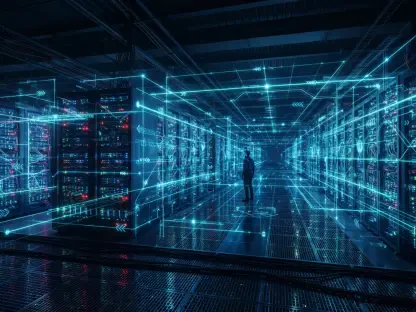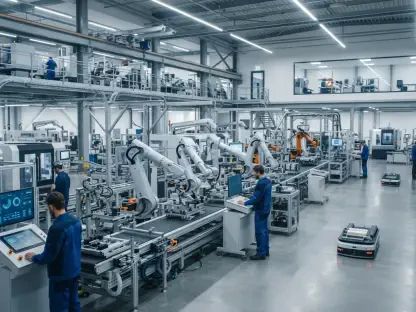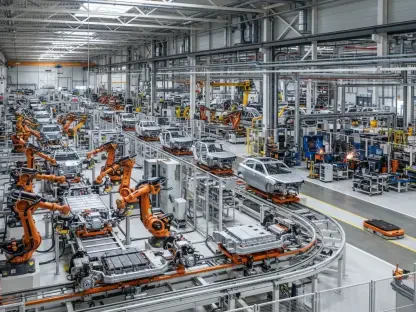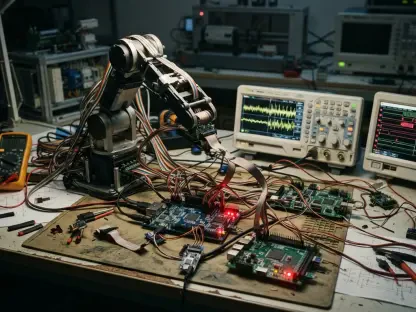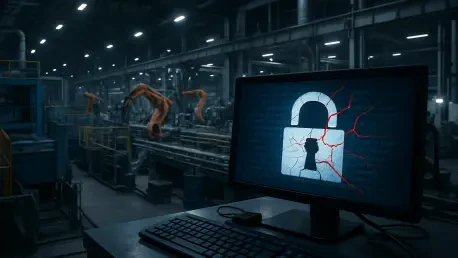

A precision-engineered production line suddenly grinding to a halt because of a single malicious line of code represents the modern nightmare currently haunting industrial leaders across the globe. As the manufacturing sector moves deeper into an era defined by total digital integration, the traditional barriers between physical machinery and virtual networks have essentially vanished, leaving a trail of vulnerabilities in their wake. This sector is currently at a difficult crossroads, desperately balancing the immense productivity benefits of digital connectivity against the sophisticated risks of the contemporary threat landscape. Because factories now adopt smart technologies at an unprecedented pace to maintain a competitive edge, they have simultaneously transformed into prime targets for cybercriminals who recognize the high stakes involved in industrial downtime. The industry remains particularly vulnerable because it handles essential goods and operates on incredibly tight production schedules where even a few hours of inactivity can lead to catastrophic financial losses and long-term reputational damage. Recent data indicates that a vast majority of industrial firms have already encountered some form of aggressive cyberattack, proving that this trend is no longer a peripheral concern for IT departments but a direct threat to national infrastructure and the stability of the global economy.
The Financial Impact: Economic Costs and Supply Chain Shocks
The economic consequences of cybersecurity breaches in the manufacturing sector are immense and often extend far beyond the immediate targeted organization. While small and medium-sized businesses frequently face recovery costs that can easily exceed hundreds of thousands of dollars, large-scale industrial events often result in total losses reaching into the billions. These incidents highlight the extreme sensitivity of modern production lines to digital interference and the high cost associated with the complete restoration of operations after a system-wide compromise. Hackers frequently target manufacturers because they possess high-value intellectual property, proprietary chemical formulas, or critical production blueprints that are indispensable to their operations. When these assets are encrypted by ransomware, the pressure to pay becomes overwhelming to avoid permanent closure. Furthermore, the financial damage is not limited to the ransom itself; it encompasses the loss of customer trust, legal fees, regulatory fines, and the massive expenditure required to rebuild a compromised digital infrastructure from the ground up, often under intense public and governmental scrutiny.
Beyond the immediate financial hit to a single company, a digital breach can trigger a massive ripple effect throughout the entire global supply chain. Because modern industry is so deeply interconnected, a security failure at a single specialized component manufacturer can disrupt thousands of downstream partner businesses, including logistics providers, assembly plants, and major retail outlets. This interconnectedness means that a company’s poor security posture eventually acts as a destabilizing force for an entire regional or national economy. For instance, the delay of a single shipment of semiconductors or specialized sensors can halt production at automotive plants thousands of miles away, leading to furloughs for workers and empty showrooms for consumers. The just-in-time manufacturing model, which was designed to maximize efficiency and minimize waste, has inadvertently created a system where there is zero margin for error when a cyberattack occurs. This fragility has forced many organizations to reconsider their vendor management strategies, as they realize that their own resilience is only as strong as the weakest link in their sprawling network of digital and physical suppliers.
Expanded Digital Networks: The Challenge of Connectivity
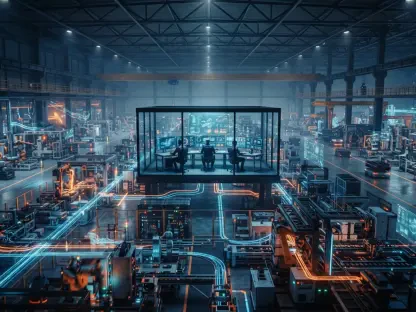
The transition toward the current iteration of Industry 4.0 has drastically increased the total attack surface that modern manufacturers are required to defend against sophisticated threats. A modern production environment is no longer a collection of isolated machines operating in a vacuum; it is a sprawling network of cloud-based management systems, remote access tools, and thousands of internet-connected industrial devices. This digital transformation offers great competitive advantages, such as real-time performance monitoring and predictive maintenance, but it also creates numerous new entry points for hackers who specialize in industrial espionage. Every connected device, from a robotic arm on the assembly line to a climate control system in the warehouse, provides a potential doorway into the core corporate network. This convergence of Information Technology and Operational Technology means that a vulnerability in a seemingly minor administrative application can eventually provide an attacker with the ability to manipulate physical hardware on the factory floor, leading to safety hazards or the intentional production of defective goods.
A major concern for security experts in the current climate is the lack of comprehensive network visibility, often referred to as the shadow network problem. Many manufacturers do not maintain a complete and updated inventory of every device connected to their systems, leaving them completely blind to potential vulnerabilities residing in unmonitored corners of their infrastructure. Even seemingly harmless devices, such as smart sensors, connected thermometers, or legacy handheld scanners, can serve as a silent gateway for intruders to access sensitive corporate data or move laterally through the network. This lack of transparency is often compounded by the rapid adoption of edge computing, where data is processed locally at the machine level rather than in a centralized data center. While edge computing improves speed and reduces latency, it also decentralizes security management, making it harder for central security teams to detect anomalous behavior in real-time. Without a unified view of the entire digital ecosystem, manufacturers remain in a reactive posture, struggling to identify breaches until significant damage has already been inflicted upon their production capabilities.
Technical Hurdles: The Conflict Between Legacy and Innovation
Manufacturing faces a unique and persistent technical challenge because ancient technology often has to work alongside cutting-edge, highly sensitive digital systems. Many active factories still rely on legacy hardware and unsupported operating systems that no longer receive security updates or patches from their original vendors. Replacing these aging systems is often considered too expensive or physically disruptive to the production flow, leaving a permanent security vacuum that hackers can easily exploit using well-known, outdated methods. These legacy machines were frequently designed at a time when cybersecurity was not a consideration, meaning they lack basic authentication protocols or encryption capabilities. Consequently, they act as a “soft underbelly” for the organization, allowing attackers to gain a foothold that is difficult to dislodge without replacing the equipment entirely. This technical debt creates a persistent risk where modern security software cannot be installed on the very machines that are most vital to the company’s daily output and profitability.
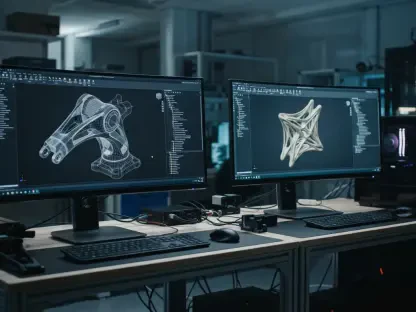
At the same time, brand-new industrial hardware is not inherently safer than the old equipment it is intended to replace. Rigorous testing has shown that modern tools, such as industrial 3D printers and advanced robotic controllers, often lack basic security by design features, which allows hackers to manipulate manufacturing instructions or steal proprietary design files directly from the device memory. This oversight puts the entire burden of verification and protection on the end-user, who must secure devices that should have been protected by the original manufacturer from the start. Furthermore, many new industrial internet of things devices come with hardcoded passwords or unencrypted communication channels that are easily intercepted by anyone with basic technical knowledge. This lack of standardized security requirements for industrial hardware manufacturers means that even as companies invest in the latest technology, they are often unknowingly importing new risks into their environments. This cycle of vulnerability necessitates a much more critical approach to procurement, where security features are prioritized just as highly as production speed or energy efficiency.
Strengthening Defenses: Cultural Shifts and Modern Architectures
While technical tools like firewalls and advanced malware protection remain essential, the human factor continues to be the most significant and unpredictable vulnerability in the manufacturing sector. Most successful cyberattacks were the result of simple human error, such as an employee clicking on a sophisticated phishing link or using weak, easily guessable passwords across multiple sensitive platforms. To be truly effective, cybersecurity training had to move beyond a once-a-year compliance checklist and instead become a permanent, ingrained part of the company’s organizational culture. This shift required every employee, from the executive suite to the factory floor, to understand their specific role in protecting the company’s digital assets. Creating a culture of high-alert awareness meant that workers felt empowered to report suspicious activity without fear of retribution, thereby acting as a human sensor network that could identify threats before they escalated into full-scale breaches. This cultural transformation proved to be the most cost-effective way to reduce the overall risk profile of an industrial organization.
Forward-thinking companies eventually moved toward a Zero Trust architecture, where no user, device, or application was automatically trusted, regardless of their physical location or position on the network. This strategy required rigorous identity verification for every access request and the implementation of micro-segmentation to prevent attackers from moving freely through the system if one area was compromised. By shifting the perspective of cybersecurity from a burdensome cost center to a critical value driver, manufacturers successfully protected their bottom line and ensured the long-term continuity of their complex supply chains. They realized that making their business a hard target was not just a technical goal, but a necessary prerequisite for survival in a modern industrial economy defined by accelerating digital threats. This transition included the adoption of automated threat hunting and the integration of security protocols directly into the manufacturing lifecycle. Ultimately, these organizations prioritized the resilience of their systems over the speed of their implementation, which allowed them to navigate the volatile landscape of the current era with greater confidence and stability.