
Manufacturers that will outperform in 2026 are those that can absorb trade policy disruptions and technological change without losing throughput or margins. Attention has shifted from pilot projects to full-scale deployment of autonomous systems that reduce labor costs, shrink geopolitical exposure, and protect domestic supply chains. The real challenge for manufacturing leaders is balancing elevated capital costs against the long-term need to build localized, intelligent production hubs that can absorb shocks and keep shipping. This article covers how agentic AI, reshoring strategy, and workforce transformation are reshaping manufacturing operations.
The Strategic Shift toward Agentic Systems and Operational Autonomy
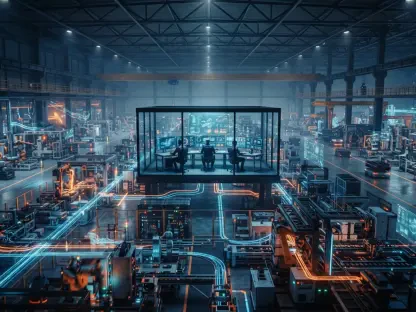
Manufacturing is moving beyond prompt-driven generative tools toward agentic AI systems that plan, decide, and act inside defined guardrails. These agents execute end-to-end workflows, from real-time schedule optimization across bottleneck assets to dynamic exception handling with multi-tier suppliers. They also power constraint-aware, should-cost modeling that ingests commodity curves, freight rates, and tariff scenarios to set negotiated targets and auto-generate procurement playbooks. The strategic posture is clear: treat AI agents as services with defined operating boundaries, not as open-ended tools. Define the scope, instrument the handoffs, and log every decision for audit and continuous improvement. Plants that follow this model cut decision latency, reduce quality variance, and recover hours previously lost to manual reconciliation and spreadsheet-driven processes.
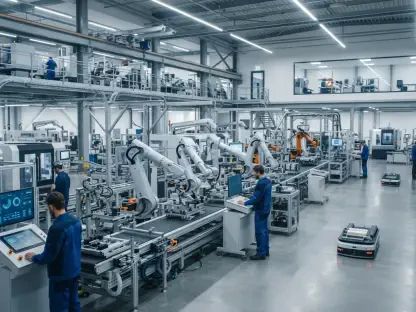
Smart manufacturing is also converging IT and OT onto a single, connected data layer, bringing shop-floor systems and enterprise data together. Sensors, controllers, and robots feed production data systems and manufacturing execution systems, which synchronize with enterprise resource planning to align materials, labor, and capacity. When this integration is well-configured, predictive maintenance shifts from a concept to a measurable cost reduction. Studies show that predictive programs can cut unplanned downtime by 35–50% in manufacturing environments. Even so, full autonomy of agentic systems remains rare by design.
Human oversight remains essential for ambiguous assembly tasks, safety-critical steps, and changeovers where operational judgment cannot be automated. The priority for 2026 is industrial-grade autonomy with full auditability: simulation testing before deployment, tiered escalation paths when agents reach confidence thresholds, and a clear chain of custody for every action an agent takes on the line. As agentic systems and connected data layers reshape the factory floor, the supply chain supporting those operations is undergoing an equally significant transformation.
Reshoring Initiatives and the New Geography of Supply Chain Resilience
Geopolitics, export controls, and new policy incentives have catalyzed a historic build-out of domestic capacity. The CHIPS and Science Act and the Inflation Reduction Act materially shifted project economics for semiconductor fabrication plants, battery plants, and clean-energy supply chains. Manufacturing construction outlays in the U.S. reached record highs in 2024, reflecting multi-year commitments to onshore critical inputs and final assembly.
Reshoring decisions are now driven by hard numbers, not strategy preferences. Total cost of ownership models that factor in shipping delays, sanctions exposure, and working-capital drag from extended lead times are making domestic production increasingly competitive. Leading manufacturers are acting on that math by moving production closer to end markets, setting resilience thresholds by product segment, and regionalizing output where labor, energy, and supplier infrastructure can support consistent throughput.
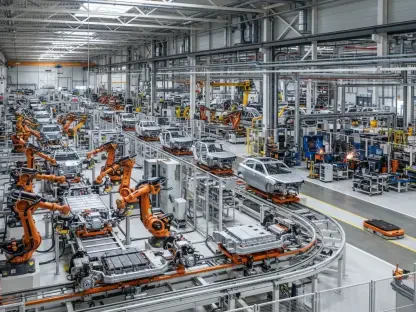
Semiconductors illustrate the playbook. Multi-billion-dollar fabrication projects in Arizona, Ohio, New York, and other states are pulling forward tens of thousands of skilled roles across construction and advanced production. That localized capacity ripples across downstream sectors, shortening lead times for electronics, automotive, medical devices, and heavy equipment. Proximity also strengthens collaboration. Supplier co-location, faster production part approval cycles, and joint problem-solving reduce the friction caused by time zones and long-haul logistics. Design iterations that once took weeks can move in days. Quality issues are caught earlier in the production cycle. By anchoring manufacturing clusters around critical components, firms reduce logistics risk while compounding technical knowledge and supplier capability inside the region.
Workforce Transformation and the Integration of Advanced Skill Sets
The workforce gap is widening as automation outpaces training capacity. Agentic systems and robotics reduce repetitive manual work, but they also demand new skills in mechatronics, data literacy, and system stewardship. Leading manufacturers are responding with skills taxonomies, paid apprenticeships, and partnerships with technical colleges that align curricula to plant technology. Internal training academies are converting institutional knowledge and original equipment manufacturer documentation into modular, stackable credentials. Meanwhile, operators are cross-trained to analyze production data, manage exceptions flagged by AI agents, and perform first-line maintenance on collaborative robots. These investments make plants safer, more productive, and more attractive to the next generation of manufacturing talent.
Technology is also reducing the risk of institutional knowledge leaving with experienced workers. Agentic AI and digital twins capture methods, tolerances, and failure modes from seasoned technicians, then convert that expertise into guided workflows that support new hires in real time. The result is fewer line stoppages during production ramp-up and more consistent first-pass yield across shifts.
Aftermarket services are increasingly central to margin expansion, which requires a workforce fluent in remote diagnostics, over-the-air configuration, and field repair. This revenue diversification stabilizes income streams but raises the skills bar across the organization. The priority through the remainder of 2026 is a durable learning culture supported by outcome-based training, competency credentials tied to pay progression, and feedback loops that connect real-time field data to curriculum updates.
Conclusion
Agentic autonomy, regionalized capacity, and a skilled workforce are not separate initiatives. They are three sides of the same operational advantage. Plants that connect these capabilities with clear guardrails, total cost of ownership discipline, and outcome-based talent development build resilience that holds under pressure, not just in stable conditions.
Execution will remain complex due to high capital costs, cybersecurity pressures, and permitting timelines. The manufacturers that pull ahead will not have the largest footprint or the most ambitious roadmap. They will be the ones who detect a disruption, make a governed decision, and act before the impact reaches the production line or the customer. Lead-time variability, exception resolution without human intervention, downtime avoided, and supply chain traceability are the metrics that show whether the operation is actually getting faster, more reliable, and more resilient under real conditions. Is your manufacturing strategy ready to move faster than the next disruption?