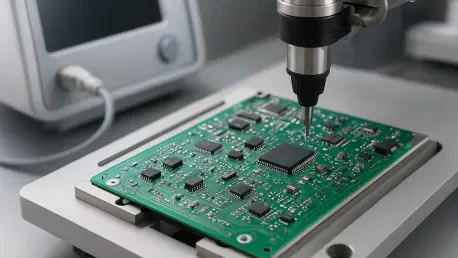

In the sterile, high-stakes environment of a modern operating room, the silent operation of life-support systems rests on complex circuitry that must never falter. The transition of a substrate from a rigid state to a pliable one at its glass transition temperature defines the structural limits of electronics used in high-stress clinical settings. Unlike consumer electronics where a failure might lead to a minor inconvenience, the medical device industry operates under the shadow of catastrophic consequences, necessitating a departure from traditional manufacturing philosophies. Engineers are no longer merely assembling components on a board; they are orchestrating a complex dance of materials and physics where every variable must be controlled to an extreme degree. The evolution of healthcare towards personalized, continuous monitoring requires hardware that can withstand years of operation within the human body or in grueling hospital environments. As 2026 marks a period of rapid advancement in implantable technology, the focus has shifted entirely toward the long-term chemical and mechanical stability of the printed circuit board. This shift requires a deep understanding of how microscopic material interactions over thousands of hours can influence the diagnostic accuracy of a machine or the life-sustaining rhythm of a cardiac device.
Substrate Selection: The Core of Device Longevity
The foundation of any reliable printed circuit board is its substrate, and in medical applications, this material selection is the primary determinant of long-term stability in the field. Unlike standard FR-4 materials used in consumer goods, medical-grade substrates must account for a variety of environmental stressors that go far beyond typical room-temperature operation. These stressors include extreme temperature fluctuations during sterilization, moisture ingress in high-humidity hospital wards, and potential exposure to biological fluids or harsh cleaning chemicals used to maintain hygiene. Choosing a material with a high glass transition temperature is essential for devices that undergo high thermal stress, ensuring that the board does not lose its structural integrity or experience unexpected dimensional changes. Furthermore, the coefficient of thermal expansion must be meticulously matched across the copper and resin components to prevent delamination or the fracturing of plated-through holes during repeated thermal cycling. This careful balancing act ensures that the physical dimensions of the circuit remain constant, preserving the alignment of internal layers and the integrity of high-speed signal paths that are vital for real-time patient data.
For specialized devices like pacemakers or neurostimulators that operate in implanted environments, the material must resist moisture absorption to prevent the catastrophic growth of conductive anodic filaments. These microscopic filaments can bridge the gap between traces, leading to hidden short circuits that are often impossible to detect until the device fails completely. Engineers generally agree that the goal is predictability rather than simply choosing the most expensive high-performance option on the market. A well-understood material with a proven track record under specific environmental conditions is always preferred over an unproven alternative that may offer better technical specs on paper but lacks long-term field data. In the current landscape from 2026 to 2028, manufacturers are increasingly leaning toward specialized laminate systems that incorporate advanced resins and glass cloths designed specifically to suppress filament growth. This conservative approach to material science is the only way to ensure that a device implanted today will continue to function flawlessly for the next decade, providing patients with the reliability they deserve and regulatory bodies with the data they demand.
High-Density Interconnects: Managing the Push for Miniaturization
As the medical industry moves toward less invasive procedures and wearable health technology, the demand for smaller, more functional devices has skyrocketed in recent months. This trend necessitates the pervasive use of high-density interconnect technology, which allows for a significantly higher component density within a much smaller physical footprint. By utilizing laser-drilled microvias, blind vias, and buried vias, designers can route complex signals through multiple layers without consuming valuable surface area. However, this shift toward miniaturization introduces significant manufacturing risks because the margin for error effectively vanishes as trace widths and spacing shrink to sub-micron levels. A deviation of just a few microns in the etching or imaging process can lead to signal crosstalk or a total circuit failure that might only manifest under specific operational loads. The complexity of these boards often requires a multi-stage lamination process, where each cycle subjects the delicate internal structures to heat and pressure that can cause subtle but dangerous dimensional shifts across the panel.
Successful miniaturization in the medical sector requires advanced control over copper distribution and dielectric thickness to ensure the physical structure remains robust enough to support its electrical requirements. Managing these dimensional shifts is critical to ensuring that layers remain perfectly aligned throughout the entire production sequence, from initial drilling to final plating. If the manufacturing partner lacks the precision equipment to handle high-aspect-ratio microvias or ultra-fine lines, the resulting board may suffer from latent defects that pass initial inspection but fail during the mechanical stresses of device assembly. Manufacturers are now utilizing real-time sensor data from the production floor to adjust their processes dynamically, compensating for material expansion or contraction during the lamination phase. This level of technical sophistication is necessary to support the next generation of robotic surgical tools and handheld diagnostic devices that require high-speed processing power in a package small enough to be easily maneuvered by a surgeon or worn comfortably by a patient for weeks at a time.
Advanced Imaging: Achieving Precision in Layer Alignment
In a multilayer medical printed circuit board, the alignment of internal layers is a critical manufacturing parameter that dictates the overall reliability of the finished product. If these internal layers are even slightly misaligned, a phenomenon known as registration error, the vias may fail to make a secure connection with their target pads, leading to weak joints or complete open circuits. These defects are particularly insidious because they might not show up during initial electrical testing but could cause the device to fail once it is exposed to the vibrations or thermal changes of a real-world clinical environment. To solve these alignment issues, traditional film-based contact exposure is rapidly being replaced by laser direct imaging systems. This technology uses a high-resolution digital file to paint the circuit pattern directly onto the board with a laser, entirely eliminating the dimensional instabilities associated with physical film masks. Modern facilities also utilize advanced X-ray and optical alignment systems to ensure every layer is perfectly centered before the lamination press cycles begin.
Despite the significant advantages provided by laser direct imaging, it remains a high-precision process that requires strict environmental and operational control to be effective. Variables such as laser energy stability, photoresist thickness, and chemical developing parameters must be monitored constantly to prevent overexposure or underexposure of the circuit features. These factors are absolutely vital for maintaining the integrity of high-speed signal paths where any physical discontinuity can lead to impedance mismatches and signal degradation. In the medical field, where a lost packet of data could mean a missed heartbeat in a monitor, the precision of the imaging process is a direct contributor to patient safety. The industry is currently moving toward fully automated imaging lines where artificial intelligence identifies and corrects for registration errors in real-time, ensuring that every board produced meets the exacting standards required for life-critical applications. This technological evolution represents a shift from reactive quality control to a proactive manufacturing paradigm that eliminates defects before they can be permanently etched into the copper.
Via Integrity: Preventing Mechanical Failure in Complex Stacks
Vias serve as the essential vertical connectors that move signals between different layers of the circuit board, and in high-density medical devices, their reliability is paramount. Common failure mechanisms in these structures often stem from inconsistent plating, where the copper thickness inside a microvia is insufficient to withstand the mechanical stress of thermal expansion. Because the substrate material and the copper plating have different expansion rates, every change in temperature puts a physical strain on the via barrel. Over several years of operation, this repeated stress can lead to fatigue and eventual cracking of the copper, resulting in an intermittent or permanent failure of the device. Many sophisticated medical designs also require vias to be filled with specialized epoxy and then capped with a layer of copper to create a flat surface for component mounting. If air bubbles are trapped during this filling process, they can expand violently during the soldering phase, causing the copper cap to crack or the entire via structure to delaminate from the internal layers.
To mitigate these risks, medical PCB manufacturers often employ specialized reliability testing protocols such as interconnect stress testing, which goes far beyond the requirements of standard industrial boards. This process involves subjecting test coupons from the same production batch to rapid, intensive thermal cycles to identify potential via failures before the boards are ever released for assembly into a finished medical device. This proactive approach ensures the structural integrity of the interconnections and provides a statistical basis for predicting the long-term survival of the product in the field. As the complexity of medical devices increases from 2026 to the end of the decade, the focus on via reliability has become a cornerstone of the manufacturing process. Engineers are now experimenting with new plating chemistries and additive manufacturing techniques to create more robust vertical interconnects that can survive the harshest mechanical conditions imaginable. By prioritizing the structural health of these microscopic connections, the industry can continue to push the boundaries of what is possible in miniaturized medical electronics without compromising on the core promise of safety.
Signal Management: Protecting Sensitive Biological Data Streams
Medical devices frequently deal with physiological signals, such as brain activity or cardiac rhythms, that are extremely weak and often measured in the millivolt or microvolt range. These signals are highly susceptible to interference from nearby digital components, wireless communication modules, or external electromagnetic sources common in modern hospitals. Design strategies for maintaining signal integrity in these sensitive boards focus heavily on physical isolation and precise controlled impedance. Engineers must physically segregate sensitive analog front-end circuits from noisy digital processing units and power supply sections to prevent noise from bleeding into the data stream. For high-frequency signals, the geometry of the traces and the thickness of the dielectric material must be kept within very tight tolerances to prevent signals from reflecting or degrading as they travel through the board. This level of precision ensures that the data reaching the processor is a true representation of the patient’s condition, free from the artifacts and distortion that could lead to a misdiagnosis.
The use of dedicated ground planes and power planes helps to provide a stable reference for signals and significantly reduces the overall noise floor of the system. This allows the device to accurately capture minute biological data that would otherwise be lost in a sea of electronic interference. Ultimately, the design must focus on the continuity of reference planes rather than just adding more layers to the board in an attempt to solve signal problems through brute force. In the current technological landscape, simulation tools are being used to map out electromagnetic interference patterns before a single board is ever manufactured, allowing designers to optimize the layout for maximum signal purity. This predictive approach is essential for modern diagnostic equipment that relies on high-resolution data to provide clinicians with the insights they need to make life-saving decisions. By treating the circuit board as an active participant in the signal chain rather than just a passive mounting surface, engineers can achieve the extreme levels of precision required for the next generation of medical sensing technology.
Chemical Purity: Mitigating the Risks of Ionic Contamination
One of the most frequently overlooked aspects of medical circuit board manufacturing is the rigorous control of ionic contamination throughout the fabrication process. During various stages of manufacturing and soldering, a wide array of chemicals, fluxes, and residues are introduced to the board surface and internal layers. If these residues are not properly removed through validated cleaning processes, they can act as electrolytes when moisture is present, leading to the rapid development of electrochemical migration. This phenomenon results in the growth of metallic dendrites between traces, which can cause intermittent short circuits or permanent failures in the field. Furthermore, leakage currents caused by surface contamination can distort the sensitive measurements required for diagnostic equipment, leading to inaccurate readings that compromise patient care. Medical electronics require cleaning protocols that go far beyond standard industrial practices to ensure long-term chemical stability and prevent the gradual degradation of the circuit over its entire service life.
Testing for ionic contamination, such as the resistivity of solvent extract testing, is standard procedure in these high-reliability environments to verify the effectiveness of the cleaning lines. This ensures that the board is chemically inert and will not degrade over time when exposed to the atmospheric humidity found in hospital settings or the interior of the human body. Maintaining this level of cleanliness is vital for the performance of high-precision medical sensors that must maintain their calibration over years of continuous operation. As we progress through 2026, many manufacturers are moving toward closed-loop cleaning systems that utilize deionized water and specialized surfactants to achieve microscopic levels of purity. This focus on chemical hygiene is a primary differentiator between medical-grade manufacturing and standard commercial production, as it directly impacts the reliability of the device in its final application. By eliminating the chemical precursors to failure, manufacturers can provide a higher degree of assurance that their products will remain safe and effective for as long as they are in service.
Environmental Shielding: Navigating Harsh Hospital Electromagnetic Fields
Medical devices must operate in some of the most complex electromagnetic environments on earth, such as intensive care units filled with high-power imaging machines and wireless communication networks. Electromagnetic compatibility is a mandatory requirement to ensure that a device does not interfere with other life-saving equipment and is not adversely affected by the external noise generated by surgical tools or MRI scanners. This is often achieved through the use of differential signaling, which routes signals in closely coupled pairs so that any external noise is naturally canceled out by the receiver. Additionally, internal circuit board layers or external metal enclosures provide critical shielding to block unwanted electromagnetic fields from reaching sensitive components. High-performance filtering components are also placed strategically near connectors to scrub electrical noise before it has a chance to enter or leave the board, protecting the integrity of the entire system.
The printed circuit board must be designed as part of a larger holistic system that considers the interactions between cables, enclosures, and internal circuitry. Engineers must follow stringent regulatory standards for safety and interference to ensure the device remains operational even in high-interference environments where other electronics might fail. Failure to meet these standards can result in dangerous equipment malfunctions or the corruption of vital patient data during a critical procedure. In the current era of interconnected healthcare, where devices are constantly sharing data over wireless networks, the importance of electromagnetic shielding has never been higher. Designers are increasingly using advanced 3D modeling to simulate how electromagnetic waves interact with the board layout, allowing them to identify and shield vulnerable areas long before the production phase begins. This rigorous attention to the electromagnetic environment ensures that medical technology remains a reliable tool for clinicians, regardless of the electronic noise present in the modern hospital ward.
Regulatory Compliance: Documentation and Manufacturing Traceability
In the medical sector, quality is not just about the physical state of the product; it is defined by the ability to prove that every step of the manufacturing process was performed correctly and consistently. The framework provided by ISO 13485 is essential for this, requiring a complete and unbreakable traceability record for every board that leaves the factory. This evidence chain is critical for gaining regulatory approval and serves as the primary tool for risk mitigation throughout the lifecycle of the device. A medical PCB manufacturer must maintain exhaustive records of material certifications, process monitoring data, and detailed inspection results for every batch produced. This includes documentation of lamination temperatures, the chemical concentrations in various plating baths, and the high-resolution results from automated optical inspection systems. Such detailed records allow for a thorough investigation if a device fails in the field, enabling engineers to pinpoint the exact moment or material that may have caused the issue.
This level of documentation is vital during regulatory reviews, such as a 510(k) submission, where the safety and efficacy of the device must be demonstrated through data. If a specific batch of raw materials or a subtle process deviation is suspected of causing a problem, traceability allows manufacturers to look back through the production records to identify the root cause and determine the scope of the issue. Without this transparency, proving the safety of a complex medical device to global health authorities is an impossible task. Modern manufacturing facilities are now integrating blockchain and advanced database systems to automate the collection of this data, creating a digital twin of every board that records its journey from raw laminate to finished assembly. This ensures that the history of each component is readily available for audit or analysis, providing a level of accountability that is unique to the medical electronics industry. By embedding traceability into the very fabric of the manufacturing process, the industry can maintain the highest possible standards of quality and safety.
Predictive Engineering: Prioritizing Design for Reliability
A fundamental consensus has emerged in medical electronics that true reliability must be designed into the product from the very beginning rather than inspected in at the final stage of production. While final inspections are a necessary part of the quality gate, they can only catch defects that have already occurred and cannot fix a design that is inherently prone to failure. The design-for-reliability approach involves using advanced software to simulate the thermal behavior, signal integrity, and mechanical stress of the board before manufacturing ever begins. This allows engineers to identify potential hotspots where components might overheat or areas where traces are too close for reliable production in a high-volume environment. Collaborative engineering between the board designer and the manufacturer has also become a key trend, ensuring that the design is optimized for the specific capabilities of the production line.
By involving the manufacturing partner early in the design cycle, engineers receive immediate feedback on the producibility of the board, leading to suggestions for changes in the layer stack-up or via structures that improve the long-term survival chances of the device. This proactive partnership reduces the likelihood of latent defects appearing after the device has been deployed to hospitals or implanted in patients. In the current technological landscape, this collaborative approach is being enhanced by virtual prototyping, where a digital version of the board is subjected to thousands of simulated hours of operation to find hidden weaknesses. This focus on predictive engineering ensures that when a board finally moves to the production floor, it is already optimized for the highest possible level of reliability. This shift from reactive troubleshooting to proactive optimization is the hallmark of modern medical device development, where the goal is to create hardware that is fundamentally robust by design.
Dynamic Circuitry: The Evolution of Flexible and Wearable Systems
The rapid rise of wearable medical monitors and smart surgical tools has brought flexible and rigid-flex printed circuit boards into the mainstream of clinical technology. These boards utilize specialized polyimide substrates that can bend and fold to fit into the ergonomic shapes of modern medical equipment or the contours of the human body. However, these designs introduce unique mechanical reliability challenges that are not present in traditional rigid boards, particularly regarding the phenomenon of copper fatigue. If a flexible circuit is bent too sharply or subjected to repeated motion, the copper traces can develop microscopic cracks that eventually lead to a total loss of connectivity. Designers must carefully calculate the minimum bend radius and ensure that no sensitive components or vias are placed in the high-stress zones where bending occurs. Furthermore, a device that is bent only once during the final assembly process has vastly different reliability requirements than a wearable patch that must flex every time a patient moves or breathes.
Wearable devices also face the constant challenge of being exposed to sweat, body heat, and physical impact during daily use, necessitating the use of specialized encapsulation materials to protect the delicate flexible circuitry. Balancing the need for flexibility with the requirement for rugged durability is one of the most difficult tasks in modern medical electronic design. Engineers are now developing new classes of stretchable conductors and resilient protective coatings that can withstand the rigors of continuous wear without degrading the electrical performance of the device. As we look ahead from 2026, the integration of these flexible systems into the standard of care is expected to accelerate, providing clinicians with unprecedented levels of patient data. The success of this transition depends entirely on the ability of manufacturers to produce flexible circuits that are as reliable as their rigid counterparts, ensuring that the move toward more convenient medical technology does not come at the cost of diagnostic accuracy or patient safety.
Integrated Solutions for Future Healthcare
The industry recognized that the path forward required a paradigm shift toward integrated lifecycle management where every manufacturing step was inextricably linked to the clinical outcome. Manufacturers successfully implemented real-time monitoring systems that synchronized material properties with environmental data, ensuring that the structural limits of high-performance substrates were never exceeded during the fabrication process. These advancements allowed for the production of highly miniaturized devices that maintained their integrity over years of continuous operation, effectively bridging the gap between innovative design and long-term reliability. The adoption of laser-based imaging and advanced thermal simulation tools transformed the production floor into a laboratory of precision, where the margin for error was minimized through algorithmic control and automated feedback loops. This evolution provided a robust foundation for the next generation of life-sustaining technologies, proving that the challenges of the past could be overcome through a disciplined application of material science and engineering rigor.
By 2026, the medical electronics sector established a new gold standard for traceability and quality assurance that redefined the relationship between hardware and healthcare. Designers and manufacturers moved away from isolated workflows, embracing a collaborative model that prioritized the survival of the device in the harshest real-world conditions. This transition was marked by a commitment to chemical purity and electromagnetic resilience, ensuring that diagnostic data remained uncorrupted by the complexities of the modern clinical environment. The success of flexible and rigid-flex systems in wearable technology demonstrated that durability and ergonomics could coexist through careful engineering and the use of advanced protective materials. These collective efforts ensured that medical devices were no longer just tools for intervention, but were instead reliable extensions of the medical professional’s capability. As a result, the focus shifted toward proactive maintenance and predictive reliability, setting a clear trajectory for a future where electronic failure was no longer a variable in the delivery of patient care.