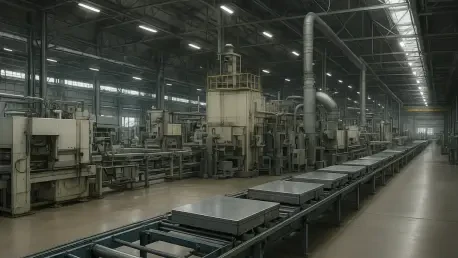

To meet the complex needs of the aerospace and medical sectors, the company has expanded its infrastructure to support intricate board designs and high layer counts. This strategic investment is highlighted by the recent commissioning of a sixth Surface Mount Technology production line, which has effectively increased the facility’s manufacturing capacity by twenty percent. By addressing the surge in demand across semiconductor hardware and defense applications, the organization has positioned itself as a critical partner in the domestic electronics supply chain. This expansion represents a proactive response to the requirements of original equipment manufacturers who seek faster turnaround times. This growth represents a qualitative leap in engineering capability, allowing the production floor to manage multiple high-priority projects simultaneously while meeting the stringent quality standards necessary for life-critical assemblies. By aligning physical resources with sophisticated engineering, the firm maintains its competitive edge.
Advanced Instrumentation: The Core of High-Mix Efficiency
The implementation of the new production line centers on the integration of highly specialized hardware designed for a high-mix manufacturing environment where flexibility is paramount. This setup utilizes a Juki G-Titan screen printer and Nordson 3D solder paste inspection systems to ensure that the foundation of every circuit board is flawless from the initial stages of assembly. The use of high-speed Juki pick-and-place machines, specifically the RX-6 platform featuring a dual-gantry architecture, allows for the simultaneous placement of components across a wide range of sizes and geometries. This technical choice is significant because it provides the agility required to switch between different product runs with minimal downtime, which is a critical necessity for clients specializing in prototype hardware or low-volume, high-complexity production cycles. By optimizing the throughput of the assembly process, the facility can now handle a broader spectrum of component types with extreme precision.
A cornerstone of this technological upgrade is the inclusion of the Vitronics Soltec Centurion reflow oven, which was selected for its superior thermal management capabilities. Equipped with fourteen heating zones and a twenty-foot tunnel, this equipment is engineered to process the most challenging boards, including those with high layer counts or heavy copper weights ranging from four to six ounces. Thermal consistency is paramount when dealing with heavy-duty industrial applications where a single weak solder joint could lead to system failure. The extended tunnel length and precise temperature control mechanisms ensure that even the most dense and thermally massive assemblies receive uniform heating, resulting in robust and reliable interconnects. This level of process control allows the company to support advanced medical imaging systems and aerospace navigation units that must operate flawlessly under extreme environmental conditions, ensuring that every board meets the highest standards.
Strategic Growth: Expanding the Domestic Supply Chain
Looking beyond current operational enhancements, the company has established an aggressive roadmap for future growth that emphasizes sustained capital investment as a core strategy. With a seventh production line currently being prepared for shipment and eighth and ninth lines already in the planning phases, the trajectory for expansion is clearly defined. This multi-phase approach ensures that the facility can scale its operations in lockstep with the increasing complexity of the electronics market through 2026 and 2028. By synthesizing advanced engineering with system-level integration, the provider creates a comprehensive ecosystem where a client can move from a preliminary concept to high-volume production within a single, unified workflow. This vertical integration reduces the risks associated with multi-vendor supply chains and provides original equipment manufacturers with a more predictable and transparent path to market for their innovative hardware solutions.
The strategic expansion of manufacturing capabilities successfully addressed the immediate needs of a rapidly evolving industrial sector while laying the groundwork for long-term technological leadership. By investing in state-of-the-art inspection systems and high-capacity reflow technology, the organization moved toward a model where precision and scalability were no longer mutually exclusive. These advancements allowed engineers to push the boundaries of what was possible in board design, particularly for sectors where failure was not an option. Decision-makers within the electronics industry observed that the move toward domestic, high-tech production facilities provided a crucial safeguard against global supply chain instabilities. Ultimately, the focus on technical excellence and proactive capacity planning served as a blueprint for how modern electronics manufacturing services should evolve to meet the challenges of the next generation of hardware innovation. Moving forward, the industry prioritized greater digital integration.