
The current state of the global semiconductor supply chain reveals a precarious balance where the relentless pursuit of high-performance artificial intelligence hardware collides with an aging, overly concentrated manufacturing infrastructure that remains dangerously susceptible to localized shocks. While the industry accelerates production to meet the unprecedented appetites of modern data centers, it ignores the structural brittle nature of its own foundations at its own peril. Recent volatility across major Asian manufacturing hubs has exposed the thin margins for error that exist within this intricate web of silicon production. For decades, the mantra of the sector was centered almost exclusively on cost efficiency and economies of scale, leading to a landscape where a handful of facilities dictate the fate of global technology markets. This hyper-concentration is now being tested by labor disputes and geopolitical shifts, forcing a fundamental reassessment of what it means to be truly resilient in a world that cannot function without advanced chips.
The Hidden Risks of Centralized Production Hubs
The recent labor standoff at Samsung Electronics served as a stark reminder of how internal corporate friction can transform into a global economic crisis within a matter of days. As tens of thousands of workers across various production divisions threatened a total work stoppage over protracted bonus disputes, the vulnerability of the global memory market was laid bare. In a system where Samsung commands a massive share of the High Bandwidth Memory sector, even a temporary pause in fabrication operations could have stripped billions of dollars from the global economy. This incident was not merely an isolated industrial relations issue; it was a demonstration of the single-point failure risk that currently defines the semiconductor landscape. When a single geographic location holds the keys to essential components for every AI server, the stability of the entire tech ecosystem is predicated on the internal harmony of that organization, which is a fragile foundation for a critical global industry.
Beyond the immediate threat of financial loss, these localized disruptions pose a direct threat to the ongoing expansion of global artificial intelligence infrastructure. Because a small group of manufacturers acts as the gatekeeper for specialized components required to train large language models, any supply chain hiccup triggers immediate price spikes and project delays that reverberate through every tech sector. Industry experts now increasingly argue that the traditional strategy of relying on highly centralized manufacturing hubs is no longer viable in a world where digital sovereignty and uptime are paramount. This realization is driving a shift toward more robust procurement models that prioritize redundancy over raw cost savings. Organizations are beginning to understand that the chokepoint effect is a systemic flaw that requires a coordinated response, including the diversification of supplier networks and the maintenance of vetted regional inventories to protect against future setbacks.
Strategic Shifts Toward Geographic Redundancy
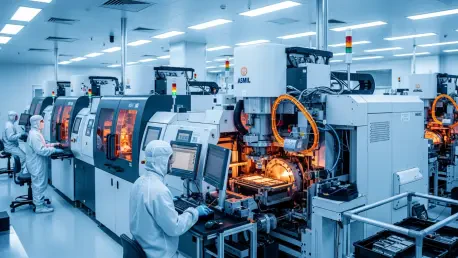
In an effort to build meaningful redundancy, the semiconductor industry is aggressively exploring new manufacturing frontiers, with India emerging as a primary beneficiary of this global realignment. The high-profile partnership between ASML, the leader in extreme ultraviolet lithography, and Tata Electronics to establish a massive foundry in Gujarat represents a pivotal shift in the global map of chip fabrication. This project involves a significant capital investment of eleven billion dollars and aims to create a state-of-the-art facility capable of handling sophisticated wafer production. By establishing such a presence in South Asia, Western technology firms are creating a necessary hedge against geopolitical tensions and regulatory constraints that have complicated operations in traditional manufacturing hubs. This initiative is about more than just adding capacity; it is about decoupling the technological future from a few potentially volatile regions and creating a distributed manufacturing network.
Despite the influx of capital into new regions, establishing a truly resilient semiconductor ecosystem requires much more than just modern facilities and advanced hardware. One of the most significant hurdles facing the industry is the persistent talent gap in the specialized workforce required for high-end chip fabrication. The intricate process of operating lithography machines and managing the chemical complexities of wafer production requires years of highly specific training that cannot be easily replicated or automated. The collaboration between ASML and Tata has notably included a focus on talent development, reflecting the reality that long-term resilience is built on human capital as much as it is on physical infrastructure. Without a steady pipeline of engineers who understand the nuances of the manufacturing process, even the most expensive foundry remains an inert asset. Addressing this shortage is now a top priority for nations looking to secure their place in the semiconductor supply chain.
Building a Future of Systemic Stability
The industry recognized that physical infrastructure alone could not bridge the gap between demand and supply without a corresponding investment in specialized technical education. Across major tech corridors, companies established vocational training programs specifically designed to create a ready-to-work workforce for high-tech foundries. These initiatives were often supported by government subsidies that treated semiconductor expertise as a matter of national security. By integrating advanced lithography and clean-room management into university curricula, the sector began to address the long-standing talent shortage that had previously capped growth. This emphasis on human capital became a cornerstone of the new resilient supply chain, ensuring that as new facilities opened in diverse locations, they were supported by a pipeline of local expertise. This educational shift ensured that the benefits of the semiconductor boom were distributed more equitably, fostering a global ecosystem that was physically expansive.
Ultimately, the fundamental transformation of the global semiconductor network was achieved through a departure from the fragile practices of the past and the adoption of a truly distributed operational model. Organizations throughout the value chain implemented proactive procurement policies that favored multi-source verification and regional redundancy over the short-term gains of centralized purchasing. This shift ensured that the global economy was no longer at the mercy of a single localized disruption or a corporate labor dispute. The industry successfully transitioned into a more stable era by prioritizing long-term systemic health, which allowed for the continued development of generative artificial intelligence and other compute-intensive technologies. This proactive approach provided a clear roadmap for other critical sectors, demonstrating that resilience is an ongoing commitment to adaptability. The actions taken by industry leaders to diversify manufacturing effectively safeguarded the technological foundation of the modern age.