
Beijing’s streets are now bustling with thousands of fully autonomous vehicles that operate without a safety driver, while European cities continue to struggle with limited pilot programs that remain confined to highly specific, geofenced industrial zones. This stark contrast highlights a widening chasm in the global transportation sector, where Chinese tech giants like Baidu and Pony.ai have successfully transitioned from experimental labs to commercialized urban fleets. In Europe, the landscape remains characterized by a cautious, incremental approach that prioritizes liability frameworks and stringent data protection over rapid deployment. The delay is not merely a matter of engineering prowess but rather a systemic disconnect between regulatory ambition and the practical requirements of training large-scale artificial intelligence models in unpredictable environments. As autonomous miles continue to accumulate in China, the resulting data advantage creates a feedback loop that accelerates software maturity at a pace European developers find difficult to match.
Regulatory Friction: The Cost of European Compliance
European automakers face a labyrinthine set of regulations that vary significantly across borders, making the deployment of a standardized robotaxi fleet across the continent a logistical nightmare. While the European Union has attempted to harmonize safety standards through various directives, the interpretation of data privacy under the General Data Protection Regulation often conflicts with the data-heavy requirements of autonomous systems. Training an artificial intelligence to recognize pedestrians and cyclists requires massive amounts of video footage, yet the strict anonymization protocols in cities like Berlin or Paris create significant friction for developers attempting to refine their computer vision algorithms. Consequently, while Chinese firms are collecting petabytes of real-world edge cases daily, European engineers are often restricted to simulated environments or limited test tracks that fail to capture the chaotic reality of modern city life. This emphasis on precautionary principles has inadvertently created a barrier to entry that favors established incumbents over agile startups.
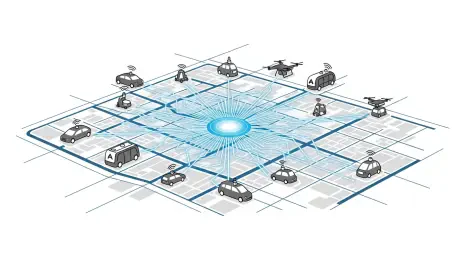
In contrast, the Chinese approach involves a top-down integration of municipal policy and private enterprise that has effectively turned cities like Shenzhen into massive living laboratories for autonomous transit. Local governments have designated expansive demonstration zones where robotaxis can operate freely with minimal bureaucratic overhead, provided they share safety data with a centralized monitoring system. This collaborative model allows for rapid infrastructure upgrades, such as the installation of roadside sensors and dedicated short-range communication units that assist vehicles in navigating complex intersections. By treating autonomous driving as a matter of national strategic importance, the state has ensured that land use, traffic management, and telecommunications infrastructure all evolve in lockstep with the needs of the robotaxi industry. This synergy allows companies to scale their operations with a level of predictability that is currently absent in the European market, where public resistance and fragmented urban planning often halt progress before it can reach commercial viability.
Industrial Fragmentation: Navigating the Supply Chain Gap
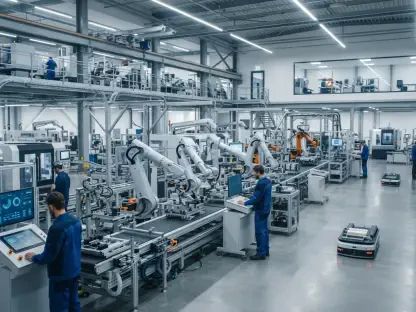
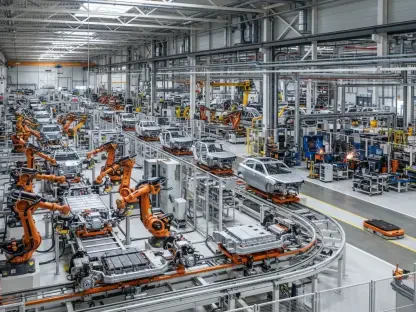
The divergence is further exacerbated by the underlying supply chain and the deep integration between vehicle manufacturers and technology providers within the Chinese ecosystem. While European traditionalists have focused on transitioning their internal combustion engines to electric powertrains, Chinese firms have simultaneously perfected the integration of advanced LiDAR, radar, and camera arrays into high-volume production lines. The proximity of hardware manufacturing hubs in the Pearl River Delta provides an unparalleled advantage in terms of hardware iteration speeds and cost reduction for critical autonomous components. European manufacturers often find themselves sourcing high-end sensors from overseas suppliers, which adds layers of complexity and cost to their development cycles. Furthermore, the software-first philosophy of Chinese companies like Xpeng or Nio contrasts sharply with the hardware-centric legacy of European automotive giants. This difference in mindset leads to a more seamless integration of the digital brain with the mechanical chassis, resulting in vehicles that are purpose-built for autonomy.
The realization that Europe had fallen behind in the autonomous driving sector led to several critical pivots that eventually reshaped the regional strategy toward automated urban mobility. It was determined that a unified European regulatory sandbox was the only viable path to overcoming the limitations of national-level pilot programs. Policy experts suggested that the focus had to shift from individual vehicle safety toward a systemic integration of autonomous fleets within the broader public transport network. This approach allowed for a more controlled deployment that addressed public concerns while still providing the data necessary for software refinement. Furthermore, the decision to invest heavily in sovereign sensor technology and localized data processing centers proved to be a turning point for domestic manufacturers. By fostering a more collaborative environment between software developers and traditional automotive engineers, the industry began to overcome the legacy hurdles that stalled innovation. These actions secured the ongoing viability of European technological sovereignty.