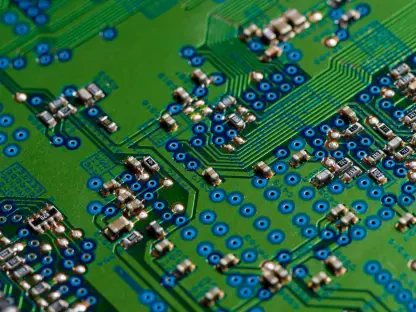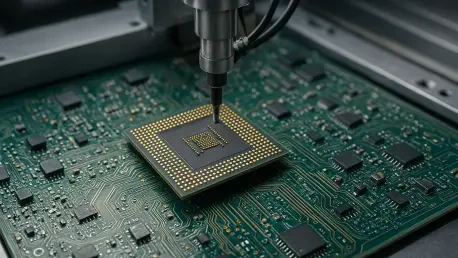

The microscopic architectures within modern semiconductor wafers have reached a level of complexity where human oversight and traditional algorithmic verification struggle to prevent catastrophic yield losses in high-stakes manufacturing environments. This technical ceiling has forced a radical rethink of how the world’s most advanced silicon is produced. In a move that signals a new era of “Manufacturing Intelligence,” Samsung Electronics recently solidified a deep-rooted strategic partnership with Mistral AI, the rising star of the European artificial intelligence landscape. This alliance is far more than a simple vendor agreement; it represents a multi-billion dollar bet on the future of industrial autonomy and data sovereignty. By integrating sophisticated large language models directly into the heart of the fabrication process, Samsung is attempting to solve physics-defying challenges that have long plagued the transition to sub-three-nanometer chip designs.
Executive Summary: The Strategic Alliance Between Samsung and Mistral AI
The partnership between Samsung Electronics and the Paris-based Mistral AI marks a pivotal shift in the global semiconductor landscape, occurring against a backdrop of intensifying geopolitical competition and rapid AI advancement. During a high-profile state summit between South Korea and France, the two entities announced a comprehensive collaboration designed to embed generative AI across the entire semiconductor value chain. This move comes at a time when the industry is grappling with the extreme difficulty of maintaining high yields at the nanometer scale, where even a single atom out of place can render a chip useless. Samsung’s approach focuses on utilizing Mistral’s open-weight and proprietary models to create a closed-loop system where machine data informs model training in real time, leading to unprecedented levels of precision.
Beyond the immediate technical benefits, the alliance is a calculated strategic maneuver to ensure technological sovereignty and operational security. Samsung is not merely using Mistral’s API; it is deploying these models on-premises within its own highly secure internal infrastructure. This “sovereign” approach allows Samsung to harness the power of frontier AI without exposing its most sensitive intellectual property—the “secret sauce” of chip fabrication—to external cloud providers. For Mistral AI, the partnership provides a massive industrial testing ground and the financial backing needed to compete with Silicon Valley giants, cementing its position as the premier AI provider for the global manufacturing sector.
A High-Stakes Fusion: Silicon and Sovereignty
In the current global climate, the intersection of silicon manufacturing and data sovereignty has become the new front line of economic security. Samsung’s move to lead a €3 billion Series D funding round for Mistral AI underscores the high stakes involved in this fusion of hardware and software. By becoming a major stakeholder, Samsung ensures that the evolution of Mistral’s models remains aligned with the specific requirements of the semiconductor industry. This is not just about having a seat at the table; it is about owning a portion of the table to ensure that the tools of the future are built with industrial rigor and data privacy as foundational principles.
The concept of “Sovereign AI” is central to this narrative, as nations and corporations alike seek to reduce their dependence on a handful of dominant technology platforms. By partnering with a European firm like Mistral, Samsung diversifies its AI portfolio and avoids the risks associated with over-reliance on any single geographic region or corporate entity. This strategic hedging is essential for a company that operates in a global market fraught with trade tensions and shifting regulatory environments. The collaboration serves as a blueprint for how hardware giants can maintain their competitive edge by securing the software intelligence that will define the next decade of industrial progress.
Why the Samsung-Mistral Alliance Matters Now
The semiconductor industry is currently facing what many experts describe as a “Yield Crisis.” As chip designs shrink toward the 1.4-nanometer threshold, the margin for error has effectively vanished, and traditional automated systems are no longer sufficient to catch the subtle defects that can ruin entire batches of wafers. This reality has made the integration of advanced AI an operational necessity rather than a luxury. The alliance with Mistral AI provides Samsung with the linguistic and analytical tools needed to process the petabytes of data generated by fabrication equipment, turning raw sensor output into actionable insights that can save billions of dollars in lost production time.
Furthermore, the rise of the “Industrial Triad”—comprising ASML, Samsung, and Mistral—represents a powerful new ecosystem in the tech world. ASML provides the extreme ultraviolet lithography machines, Samsung provides the world-class fabrication facilities, and Mistral provides the AI “brain” that optimizes the interaction between the two. This closed-loop ecosystem ensures that every step of the manufacturing process, from the initial lithography to the final packaging of High Bandwidth Memory, is monitored and improved by intelligent algorithms. This level of integration is what the market demands in 2026, as the hunger for specialized AI chips continues to outpace the industry’s ability to produce them efficiently.
Orchestrating the Future: The Semiconductor Value Chain
The financial underpinnings of this deal reveal a move from a customer-supplier relationship to a deep stakeholder partnership. By leading the Series D round, Samsung has secured prioritized access to Mistral’s research and development, allowing for the creation of customized models that are specifically tuned for semiconductor physics. This investment strategy is part of a broader “AI hedging” effort, where Samsung balances its interests across Mistral, Anthropic, and OpenAI to ensure it remains at the cutting edge of every major AI breakthrough. This multifaceted approach provides a safety net against the volatile nature of the AI industry while maximizing the company’s exposure to diverse technological breakthroughs.
Operational optimization within the cleanroom is where the “Mistral Large” model truly demonstrates its value. In the highly controlled environment of a semiconductor fab, AI is being used to revolutionize defect detection through advanced anomaly identification that far surpasses previous generations of software. Predictive maintenance has also become a reality, with Mistral’s models analyzing sensor data to eliminate equipment downtime before it occurs. This proactive stance is particularly critical for the development of next-generation High Bandwidth Memory, which requires an incredibly complex stacking process where the slightest misalignment can lead to failure. By automating these high-precision tasks, Samsung is significantly accelerating its development cycles.
Expert Perspectives and Industry Validation
The industry’s most influential voices have been quick to validate the necessity of this partnership. Young Hyun Jun, Vice Chairman and CEO of Samsung’s Device Solutions Division, recently noted that the sheer complexity of modern logic chips makes AI integration a prerequisite for survival. His insights are echoed by Gartner’s 2026 report on AI sovereignty, which highlights a massive shift toward “sovereign-by-design” architectures among the world’s leading manufacturers. This consensus suggests that the days of sending sensitive industrial data to the public cloud are coming to an end, as companies prioritize local control to protect their competitive advantages.
Arthur Mensch, the co-founder of Mistral AI, has also emphasized that his company’s mission is to power the global electronics industry by providing transparent and locally deployable models. This mission is backed by a Deloitte benchmark which found that 72% of professionals in the semiconductor space now view generative AI as a transformative force. The validation from these diverse sources—ranging from corporate executives to market analysts—underscores the fact that the Samsung-Mistral alliance is not an isolated event but part of a broader structural change in how technology is built and secured.
Strategies for Integrating Industrial AI
Successful integration of industrial AI requires a move toward a “closed-loop” system where machine data constantly informs and refines the models. For Samsung, this means creating a seamless flow of information between the sensors on the factory floor and the Mistral models running on-site. By prioritizing local data sovereignty, the company can protect its intellectual property while still reaping the benefits of massive-scale data analysis. This balance of hardware prowess and software intelligence is the key to gaining a competitive edge in an era where the hardware alone is no longer enough to win the market.
To scale these AI tools effectively, manufacturing environments must adopt frameworks that allow for high-precision model tuning without disrupting the delicate balance of the cleanroom. This involves a rigorous process of testing and validation to ensure that AI-driven decisions are both accurate and explainable. As the industry moves toward 2027 and beyond, the focus will likely shift toward even more autonomous systems that can self-correct manufacturing errors in real time. Organizations that invested early in these sovereign AI strategies found themselves better positioned to navigate the complexities of the 1.4-nanometer era and beyond.
The strategic alliance between Samsung and Mistral AI successfully demonstrated the power of fusing hardware expertise with sovereign software intelligence. It provided a clear roadmap for how industrial giants could protect their intellectual property while embracing the transformative potential of large language models. The implementation of on-premises AI agents reduced latency and increased operational security across Samsung’s global fabrication network. Executives realized that the shift toward manufacturing intelligence was not just a technical upgrade but a fundamental requirement for maintaining global leadership. These early initiatives eventually paved the way for the fully autonomous semiconductor facilities that became the industry standard in the years that followed.