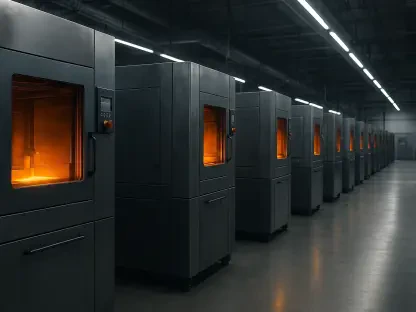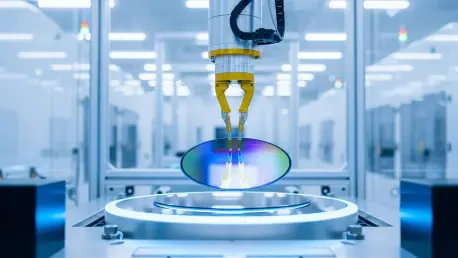

The global semiconductor landscape is witnessing a seismic shift as high-tech manufacturing returns to American soil with unprecedented financial backing and industrial ambition. Taiwan Semiconductor Manufacturing Company has fundamentally altered the trajectory of the domestic electronics industry by announcing a massive increase in its commitment to Arizona operations, pledging an additional $100 billion to its existing projects. This expansion brings the total projected investment to a remarkable $265 billion, marking a historic turning point for the United States’ technological sovereignty and its role in the global supply chain. By prioritizing the production of advanced semiconductor nodes locally, the company is positioning its Arizona facilities as the primary engine for next-generation computing power. This growth strategy aims to construct twelve distinct manufacturing and packaging sites, significantly exceeding the original scope of the project and ensuring a steady flow of essential chips for the world.
Financial Evolution: The Capital Intensity of Modern Fab Production
The sheer financial magnitude of this initiative highlights the extreme capital intensity required to build and maintain modern semiconductor fabrication plants, commonly referred to as fabs. Initially budgeted at $65 billion, the project’s costs have nearly quadrupled to the current $265 billion total, reflecting the rising prices of precision machinery and specialized construction materials. These facilities are widely regarded as some of the most expensive and complex structures on the planet, requiring years of meticulous planning and ultra-clean environments before a single silicon wafer can be processed. This aggressive scaling is not merely a reaction to inflation but a proactive attempt to stay ahead of the Moore’s Law curve by installing the most sophisticated lithography equipment available. As the density of transistors continues to increase, the infrastructure needed to support such precision grows exponentially in cost, requiring long-term financial commitments that few other industries can match.
Beyond the balance sheet, this massive infusion of capital represents a strategic move to secure national competitiveness in an era where artificial intelligence defines global leadership. As the race for AI dominance intensifies among major world powers, having a reliable domestic source for high-performance processors has transitioned from a business advantage to a top-tier national security priority. These chips serve as the essential building blocks for everything from sophisticated defense systems to the massive, energy-hungry data centers that power the modern internet and generative AI platforms. By anchoring these production capabilities in Arizona, the initiative mitigates the risks associated with geopolitical instability and ensures that critical components remain available even during global crises. This level of investment signals to the market that the U.S. is no longer willing to outsource the foundational hardware of the digital age, opting instead to foster a robust internal ecosystem capable of supporting the highest levels of innovation.
Technological Integration: Advanced Packaging and Industrial Clusters
A pivotal component of the expanded Arizona roadmap is the integration of advanced packaging services alongside traditional wafer fabrication within the domestic manufacturing loop. While fabrication involves the complex process of etching circuits onto silicon, advanced packaging allows different specialized chips to be combined into highly efficient, integrated systems that offer superior performance and power management. By offering both services in the United States, a complete end-to-end manufacturing solution is established, effectively eliminating the logistical necessity of sending semi-finished products overseas for final assembly and testing. This streamlined production cycle not only reduces the carbon footprint associated with global shipping but also drastically shortens the time it takes to move a design from the laboratory to the consumer market. Such an integrated approach ensures that the most sensitive intellectual property remains within a secure and controlled environment throughout the entire assembly process.
The arrival of twelve advanced facilities is expected to trigger a massive economic transformation across the Southwestern United States by creating tens of thousands of specialized jobs. These roles for engineers, material scientists, and high-tech technicians provide a foundation for a new middle class focused on high-precision manufacturing and industrial research. Beyond direct employment at the plants, the project is fostering a powerful cluster effect, drawing in an entire ecosystem of satellite companies, including specialized chemical suppliers, utility providers, and logistics firms. This development aims to build a self-sustaining semiconductor hub that can meet the high demands for ultra-pure water, consistent electricity, and hazardous material handling required for modern chip production. As these supporting industries take root, the region is becoming a magnet for global talent, effectively shifting the industrial center of gravity and creating a resilient economic base that can withstand the volatility of traditional markets.
Policy Frameworks: Strengthening the Domestic Supply Chain
The $265 billion commitment functions as a cornerstone of a broader federal effort to revitalize high-tech manufacturing through strategic international partnerships and domestic incentives. This expansion stems directly from a landmark trade and investment agreement reached between the United States and Taiwan in early 2026, which paved the way for deeper industrial cooperation. Under this new policy framework, the Department of Commerce anticipates that other allied firms will contribute another half-trillion dollars into the domestic supply chain, focusing on testing, raw materials, and specialized tooling. This collaborative environment is designed to protect the country from future supply chain disruptions, ensuring that essential technology remains accessible during periods of global logistics congestion. By codifying these investments through formal agreements, the government provides the regulatory certainty and infrastructure support necessary for private enterprises to commit such astronomical sums of capital over multiple decades.
From a commercial perspective, this move serves as a direct response to the evolving long-term needs of major American software and hardware designers who lead the global tech sector. By placing its most advanced production lines within the same geographic region as its primary customers, the company can foster deeper technical collaboration and more agile prototyping sessions. This proximity reduces lead times for critical components, allowing American innovators to bring new products to market faster than their international competitors. Geographical diversification also acts as a sophisticated risk management tool, ensuring that the company can continue to supply the world with the chips necessary for the next generation of mobile innovation and cloud computing regardless of regional disruptions. This responsiveness to market demand ensures that the production capacity is not just built, but utilized to its full potential by companies that are already designing the software and hardware of the late 2020s.
Strategic Trajectory: Building a Resilient Future
The expansion of the Arizona manufacturing complex established a definitive roadmap for the future of American industrial policy and high-tech self-sufficiency. Stakeholders recognized that maintaining this momentum required a sustained focus on workforce development and the modernization of local infrastructure to support such high-intensity operations. Educational institutions worked to align their curricula with the specific needs of the semiconductor industry, ensuring a steady pipeline of domestic talent capable of managing the world’s most advanced machinery. Furthermore, the focus shifted toward securing the upstream supply chain, where the procurement of raw materials and specialty chemicals became as important as the fabs themselves. By addressing these foundational needs, the industry moved beyond mere construction toward the creation of a permanent and evolving technological stronghold. This proactive stance ensured that the United States remained at the cutting edge of global innovation while fostering an environment for future growth.
Leaders concluded that the success of this industrial hub depended on a collaborative approach between private corporations and regional governments to manage resources effectively. This necessitated significant investments in sustainable water recycling technologies and renewable energy grids to power the massive fabrication units without compromising the local environment. Analysts observed that the project provided a scalable model for other sectors, proving that high-end manufacturing could thrive in high-cost regions when supported by superior logistics and a highly skilled workforce. As the facilities reached full operational capacity, the broader technology sector benefited from a more resilient and responsive supply chain that favored stability over short-term savings. The strategic foresight demonstrated by this investment allowed the domestic market to transition from a consumer of foreign-made components to a primary producer of the world’s most critical hardware. This evolution ensured that the region remained a global leader in the digital economy for years to come.