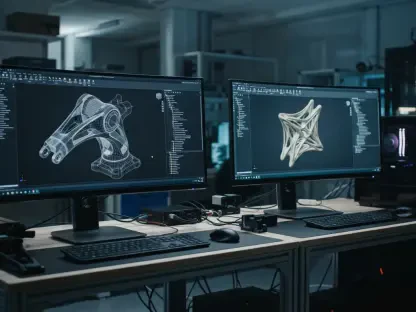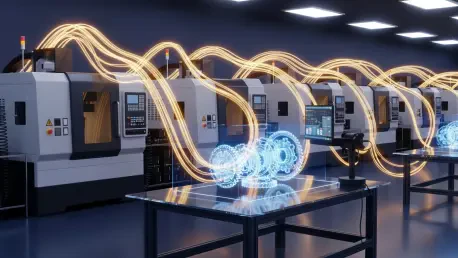

The aerospace engineer watching a multi-million dollar five-axis milling machine struggle with vibration issues might find it hard to believe that the underlying software logic guiding that cutting tool was originally standardized when vacuum tubes were still state-of-the-art technology. Despite the advent of sophisticated robotics and high-precision instrumentation, the manufacturing world remains largely tethered to G-code, a control language that treats advanced hardware like a 1950s-era teletype machine. This legacy system operates by sending linear, line-by-line instructions that fail to account for the dynamic physical environment of the factory floor. As industry demands for precision and speed outpace the capabilities of this antiquated format, researchers at institutions like MIT are spearheading a transition toward model-based control. This shift promises to replace static command lists with intelligent systems that understand the physics of motion, allowing machines to adapt in real-time to the stresses and strains of the fabrication process. By moving away from rigid instructions, the sector aims to unlock the true potential of modern hardware, turning “dumb” tools into responsive, physics-aware partners in production. The current reliance on G-code represents a form of technical debt that limits innovation, as it prevents machines from communicating their internal states back to the software that drives them. This gap between the digital design and the physical reality often leads to inefficiencies, as programmers must guess how a machine will react to certain speeds and feeds rather than having the system calculate the optimal path based on real-world dynamics.
The Technical Debt of Legacy Machine Control
Breaking the One-Way Communication Pipe: The Architectural Gap
The fundamental flaw in G-code architecture is its reliance on a “one-way pipe” communication model, which effectively isolates the high-level programmer from the physical reality of the machining environment. In this traditional setup, instructions are sent from a computer to a hardware controller that executes movements without any meaningful feedback loop regarding the machine’s internal state or changing environmental conditions. This design choice assumes that the machine is a perfect, rigid entity that will follow every coordinate command precisely, ignoring variables such as thermal expansion, tool deflection, or structural resonance. Because the controller is essentially blind to how the machine is responding to its commands, it cannot make the micro-adjustments necessary to maintain precision under load. This lack of a feedback mechanism means that any unexpected physical variable, from a slight variation in material hardness to a change in ambient factory temperature, can result in a part that falls outside of required tolerances. Consequently, the high-performance capabilities of modern CNC hardware are often throttled by a software interface that cannot process the very data the machine’s sensors are capable of providing. This disconnect creates a situation where the digital twin is never truly in sync with the physical object being produced, leading to a reliance on conservative safety margins that prevent the hardware from operating at its peak efficiency.
Addressing the Variables of Machine Dynamics: The Black Box Problem
Because G-code lacks a standardized mechanism for communicating machine-specific dynamics, it essentially operates as a “black box” where identical instruction files can yield vastly different results when run on different pieces of equipment. A G-code program optimized for an ultra-stiff, brand-new horizontal machining center may fail to produce an acceptable part when run on an older vertical mill with slightly more play in its lead screws or less available motor torque. This inconsistency forces machinists to rely on a tedious process of manual tweaks and trial-and-error, where they must “listen” for vibration or manually observe tool wear to compensate for the software’s lack of physical awareness. This human-in-the-loop requirement is a significant bottleneck in modern manufacturing, as it prevents the true automation of high-precision tasks. The G-code format does not specify the forces or torques required to move the tool; it only specifies a series of geometric destinations and feed rates. This abstraction layer ignores the fact that a machine’s ability to follow a path is dictated by its own mass, inertia, and the power of its drives. Without a control system that understands these physics, the burden of optimization falls entirely on the operator, who must manually adjust the “knobs” of the process to account for the unique quirks of each machine. This traditional approach is increasingly unsustainable as parts become more complex and the margin for error shrinks in industries like aerospace and medical device manufacturing.
The Shift to Physics-Aware Programming
Transitioning Toward Declarative Control Systems: From Steps to Intent
The transition to model-based control represents a fundamental pivot from imperative programming to a declarative approach that prioritizes the desired outcome over the specific steps taken to achieve it. In an imperative G-code system, the programmer must dictate every tiny movement, specifying exactly where the tool should go and how fast it should get there. In contrast, a declarative model-based system allows the user to define the “manufacturing intent,” such as the final geometry of the part, the required surface finish, and the allowable stress limits on the tool. The controller then utilizes an integrated physics engine to determine the most efficient way to achieve that goal based on the specific capabilities of the machine in use at that exact moment. By modeling the physics of the hardware—such as how an electric motor’s available torque fluctuates with its current speed—the controller can exploit the machine’s full “operating envelope” without crossing into the territory of mechanical failure. Traditional systems often use static, conservative limits to ensure safety, which leaves significant performance on the table; however, a model-based system understands exactly how much stress the machine can handle at any given millisecond. This shift allows the machine to behave more like a skilled artisan who understands the feel of the material, rather than a mindless robot following a list of coordinates.
Achieving Measurable Gains in Industrial Efficiency: Data-Driven Performance
The practical application of model-based control has already demonstrated significant improvements in industrial output, including a documented 17.5% reduction in cycle time for complex CNC milling tasks. These gains are achieved by accounting for the relationship between torque, speed, and inertia in real-time, allowing the system to optimize toolpaths in ways that a human programmer using G-code simply cannot manage. By understanding the mechanical limits of the spindles and axes, the controller can accelerate and decelerate with surgical precision, minimizing the “air-cutting” time and ensuring that the tool is always operating at its most efficient material removal rate. This level of optimization is particularly impactful in high-speed applications where even minor deviations in path planning can lead to significant cumulative time losses. Furthermore, these benefits extend into the realm of additive manufacturing, where traditional controllers often treat material extrusion as a fixed value regardless of the print head’s velocity. A model-based approach can account for the thermal history and fluid dynamics of the polymer, recognizing that if the printer has been moving slowly, the material in the nozzle has had more time to liquefy. The system can then execute a brief burst of high-speed extrusion to maintain a consistent bead width, ensuring better part quality and faster production times by letting the physics of the material guide the motion of the machine.
Real-Time Intelligence and Industry Evolution
Integrating Active Physical Simulation Loops: High-Frequency Control
While contemporary manufacturing software frequently employs geometric simulations to prevent tool collisions, these processes are typically passive and occur long before the machine actually begins its work. Model-based control seeks to bring this “physical simulation” directly into the real-time control loop, performing complex calculations at intervals as short as 100 microseconds to ensure constant synchronization between the digital model and the physical hardware. By leveraging the parallel processing power of modern graphics processing units, the controller can track the evolving relationship between the tool and the workpiece with incredible granularity as the job progresses. This active simulation allows the machine to autonomously identify and mitigate issues like resonance frequencies, chatter, and heat buildup that would normally lead to part defects or tool breakage. Instead of simply following a pre-recorded animation of the process, the controller acts as an intelligent pilot, making micro-adjustments to feed rates and spindle speeds on the fly to maintain the most stable cutting conditions. This evolution moves the machine from a reactive follower of static instructions to an active participant in the manufacturing process, capable of solving complex physical problems without needing a human operator to stop the cycle and intervene. This high-frequency feedback loop is essential for the next generation of “lights-out” manufacturing, where machines must be able to self-correct in the absence of human supervision.
Bridging the Skills Gap through Intuition-Based Software: Democratizing Expertise
The manufacturing sector is currently grappling with a severe skills gap as veteran machinists, who possess decades of “shop-floor intuition,” reach retirement age and exit the workforce. These experts understand the subtle cues of a machine—the sound of a dulling tool or the vibration of a part that isn’t clamped tightly enough—knowledge that G-code is fundamentally unable to capture or digitize. Model-based control addresses this crisis by democratizing expertise, embedding that physical intuition directly into the software so that even less experienced operators can achieve high-quality results. The system allows users to program based on high-level manufacturing goals, such as maximizing tool life or achieving a specific surface finish, while the software handles the complex physics of the execution behind the scenes. This shift reduces the barrier to entry for new talent and allows engineers to focus on design and strategy rather than the minutiae of machine settings. Additionally, economic and geopolitical pressures are beginning to challenge the fragmented Western CNC ecosystem, which is often split between various software vendors and hardware builders. In rapidly developing manufacturing hubs like Shenzhen, young engineers are adopting more vertically integrated approaches that combine design, simulation, and control into a single platform. This competitive pressure is forcing the global industry to reconsider its reliance on legacy formats like G-code in favor of more integrated, process-aware systems that can keep pace with the speed of modern innovation.
Establishing New Standards for Intent-Based Fabrication
Unifying Design and Execution through Physical Languages: A Seamless Workflow
The eventual departure from G-code will likely be a gradual process given its deep-seated presence in global industrial infrastructure, yet the future of fabrication undeniably belongs to a unified language of force, torque, and thermal behavior. By moving toward a common framework that respects the physical realities of both the hardware and the material, the industry can finally eliminate the long-standing disconnect between the design studio and the shop floor. When a designer creates a complex geometry in a model-based environment, the system provided immediate feedback on the physical viability of that part, identifying potential manufacturing bottlenecks before a single piece of material was ever wasted. This seamless communication reduced the need for expensive prototyping and allowed for a more direct path from initial concept to the finished product, significantly shortening development cycles. The transition to these smarter systems was focused on creating an environment where machines could finally keep pace with the massive computational power available in the 21st century. By prioritizing the physics of the process over the rigidity of the code, the industry moved toward a more resilient and innovative future where the machine’s performance was no longer limited by a legacy of punched tape logic. This shift empowered manufacturers to produce more complex parts with higher reliability, ensuring that the digital model was always an accurate reflection of the physical object.
Implementing Future-Ready Solutions in Modern Factories: Strategic Modernization
To successfully transition away from legacy control systems, manufacturers adopted a strategy of incremental integration, starting with hybrid controllers that could bridge the gap between G-code and model-based logic. This allowed existing facilities to upgrade their capabilities without needing to replace their entire fleet of machines simultaneously, providing a practical and cost-effective path toward modernization. Engineers focused on training staff to work with declarative programming models, shifting the focus from manual toolpath tweaking to high-level process optimization and strategic resource management. As these systems became more prevalent, the data generated by real-time physics simulations was utilized to refine digital twins, creating a virtuous cycle of improvement that enhanced both the design phase and the production execution. Organizations that embraced this change found themselves better positioned to handle the demands of custom, low-volume production while maintaining the efficiency of mass manufacturing environments. The shift ultimately proved that the true value of a machine was not just in its mechanical precision, but in its ability to understand and master the physical world it was designed to shape. By investing in these intelligent control frameworks, the manufacturing sector ensured its continued relevance in an increasingly automated and data-driven global economy. The transition marked the end of an era of “blind” machining and the beginning of a new standard where intent and execution were perfectly aligned through the laws of physics.