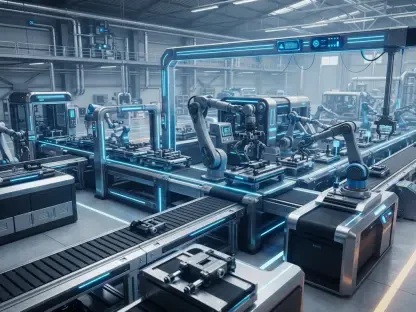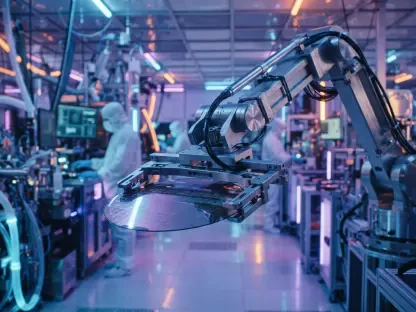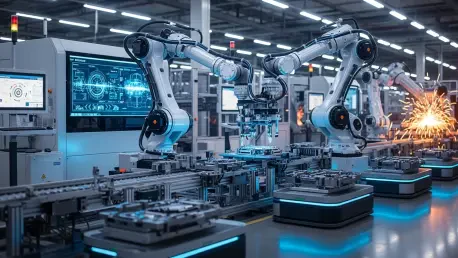

The rapid transformation of the industrial landscape has reached a critical juncture where nearly half of the world’s major smart factories now operate within Chinese borders, showcasing a level of technological maturity that seemed aspirational only a few years ago. This shift is not merely about replacing human labor with mechanical arms but represents a fundamental reimagining of the manufacturing lifecycle through the lens of artificial intelligence. By leveraging vast domestic datasets and a centralized policy framework, the region has transitioned from being the world’s assembly line to becoming its primary laboratory for autonomous production. This evolution is characterized by the widespread adoption of “lighthouse” factories—facilities that utilize high-end industrial internet platforms to connect every sensor and machine to a central cognitive brain. Consequently, the traditional barriers between digital design and physical execution have largely vanished, allowing for a seamless flow of information that drives efficiency and reduces waste on an industrial scale.
Strategic Integration of Industrial Intelligence
The deployment of domain-specific large language models has significantly altered how operators interact with complex machinery, turning natural language into a powerful interface for industrial troubleshooting. In major industrial hubs like Shenzhen and Suzhou, engineers no longer rely solely on thick manuals or rigid code; instead, they utilize generative AI to diagnose mechanical failures and optimize energy consumption in real time. This integration of advanced neural networks into the factory floor has allowed for the creation of “digital twins” that are more than just static 3D models. These dynamic simulations ingest constant streams of data to predict how a slight change in humidity or temperature might affect the structural integrity of a semiconductor or a high-capacity battery. By focusing on vertical AI applications rather than general-purpose tools, manufacturers have successfully reduced the training time for new systems, ensuring that high-precision tasks are executed with a degree of consistency that was previously unattainable.
Beyond the individual factory floor, the synchronization of decentralized production networks has created a highly resilient supply chain that can pivot instantly in response to market fluctuations. Advanced algorithms now oversee the movement of raw materials and finished goods with surgical precision, often anticipating logistical bottlenecks before they actually manifest in the physical world. This systemic connectivity is supported by 5G-Advanced infrastructure, which provides the low-latency communication necessary for thousands of autonomous mobile robots to navigate warehouse environments without human intervention. The result is a self-correcting ecosystem where inventory levels are maintained at optimal thresholds, virtually eliminating the costs associated with overproduction and storage. Moreover, this level of transparency allows for a more circular economy, as companies can track the lifecycle of every component from extraction to assembly. Such logistical mastery has solidified the region’s competitive edge, making it difficult for traditional models to match this speed.
Workforce Evolution and Global Strategic Impacts
The relationship between the workforce and automation has evolved into a collaborative paradigm where humans are repositioned as strategic supervisors rather than repetitive task-performers. Collaborative robots, or cobots, are now equipped with sophisticated tactile sensors and vision systems that allow them to work safely alongside people, handling heavy lifting or hazardous chemical processing with ease. This shift has necessitated a massive upskilling initiative across the industrial sector, as workers are trained to manage AI systems and interpret the vast amounts of diagnostic data they generate. Rather than causing widespread unemployment, this transition has spurred the growth of new roles in algorithmic auditing and human-robot interaction design. The emphasis is now on high-value cognitive contributions, where the human element provides the creativity and ethical oversight that AI still lacks. By fostering this synergy, companies have achieved a harmonious balance that maximizes the strengths of both biological and artificial intelligence.
The global industrial community recognized that the success of these initiatives required more than just technical hardware; it demanded a holistic restructuring of corporate governance and international standards. Policymakers and industry leaders realized that data sovereignty and cross-border interoperability were the twin pillars of a sustainable AI ecosystem. Consequently, businesses began to prioritize the development of open-source frameworks that allowed different AI models to communicate regardless of the original manufacturer. They also invested heavily in edge computing resources to process data locally, which enhanced security and reduced the carbon footprint of large-scale data centers. This period taught the world that the true value of AI-driven manufacturing lay in its ability to be both hyper-efficient and environmentally responsible. Leaders moved toward a model where sustainability metrics were integrated directly into the AI’s objective functions, ensuring that profit motives never overshadowed ecological health or long-term structural viability.