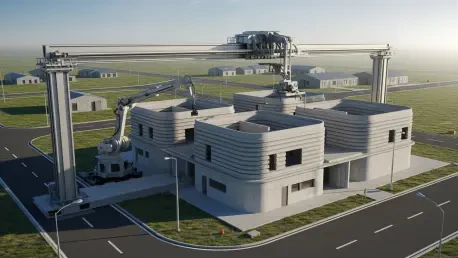

Standing amidst the sprawling desert landscapes of West Texas, the transformation of Fort Bliss from a modest 19th-century border post into a sophisticated hub for robotic construction signifies a profound shift in the Department of Defense’s approach to permanent military housing. This evolution has culminated in the unveiling of the largest 3D-printed barracks project ever undertaken by the American military, signaling that the era of manual, labor-intensive construction is being challenged by high-precision automation. By transitioning to this additive manufacturing model on a massive scale, the Army is not just experimenting with a novel technology but is actively refining a system designed for maximum efficiency and structural longevity. These buildings represent a tangible departure from conventional methodologies, offering a glimpse into how the military intends to manage its domestic and expeditionary infrastructure needs without the heavy logistical burden of traditional material transport.
Interagency Collaboration: The Foundation of Robotic Construction
The successful implementation of such a complex engineering feat required an unprecedented level of coordination between the United States Army Corps of Engineers, the Installation Management Command, and construction technology pioneers from ICON. This consortium worked to establish a blueprint for what is now known as the additive construction model, a framework that prioritizes the rapid deployment of permanent facilities while minimizing the environmental impact of typical construction sites. One of the primary motivations behind this collaborative effort was the urgent need to address the housing deficit for soldiers while simultaneously reducing the volume of material waste that usually accumulates during wood-frame or concrete masonry projects. By integrating architectural design with automated execution, the partnership demonstrated that high-stakes military infrastructure could be delivered with greater consistency than traditional crews might achieve under similar environmental pressures.
At the technological heart of this initiative lies the Vulcan printer, a robust robotic system that utilizes advanced software to deposit building materials with sub-inch precision in a layer-by-layer sequence. This machine is specifically designed to handle the challenges of large-scale construction, employing a proprietary material known as Lavacrete which has been engineered to withstand the punishing heat and arid conditions prevalent in the Texas climate. Despite the high level of automation involved in creating the structural shells, the project remains a sophisticated hybrid endeavor that still relies on traditional construction expertise for finishing touches. Human teams were essential for the installation of complex internal systems, including electrical wiring, plumbing, and roofing, which ensures that these robotic builds are fully habitable. This synergy between automated masonry and manual mechanical work highlights a transition where robots handle the most grueling tasks while specialists finalize the infrastructure.
Performance Metrics: Evaluating Speed and Budgetary Success
Recent data gathered from the Fort Bliss construction site highlights a remarkable improvement in operational speed, revealing that the 3D-printed shells were completed in a mere 58 days. This timeline represents a pace approximately four times faster than the industry standard for traditional masonry or wood-frame barracks of similar size and complexity. Beyond the sheer speed of execution, the project also yielded significant financial benefits, resulting in over $5 million in savings and finishing nearly 10 percent under the initial budget estimates for conventional builds. These cost reductions were primarily driven by a substantial decrease in the total man-hours required to erect the primary structures and the near-total elimination of raw material waste during the printing process. By leveraging the accuracy of robotic deposition, the Army has found a way to bypass many of the fiscal and temporal bottlenecks that have historically plagued large-scale governmental infrastructure development projects.
Safety and regulatory compliance remained paramount throughout the development of these 5,700-square-foot facilities, which are engineered to house up to 56 soldiers per building. Rather than serving as temporary or makeshift shelters, these barracks were built to satisfy the Department of Defense’s rigorous Unified Facilities Criteria, which dictates the structural standards for all permanent military installations. Recent updates to building codes specifically for additive manufacturing have allowed these structures to meet or exceed the safety requirements for fire resistance and structural integrity compared to traditional concrete masonry units. The resilience of the printed walls provides an added layer of protection against the elements, ensuring that the personnel stationed there are housed in environments that are both durable and secure. This adherence to strict military standards proves that 3D-printed buildings are no longer experimental prototypes but are viable, code-compliant solutions for the heavy-duty requirements of the Pentagon.
Strategic Integration: Logistics and Tactical Infrastructure
Looking beyond the borders of domestic installations, the deployment of 3D printing technology offers a formidable strategic advantage in active theaters of operation where traditional supply chains are often vulnerable or non-existent. The ability to utilize locally sourced materials to create fortified structures could drastically reduce the need for hauling heavy materials through hostile territory, thereby lowering the risk to logistical convoys and personnel. As soldiers from the 382nd Military Police Detachment begin to occupy these new facilities, the Army is establishing a global benchmark for the construction industry at large, demonstrating that advanced robotics can thrive under rigorous operational demands. This capability suggests a shift toward a more self-sufficient military infrastructure that can be rapidly stood up in remote locations using minimal resources. The potential to print everything from protective barriers to complex living quarters on-demand ensures that tactical flexibility is maintained in any environment.
The successful completion of the Fort Bliss barracks provided a definitive roadmap for integrating additive manufacturing into the broader logistical framework of the modern military. Decision-makers recognized that the transition to robotic construction addressed the critical need for speed and fiscal responsibility without sacrificing the safety or comfort of service members. By moving away from labor-intensive traditional methods, the project established that future investments should prioritize the development of mobile printing units capable of operating in diverse climates and remote settings. Engineers and strategists focused on expanding the library of printable materials to include soil and debris found on-site, which further reduced the reliance on external supply lines. This initiative proved that the adoption of automation was not merely an upgrade in technology but a necessary shift in strategic thinking. The ultimate insight gained was that a more resilient and adaptable infrastructure was achievable by embracing the precision and efficiency of autonomous construction systems.