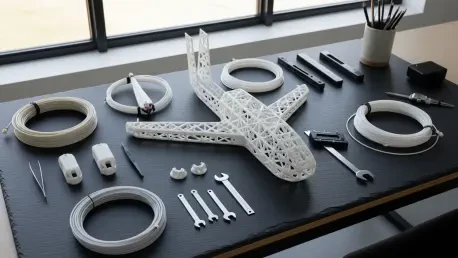

The rapid evolution of additive manufacturing is dismantling the traditional barriers of aerospace production, allowing engineers to bypass the lengthy and expensive tooling processes that once defined the unmanned aerial vehicle industry. Instead of waiting weeks for specialized injection molds or precision-machined aluminum parts, defense contractors and commercial startups are now capable of iterating complex airframe designs in a matter of hours. This transition is not merely a change in fabrication techniques but a complete paradigm shift in how aircraft are conceived, prototyped, and eventually deployed across diverse operational environments. As global supply chains face increasing pressure from geopolitical instability and logistical bottlenecks, the ability to print flight-ready components on-demand offers a strategic advantage that was previously unattainable. This localized production capability ensures that drone fleets can be repaired or modified directly at the point of need, whether that is a remote research station in the Arctic or a crowded urban delivery hub.
Market Dynamics and Technical Advantages
Economic Growth: The Path to a Five-Billion-Dollar Industry
Market analysts forecast a significant trajectory for the additive manufacturing sector within the drone industry, with the global valuation expected to reach approximately five billion dollars by 2035. This growth is primarily fueled by a surge in defense spending, where national militaries are prioritizing the acquisition of low-cost, expendable aircraft that can be produced in high volumes without straining existing industrial infrastructure. By utilizing high-performance polymers and carbon-fiber-reinforced filaments, manufacturers are successfully reducing the gross weight of airframes, which directly correlates to extended flight endurance and increased payload capacity. These improvements are critical for long-range surveillance missions and cargo transport operations where every gram of saved weight translates into additional fuel or sensor equipment. Furthermore, the decentralization of manufacturing through 3D printing allows for a more resilient supply network, as digital blueprints can be securely shared across borders and printed locally.
Engineering Efficiency: Rapid Iteration and Waste Reduction
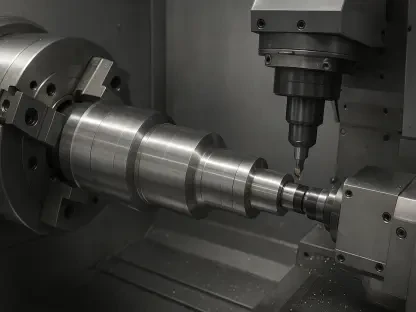
The transition toward 3D printing is anchored by fundamental engineering pillars that prioritize speed and resource management over legacy manufacturing constraints. Traditional subtractive methods, such as CNC machining, often result in significant material waste as large blocks of metal or plastic are carved away to reveal the final part. In contrast, additive manufacturing builds components layer by layer, utilizing only the precise amount of material required for the specific geometry, which drastically lowers production costs and environmental impact. This efficiency is paired with the unprecedented speed of rapid prototyping, enabling engineering teams to move from a conceptual CAD model to a functional physical prototype within a single work cycle. Such agility allows for exhaustive wind-tunnel testing and field trials to happen much earlier in the development process, ensuring that final designs are optimized for aerodynamic performance. By eliminating the need for expensive tooling, manufacturers can implement continuous design improvements throughout the product lifecycle.
Industry Implementation and Future Directions
Practical Applications: From Agriculture to Disaster Response
While the defense sector remains a major catalyst for innovation, the practical application of 3D printed drones has expanded rapidly into civil and commercial spheres. In the agricultural sector, farmers are deploying custom-built drones equipped with multispectral cameras and specialized spraying nozzles to monitor crop health and apply fertilizers with surgical precision. These aircraft are often designed with modular 3D printed components that allow for quick field repairs, ensuring that seasonal windows for planting and harvesting are never missed due to equipment failure. Similarly, the logistics industry is refining last-mile delivery systems where 3D printed chassis are optimized for specific parcel sizes and urban flight paths. In the wake of natural disasters, the utility of this technology becomes even more apparent, as emergency responders can use portable 3D printers to manufacture situational awareness drones on-site. This capability enables teams to assess structural damage or locate survivors in areas where traditional infrastructure has been destroyed completely.
Technological Evolution: Advanced Materials and Corporate Innovation
Industry giants like DJI and Lockheed Martin are currently at the forefront of integrating additive manufacturing into large-scale production, setting new standards for the entire aerospace sector. DJI is focusing on the development of specialized thermoplastic airframes that integrate complex internal channels for wiring and sensor cooling, a feat that is nearly impossible with standard molding techniques. Meanwhile, Lockheed Martin has invested heavily in metal 3D printing facilities, producing titanium and high-strength alloy components for military drones that require extreme thermal resistance and structural durability. This corporate push is driving a broader evolution in material science, with the industry moving toward the use of bio-based resins and advanced metal powders that offer superior strength-to-weight ratios. As the market approaches 2035, the convergence of additive manufacturing and autonomous flight software will likely lead to the creation of self-optimizing aircraft that are mathematically optimized for specific environments.
Strategic Advancements: Standardizing On-Demand Production
The shift toward additive manufacturing in the drone industry successfully bridged the gap between rapid digital design and large-scale physical deployment. Industry leaders finalized the transition by establishing standardized certification processes for 3D printed materials, ensuring that every component met rigorous safety and performance benchmarks. To capitalize on this momentum, stakeholders focused on the development of open-source material databases and more robust cybersecurity protocols to protect digital design files during remote transmission. Investment shifted toward hybrid manufacturing systems that combined the precision of 3D printing with the durability of traditional finishing techniques. Research teams prioritized the creation of multi-material printing capabilities, allowing for the simultaneous fabrication of structural frames and conductive circuitry within a single build. These strategic advancements ensured that the infrastructure for on-demand aerospace production became more accessible to smaller enterprises and international relief organizations.