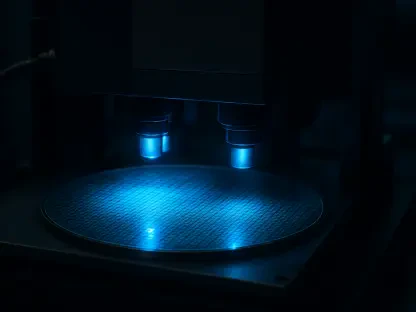

The global transition toward a fully electrified infrastructure has historically been hindered by the inherent safety risks and physical limitations of conventional liquid-based lithium-ion battery systems. While liquid electrolytes facilitate rapid ion movement, their high volatility and susceptibility to thermal runaway present significant hurdles for high-capacity applications in electric vehicles and consumer electronics. A paradigm-shifting study has recently introduced a sophisticated method for synthesizing gel polymer electrolytes through vat photopolymerization, a precise form of 3D printing that utilizes light-curing resins. This technological leap allows for the creation of components that exist in a critical middle ground, offering the high ionic conductivity of liquids alongside the structural integrity and leak resistance of solid-state materials. By utilizing light as the primary catalyst for solidification, engineers can now fabricate electrolytes that are not only safer but also tailored to the specific geometric requirements of modern hardware. This innovation represents more than a minor adjustment to manufacturing; it is a fundamental reimagining of how energy storage materials are designed and integrated, paving the way for a more resilient and versatile power grid that can adapt to the increasingly diverse demands of the current year and beyond.
The Material Synergy: Bridging Liquid and Solid States
Gel polymer electrolytes represent a sophisticated engineering solution that effectively mitigates the “conductive-safety trade-off” that has plagued battery development for decades. In a standard lithium-ion cell, liquid electrolytes provide the highway for ions to travel between electrodes, but they are notoriously flammable and prone to leakage if the casing is compromised. On the other end of the spectrum, solid-state electrolytes are inherently safer but often suffer from high internal resistance because they do not make consistent contact with the uneven surfaces of the electrodes. By using vat photopolymerization to create a gel-like matrix, researchers have developed a material that behaves like a solid during handling but maintains a liquid-like environment within its polymer walls. This ensures that the electrolyte stays exactly where it is needed without the risk of flowing out, while still allowing lithium ions to move through the network with high efficiency. The result is a more stable energy storage device that can survive physical trauma without the immediate risk of a chemical fire, which is a critical requirement for the next generation of portable electronics and high-performance electric vehicles.
The architectural success of these gel polymer electrolytes is deeply rooted in the meticulous control of solvent chemistry during the initial 3D printing stages. Rather than acting as a simple filler, the solvent serves as a primary architect that determines the final physical characteristics of the cured resin. During the photopolymerization process, the ratio and type of solvent used directly influence the speed of the chemical reaction and the density of the resulting polymer chains. This chemical modulation allows engineers to dial in specific properties, such as the exact level of porosity needed to maximize ion transport without sacrificing the material’s structural strength. By balancing these competing factors, the research demonstrates a clear pathway for creating electrolytes that are specifically optimized for different use cases, such as fast-charging systems that require high ion mobility or long-term storage units that prioritize physical stability. This level of precision marks a significant departure from traditional bulk-manufacturing methods, where the internal microstructure is often left to chance rather than being carefully engineered at the molecular level.
Design Versatility: Reimagining Battery Architecture
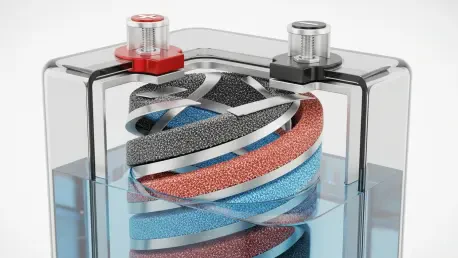
One of the most transformative aspects of utilizing additive manufacturing for battery components is the ability to break away from the restrictive “flat sandwich” designs of the past. Traditional manufacturing limits battery components to simple layers, which often creates bottlenecks in energy flow and restricts the physical shape of the final product. With the advent of 3D printing, researchers can now produce electrolytes with intricate three-dimensional geometries, such as gyroidal structures or gradient lattices, that were previously impossible to manufacture. These complex architectures serve a functional purpose by dramatically increasing the surface area where the electrolyte meets the active electrode material. This expanded interface allows for more efficient electrochemical reactions and lower internal resistance, which directly translates to faster charging speeds and better power delivery. Furthermore, the ability to print these structures on demand means that batteries can now be designed to fit perfectly into the irregular cavities of device housings, enabling a new wave of ergonomic and space-efficient product designs that were previously limited by standardized battery shapes.
Beyond geometric freedom, the mechanical properties of 3D-printed gel electrolytes provide a robust solution to the physical stresses inherent in battery operation. As a lithium-ion battery undergoes charge and discharge cycles, the internal electrodes physically expand and contract, a process that often leads to internal cracking or the delamination of materials in traditional cells. The 3D-printed lattice structures within the gel electrolyte act as a mechanical buffer, providing a level of elasticity that allows the battery to “breathe” during operation without losing its structural integrity. This resilience is particularly important for flexible and wearable technology, where devices are frequently bent, twisted, or subjected to external pressure. By integrating these compliant structures directly into the electrolyte, the research ensures that the battery remains functional even after thousands of cycles of physical and chemical stress. This development moves energy storage away from being a rigid, fragile component and toward being a durable, integrated part of a device’s physical frame, which is essential for the long-term reliability of sensors and mobile hardware.
Performance Metrics: Superior Efficiency and Safety
The electrochemical performance of these advanced gel electrolytes is characterized by a high degree of efficiency that stems from the customized microenvironments created during the light-curing process. Advanced diagnostic techniques have revealed that the polymer matrix facilitates a mechanism known as “ion hopping,” where lithium ions transition between coordination sites with significantly less resistance than in standard solid materials. This enables the 3D-printed gels to achieve ionic conductivity levels that are nearly identical to those found in liquid electrolytes, effectively eliminating the primary performance hurdle that has held back the adoption of non-liquid systems. Because the polymer network is engineered to be highly organized, the ions follow a more direct path through the electrolyte, reducing the energy lost as heat and improving the overall efficiency of the battery. This performance boost is not just a theoretical improvement; it represents a tangible increase in the power density of the battery, allowing for smaller cells to deliver the same amount of energy as larger, conventional units while maintaining a much higher safety profile for the end user.
The chemical stability of these 3D-printed gels also allows for the safe exploration of high-voltage battery chemistries that were previously considered too unstable for mass production. Many liquid electrolytes decompose at higher voltages, leading to dangerous internal pressure and the rapid degradation of the battery’s capacity over time. However, the specific solvent-polymer combinations used in this 3D printing technique create an “oxidative stability window” that is much wider than what is available in commercial cells today. This stability prevents the side reactions that normally occur at the interface between the electrolyte and the cathode, allowing the battery to operate at higher voltages without sacrificing safety. By unlocking these higher voltage levels, engineers can significantly increase the energy density of the battery, which is the key to extending the driving range of electric vehicles and the usage time of high-drain portable electronics. Additionally, the gel’s ability to act as a thermal barrier helps prevent the spread of localized heat, ensuring that even if one part of the battery experiences a failure, the rest of the system remains stable and protected from thermal runaway.
Future Outlook: Sustainable Manufacturing and Industrial Scaling
From an environmental and manufacturing perspective, the adoption of vat photopolymerization for battery production demonstrated a significant reduction in the chemical waste typically associated with large-scale electrode coating. Because 3D printing is inherently an additive process, the technology only utilized the exact volume of resin required to form the electrolyte, effectively eliminating the surplus waste generated by traditional subtraction or casting methods. The research also moved the industry closer to its sustainability goals by successfully incorporating “green” solvents into the printing process, replacing the hazardous volatile organic compounds that have long been a staple of battery manufacturing. This shift not only reduced the environmental footprint of the production line but also improved the safety conditions for workers in the manufacturing facility. By proving that high-performance materials could be synthesized through cleaner, more efficient methods, the study provided a clear roadmap for how the energy sector could align its production capabilities with modern ecological standards without compromising on the quality or efficiency of the final product.
As the focus shifted toward the commercialization of this technology, the integration of automated quality control and real-time diagnostic tools became the primary priority for industrial scaling. The laboratory successes of the current year provided a foundational framework that allowed manufacturers to transition toward “feedback-controlled” printing systems, where sensors monitored the curing process in real-time to ensure every unit met strict performance standards. The adaptability of the vat photopolymerization platform also suggested that the technique would not remain limited to lithium-ion systems, as early experiments with sodium-ion and magnesium-ion chemistries showed similar promise. This flexibility allowed for the rapid development of low-cost, high-capacity storage solutions that could be deployed across a wide range of industries, from large-scale grid storage to miniaturized medical implants. By establishing a robust link between chemical design and automated manufacturing, the research effectively dismantled the barriers to entry for advanced electrolytes, ensuring that the next generation of energy storage would be defined by its safety, efficiency, and architectural ingenuity.