
The shift in the global biopharmaceutical manufacturing map has moved toward the Asia-Pacific region as developers seek diversified supply chains and cutting-edge production capacity. AGC Biologics has anchored its presence in this shifting landscape with a $350 million expansion in Yokohama, a move designed to meet the escalating demand for high-quality drug manufacturing services. This investment signals a broader trend where contract development and manufacturing organizations (CDMOs) provide the essential backbone for the industry. Key players including Fujifilm, WuXi Biologics, and Thermo Fisher Scientific now compete for dominance in an environment where infrastructure for mammalian, microbial, and cell therapy production determines which region wins the next wave of innovation.
The CDMO model remains the lifeblood of modern drug development, allowing pharmaceutical firms to offload the heavy capital expenditures of facility construction to specialized partners. While local giants such as Fujifilm have traditionally dominated the Japanese landscape, the entry of AGC Biologics’ massive Yokohama project creates a more competitive marketplace. This facility serves as a vital hub, bridging the gap between clinical research and commercial distribution by providing the scale necessary to handle global pipelines. By offering specialized suites for various biological platforms, these organizations ensure that life-saving treatments move from the laboratory to the patient with greater efficiency and lower regulatory risk.
Evaluating Technical Capabilities and Manufacturing Focus
Mammalian Production Capacity and Single-Use Technology
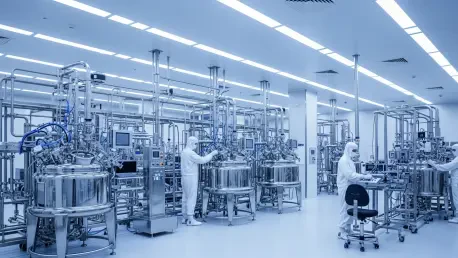
In the race for manufacturing supremacy, scale and technology are the primary differentiators. AGC Biologics has leveraged the Thermo Scientific DynaDrive system to create an impressive single-use bioreactor suite that includes two 5,000L and four 2,000L units. This configuration is specifically designed to challenge the established dominance of WuXi Biologics and Thermo Fisher Scientific, particularly in the realm of mammalian cell culture. By focusing on single-use technology, AGC offers a degree of flexibility and speed that traditional stainless-steel facilities often struggle to match, reducing the risk of cross-contamination and shortening changeover times between product runs.
This capacity positions the Yokohama site as one of the largest single-use mammalian manufacturing hubs outside of China. For developers, this provides a strategic alternative to Chinese-based manufacturing, addressing geopolitical and supply chain concerns that have become increasingly prominent. While rivals like WuXi continue to hold massive global market shares, the sheer volume of AGC’s single-use capacity in Japan offers a localized solution for companies targeting the lucrative Asian market without sacrificing the technical sophistication required for complex biologics.
Specialization in Next-Generation Modalities: mRNA and CGT
While capacity is essential, the specific therapeutic modalities a CDMO supports can define its market niche. AGC Biologics has deliberately steered its Yokohama strategy toward mRNA and cell and gene therapies (CGT), contrasting sharply with the antibody-drug conjugate (ADC) focus maintained by local competitors like Fujifilm. The facility features a multi-modal design, including dedicated lines for in vitro transcription (IVT) and lipid nanoparticle (LNP) production capable of generating up to 50g of mRNA. This specialization ensures that AGC can capture the burgeoning demand for vaccines and genetic medicines that require highly specialized processing equipment.
The cell therapy department further distinguishes AGC from its regional rivals through its reliance on expertise from the company’s established Center of Excellence in Milan. By implementing four dedicated cleanrooms for both autologous and allogeneic cell therapy processing, the site provides a level of technical depth that standalone facilities often lack. In contrast, competitors like Fujifilm have funneled significant resources into the ADC space, which involves its own set of complex conjugation chemistries. This divergence allows the Japanese market to offer a balanced portfolio of services, where developers choose their partner based on the specific biological architecture of their drug candidate.
Regional Ecosystems and Internal Developmental Networks
A significant advantage for AGC Biologics lies in its integrated regional network, which links the new Yokohama facility with existing sites like the Yokohama Technical Center and the Chiba microbial facility. This internal ecosystem allows for a seamless transition from early-phase process engineering—supported by over 1,000 scientists—to full-scale commercial manufacturing. Such a unified network is often more efficient than the fragmented models used by some regional providers, where research and development might be geographically isolated from the actual production lines.
The proximity of these specialized sites enables a collaborative environment where technical knowledge flows freely between teams. For instance, a project that begins in the technical center can be scaled up to the mammalian or microbial suites with minimal friction, ensuring that the critical data gathered during early development is not lost in transition. This regional synergy is a key selling point for developers who prioritize speed and reliability, as it minimizes the administrative and logistics hurdles often associated with moving a project through different stages of the manufacturing lifecycle.
Operational Challenges and Strategic Limitations in the Asia-Pacific Market
Navigating the biopharmaceutical landscape in Japan is not without its hurdles, particularly regarding the pivot toward highly specialized fields like mRNA. The capital requirements for advanced single-use equipment and the high cost of maintaining cleanroom environments place a significant financial burden on CDMOs. Furthermore, the regulatory landscape remains stringent, requiring a long lead time for facility certification. Even after the mechanical completion of a site, there is typically a two-year gap before the first GMP-certified batches can be released, creating a period of significant operational risk where the facility must be maintained without generating commercial revenue.
Strategic limitations also arise from niche specialization. By focusing heavily on CGT and mRNA, AGC Biologics necessarily leaves gaps in other manufacturing areas, such as the antibody-drug conjugates mentioned previously. To address these deficiencies, the company must rely on strategic partnerships, such as its collaboration with Cerbios. While these partnerships allow for a more comprehensive service offering, they also introduce a layer of complexity in project management. Developers must weigh the benefits of a specialized hub against the convenience of a “one-stop-shop” that might offer broader, albeit less deep, technical capabilities across all modalities.
Strategic Recommendations for Biopharmaceutical Outsourcing
Choosing the right CDMO in the current market required a careful evaluation of technical versatility and geographic security. For organizations with pipelines centered on large-scale mammalian production or next-generation mRNA and cell therapies, the AGC Yokohama site provided a compelling case for investment. Its massive single-use capacity and integrated scientific network offered a level of scalability that few other regional players could match. In contrast, those focused on ADC-heavy portfolios might have found the specialized infrastructure of rivals like Fujifilm more aligned with their specific chemical conjugation requirements.
The evolution of the Yokohama facility demonstrated that the selection process for developers shifted toward stabilizing global supply chains within the Japanese market. By prioritizing the most advanced single-use bioreactor technologies, AGC successfully influenced the criteria for biopharmaceutical outsourcing, emphasizing flexibility over traditional large-scale stainless steel. Ultimately, the decision to partner with a specific organization became a matter of aligning the therapeutic modality with the regional infrastructure that best supported long-term commercial goals. Developers who analyzed these differentiators effectively were better positioned to navigate the complexities of modern drug manufacturing.