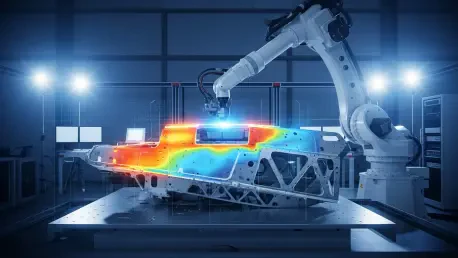

Large-scale additive manufacturing frequently encounters a significant technical bottleneck where the complex thermal simulations required for quality assurance take considerably longer than the physical fabrication process itself. This persistent delay often forces engineers to rely on trial-and-error methods, leading to expensive material waste and structural failures that could have been avoided with better data. To address this challenge, the introduction of Aibuild FETS represents a shift toward high-speed finite element thermomechanical simulation. By leveraging GPU-powered processing, this software transforms what used to be days of intensive computation into a rapid, iterative workflow that functions efficiently without the need for specialized supercomputing hardware. This advancement allows production teams to anticipate how a part will behave during the build phase well before a single layer of material is deposited. It effectively bridges the gap between digital design and physical reality, ensuring that complex geometries are viable and sound.
Comprehensive Material Analysis and Process Versatility
The versatility of this simulation tool extends across a diverse range of metal and thermoplastic manufacturing techniques, making it a universal asset for various industrial sectors. It supports processes such as Directed Energy Deposition and Wire Arc Additive Manufacturing, alongside specialized methods like Friction Stir Additive Manufacturing and standard Fused Filament Fabrication. By focusing on six critical performance areas, the software provides a deep dive into the mechanical integrity of each part. Engineers can analyze thermal distribution and thermomechanical behavior to pinpoint areas prone to distortion or residual stress. Furthermore, the tool addresses the common problem of interlayer bonding, identifying potential issues like sagging or poor adhesion that often lead to part rejection. The ability to predict cracks based on simulated stress levels adds a layer of safety, ensuring that the final product meets the rigorous standards of modern engineering. This holistic approach ensures every variable is managed.
Streamlined Integration: The Future of Validated Workflows
Beyond its technical capabilities, the system emphasized accessibility by adopting a CAM-agnostic framework that allowed for seamless integration into existing manufacturing pipelines. A simplified calibration process was utilized to minimize setup times, removing the barriers that often discouraged smaller firms from adopting high-level simulation tools. Validation by the National Institute for Aviation Research confirmed that the tool maintained high technical accuracy consistent with established industry standards despite its rapid performance. This validation provided the necessary confidence for aerospace manufacturers to move forward with critical components. The software ultimately represented a significant trend toward more agile manufacturing workflows by allowing teams to refine process parameters early in the design cycle. By mitigating risks such as thermal distortion or structural failure before production, the industry successfully reduced material waste and shortened the path from digital concept to finished part. This was a vital shift in AM.