
The traditional perception of industrial safety as a burdensome cost center is rapidly being replaced by a sophisticated understanding of how protection and productivity are fundamentally intertwined. In the high-pressure environment of modern manufacturing, where every second of downtime impacts the bottom line, the presence of physical hazards acts as a hidden tax on overall operational speed. When a facility operates under the shadow of potential injury, the resulting friction manifests as slowed movement, increased worker fatigue, and a general lack of process predictability. By shifting the focus from a purely reactive stance to a proactive culture of risk elimination, manufacturers can unlock latent capacity that was previously suppressed by suboptimal working conditions. This evolution requires moving beyond simple compliance with regulatory standards to a more holistic strategy where safety serves as a primary driver for identifying and removing inefficiencies. Ultimately, a secure workplace provides the stable foundation necessary for scaling production and maintaining high-quality standards without the constant threat of disruption caused by human or mechanical failure.
The Physical Toll of Manual Processes
Manual handling remains one of the most significant hurdles to achieving peak efficiency in a factory setting where high-volume production is the primary goal. In many manufacturing environments, routine tasks like lifting, pushing, or pouring heavy raw materials are seen as standard operating procedures, yet they frequently lead to various musculoskeletal disorders. These injuries are rarely the result of a single catastrophic accident; instead, they are caused by the cumulative effect of high-force application, repetitive motions, and awkward postures sustained over long shifts. When workers are physically fatigued or managing chronic pain, their precision inevitably drops, the error rate climbs, and the overall rhythm of the production line is disrupted. This creates a direct and measurable link between physical strain and reduced throughput, as the human element becomes the weakest link in an otherwise fast-paced system.
A clear example of this dynamic can be found in sectors like high-volume food production, where workers might be tasked with lifting heavy bags of raw ingredients into mixers every few minutes to meet demand. While the output might meet targets in the short term through sheer effort, the physical toll eventually creates a bottleneck as workers naturally slow down to manage discomfort. Management often attempts to solve these issues using administrative controls, such as rotating staff or assigning extra personnel to a specific station. While these “soft” fixes might spread the workload more evenly, they fail to address the root cause of the hazard, leaving the company vulnerable to both injury claims and inconsistent production speeds. True operational excellence cannot be achieved as long as the core process relies on unsustainable levels of human physical exertion that lead to inevitable burnout and turnover.
Strengthening Performance Through Worker Consultation
True operational efficiency is rarely achieved through top-down mandates alone; it requires the active and informed participation of the people who operate the machinery every day. By establishing formal safety structures, such as designated work groups and health and safety representatives, a company creates a vital feedback loop that uncovers hidden inefficiencies buried within daily routines. Workers who perform specific tasks daily possess the most intimate knowledge of where the process breaks down or where a particular tool fails to perform as intended. Engaging these employees in regular “toolbox meetings” allows management to identify specific postural strains or minor equipment flaws that a supervisor might overlook during a standard walkthrough. This ground-level insight is often the missing piece in a puzzle that, when solved, streamlines the entire workflow.
This collaborative approach ensures that safety investments are targeted and effective rather than being generic solutions that fail to meet the specific needs of a unique production line. When employees feel that their physical well-being is a genuine priority for leadership, morale increases significantly, leading to higher levels of engagement and lower turnover rates. A stable, experienced workforce is inherently more efficient than one that is constantly training new hires to replace staff who have left due to injury or job dissatisfaction. By formalizing communication and governance, manufacturers build a robust foundation where safety concerns are raised proactively, allowing for minor adjustments before a small issue turns into a costly operational shutdown. This culture of mutual respect and shared responsibility transforms safety from a checklist into a strategic advantage that fosters long-term business resilience.
Engineering Out the Bottlenecks
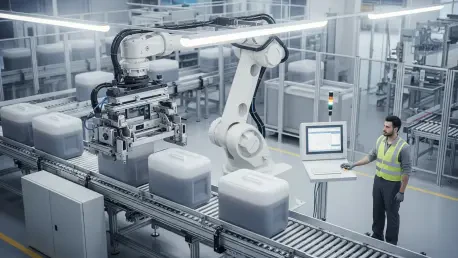
The transition from merely managing risks to systematically eliminating them is where the most significant gains in manufacturing efficiency are typically found. Using the Hierarchy of Controls, forward-thinking manufacturers prioritize engineering solutions that remove a hazard entirely rather than relying on protective gear or behavioral changes. For instance, replacing a manual lifting task with a fully automated vacuum loading system does more than just protect the worker’s physical health; it standardizes the pace of the entire production line. Automated systems do not suffer from the fatigue or cumulative soreness that naturally slows a human worker down over an eight-hour shift, leading to a much more predictable and faster manufacturing cycle. This shift allows the facility to maintain a constant rate of production that is decoupled from the physical limitations of the workforce.
Ultimately, the transition from manual labor to engineered, automated solutions bolsters the company’s bottom line through increased consistency and reduced waste. Removing physical bottlenecks allows the entire facility to operate at its true capacity, often paying for the initial investment in equipment through higher volume and a marked reduction in downtime. When a business treats safety as a core component of its operational strategy, it achieves a dual benefit: a healthier, more motivated workforce and a streamlined process that is built for long-term scalability. This holistic approach proves that the safest way to work is almost always the most productive way to work, as it replaces variability with precision. Transitioning to these systems ensures that the business remains competitive in an era where speed and reliability are the primary currencies of success.
Strategic Directions for Future Implementation
To capitalize on the link between safety and efficiency, organizations must move toward the integration of real-time ergonomic monitoring and predictive maintenance. In the coming years, the adoption of wearable sensors that track worker posture and exertion levels will allow managers to identify high-risk areas before they result in a decline in production speed. This data-driven approach shifts the focus from historical accident reports to proactive interventions, ensuring that the workflow remains optimized and injury-free. Furthermore, as manufacturers invest in new machinery, they should prioritize equipment that features built-in safety-by-design principles, which reduce the cognitive load on operators and minimize the chances of human error during high-speed operations. These technological advancements will serve to tighten the loop between worker protection and peak mechanical performance.
Beyond the implementation of new technology, the most effective next step for any manufacturer is to conduct a comprehensive audit of all manual handling tasks to identify where automation can be utilized as a dual-purpose tool. By targeting the most physically demanding jobs for mechanical assistance, a company can simultaneously lower its insurance premiums and increase its hourly output. Management should also focus on formalizing the role of health and safety representatives, ensuring they have the authority to suggest process improvements that go beyond simple risk mitigation. Moving forward, the goal should be the creation of an environment where safety and efficiency are no longer discussed as separate topics, but as a single, unified metric of operational health. Organizations that successfully bridge this gap will find themselves better equipped to handle the demands of a rapidly evolving global market.