
Certification testing for the MAX 7 and MAX 10 variants has progressed to the point where customer deliveries are now scheduled for early 2027. This revised timeline represents a significant departure from previous forecasts, reflecting the immense pressure on the manufacturer to rectify its industrial framework. CEO Kelly Ortberg emphasized that the company is prioritizing a stable production environment over aggressive volume increases. The current goal is to reach a consistent output of 47 aircraft per month by 2027, a target that has been pushed back as the organization grapples with deep-seated manufacturing bottlenecks. This shift highlights the extreme difficulty of modernizing a legacy assembly system while managing a complex global supply chain that remains fragile. By extending the recovery window, the leadership team aims to ensure that every aircraft rolling off the line meets rigorous standards, effectively signaling an era where safety and reliability supersede speed.
Industrial Realities: Navigating the Production Bottleneck
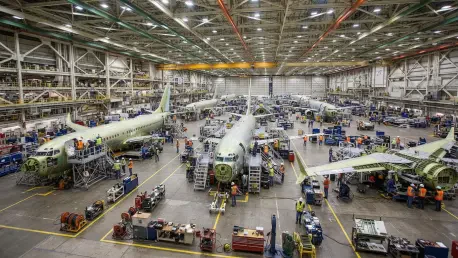
While engine availability was once the primary concern for aerospace analysts, the focus has shifted toward more structural components within the assembly process. Specifically, wing production has emerged as a critical bottleneck that requires extensive corrective action and capacity expansion. Boeing is currently in the process of modifying its wing manufacturing workflows to capture efficiency gains that previously failed to materialize. This involves adding specialized tooling and increasing the workforce dedicated to these complex assemblies to prevent delays from cascading down the production line. The company has acknowledged that previous assumptions regarding the speed of these improvements were overly optimistic, leading to the current reassessment of what is physically achievable. Strengthening the wing fabrication process is not merely about adding more shifts but involves a fundamental re-evaluation of how parts move through the factory floor to eliminate unnecessary downtime.
A core component of the revised recovery strategy is a more cautious philosophy regarding production rate increases across all assembly lines. Leadership has determined that output levels will remain capped until the entire manufacturing ecosystem demonstrates a sustained ability to operate without disruptions. This approach is designed to eliminate the practice of “traveled work,” where unfinished components move through the line, causing inefficiencies and quality risks later in the process. By holding at current levels, the factory floor can synchronize more effectively with tier-one suppliers, ensuring that every necessary bolt and panel is available exactly when needed. This tactical pause reflects a broader cultural shift within the organization, prioritizing systemic health over quarterly delivery metrics. The commitment to maintaining a stable pace is intended to rebuild trust with regulators and airline customers who have faced numerous schedule changes over the last several years.
Strategic Integration: Financial Resilience and Expansion
The financial fallout from these production delays has been immediate and severe, causing significant ripples throughout the global financial markets. Following the announcement of the pushed-back recovery timeline, the company’s stock experienced a sharp decline of nearly ten percent in a single day, marking one of its most challenging trading sessions in recent memory. This investor reaction underscores the market’s sensitivity to delivery schedules and the resulting impact on liquid capital. Furthermore, the projected free cash flow for 2027 has been revised downward to approximately $3 billion, a stark contrast to the $5.5 billion that many Wall Street analysts had originally anticipated. This reduction in available cash limits the company’s flexibility to invest in future projects or reduce debt, necessitating a disciplined approach to capital allocation. Investors remain wary of the long-term implications, as the slower ramp-up suggests that the path to full financial recovery will be longer and more arduous than initially forecasted.
The path forward necessitated a fundamental restructuring of how production milestones were communicated and met within the aerospace sector. To ensure long-term stability, industry leaders focused on implementing advanced data analytics to monitor supply chain health in real-time, allowing for proactive adjustments before bottlenecks occurred. This technological integration proved essential in bridging the gap between theoretical capacity and actual factory output. Moving into the next phase of recovery, stakeholders prioritized the standardization of assembly protocols across different geographic locations to maintain consistency in aircraft quality. These efforts were complemented by a renewed emphasis on workforce development, ensuring that technical expertise was preserved during the transition to new manufacturing lines. Ultimately, the lessons learned from the delays provided a blueprint for more sustainable growth. Organizations should now focus on fostering deep transparency with suppliers to create a resilient and agile production environment.