
The Fragility of Aerospace Giants and the Power of Niche Suppliers
The immense complexity of modern aerospace manufacturing ensures that even a global giant like Boeing remains remarkably vulnerable to the operational stability of its smallest specialized partners. While the industry is often viewed as a monolith of massive corporations, the reality is a delicate web of dependencies where a single missing component can halt the most advanced assembly lines. This vulnerability recently manifested at Boeing’s Everett facility in Washington, where a dispute with a niche supplier disrupted the production of vital widebody aircraft. By examining this crisis, the strategic risks inherent in just-in-time manufacturing and the high cost of supply chain friction become clear.
The event highlights the precarious nature of the 777 freighter and 767 programs, which are essential for global logistics and national defense. As Boeing navigates a landscape defined by post-pandemic recovery and intense quality control scrutiny, this specific bottleneck serves as a stark cautionary tale. The purpose of this timeline is to detail the progression of the standoff with Vaero, the resulting financial fallout, and the strategic shifts implemented to ensure that a localized dispute never again holds a global delivery schedule hostage.
A Timeline of Supply Chain Stagnation and Recovery
August 2026: The Financial Hemorrhage Begins
The tension between Boeing and its Florida-based supplier, Vaero, reached a critical breaking point in mid-2026. As the exclusive provider of trailing-edge rib kits for 777 freighter and 767 wings, Vaero held significant leverage. When shipments ceased due to a protracted legal and contractual dispute, the Everett facility was quickly starved of essential parts. Court filings from August revealed the staggering scale of the crisis, with Boeing reporting losses of approximately $6.5 million for every day the production line remained idle. This period marked the start of a two-month paralysis for the 777 freighter program, signaling that even a small supplier could effectively disable a multi-billion dollar assembly operation.
September 2026: Settlement and Partial Resumption
After weeks of mounting losses and legal maneuvering, Boeing and Vaero reached a formal settlement in late September. This agreement was intended to restart the flow of components and stabilize manufacturing. However, the resumption of work was far from instantaneous. While the 767 line—responsible for commercial cargo planes and KC-46 military tankers—began to receive parts and show signs of recovery, the 777 freighter line remained largely frozen. The backlog created by the stoppage meant that the delivery ecosystem remained out of sync, proving that ending a legal dispute is only the first step in a much longer process of operational recalibration.
October 2026: The Impact on Final Assembly and Delivery
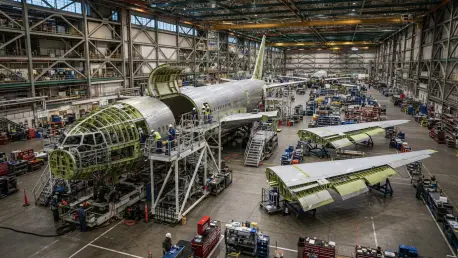
By October, the physical consequences of the supply chain break became visible on the factory floor. Boeing was forced to remove two partially assembled 777 freighters from its final assembly line to make room for other work. One of these stalled aircraft was a high-profile delivery intended for FedEx, highlighting the direct impact on global logistics. Despite having delivered 21 freighters earlier in the year, the company was forced to rely on dwindling pre-existing wing stock to meet its remaining commitments. This month solidified the realization that the ripple effects of a two-month stoppage would linger long after the legal papers were signed.
Analyzing the Turning Points and the Shift Toward Resilience
A major turning point in this saga was the realization that a single point of failure existed within the production of a successful widebody freighter. The dispute demonstrated that the cost of a components kit is negligible compared to the $6.5 million daily loss incurred when it is missing. A significant theme emerging from this crisis is the transition from “just-in-time” efficiency to “just-in-case” resilience. Boeing’s decision to move the manufacturing of these rib kits in-house represents a fundamental shift in procurement philosophy, prioritizing control over the potential cost savings of outsourcing to niche vendors.
There was also a notable technological divergence during the crisis. While traditional 777 and 767 programs were paralyzed, the next-generation 777X program remained unaffected. This is because the 777X utilizes advanced composite wing technology rather than the aluminum rib kits provided by Vaero. This gap in impact highlights how technological evolution can inadvertently insulate a company from legacy supply chain risks, though it also underscores the challenges of maintaining older airframes that rely on a shrinking pool of specialized suppliers.
Broader Implications for Global Aerospace Stability
The conflict between Boeing and Vaero serves as a microcosm for larger challenges facing the aerospace sector. Regional differences in manufacturing and the concentration of expertise in small firms create bottleneck hubs susceptible to volatility. Experts suggest that as aircraft become more complex, the number of exclusive-source components increases, heightening risks for manufacturers. This incident sparked a broader conversation about de-risking the supply chain, with industry leaders now reconsidering the wisdom of relying on a single source for mission-critical parts.
The 767 program also illustrates the intersection of commercial and defense interests. Because the platform supports the KC-46 aerial refueling tanker, the disruption had potential implications for military readiness. This overlap often brings additional regulatory scrutiny to supplier disputes. As Boeing moves forward with its strategy of vertical integration for wing components, the industry will watch closely to see if other manufacturers follow suit, potentially reversing decades of outsourcing trends in favor of greater internal oversight and production security.
In conclusion, the resolution of the Boeing-Vaero standoff provided a blueprint for how aerospace giants managed unexpected operational shocks. The transition to in-house manufacturing of rib kits effectively removed a major single point of failure that had cost millions in daily revenue. Leaders across the sector analyzed the shift toward vertical integration as a necessary safeguard against the inherent risks of a fragmented global supply chain. Moving forward, the focus remained on diversifying component sources and accelerating the adoption of composite technologies to replace legacy parts. These actions suggested that the industry moved toward a more resilient, self-contained model of production designed to withstand localized legal and economic volatility.