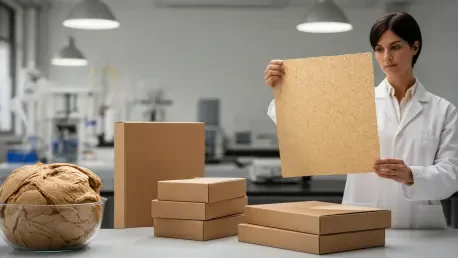

The global paper industry is currently facing a transformative period as traditional timber resources become increasingly scarce and environmental regulations tighten around the world. Every year, the commercial banana industry generates millions of tons of agricultural waste that typically goes to rot in the fields or is burned, releasing significant carbon emissions into the atmosphere. Recent breakthroughs in material science have demonstrated that banana pseudostems, the thick stalks left behind after the fruit is harvested, offer a remarkably effective and sustainable alternative to conventional wood pulp. By converting these bulky residues into high-quality paper, manufacturers can effectively transform a massive environmental liability into a lucrative commercial asset. This shift addresses the urgent need for circular economy models that minimize waste while preserving the remaining forest ecosystems that are vital for climate stability. The integration of such agricultural byproducts into the global supply chain represents a significant leap forward in industrial sustainability and resource efficiency for the coming years.
Turning Agricultural Residue into Industrial Assets
In primary production regions such as Sindh, Pakistan, the sheer scale of banana-related agricultural waste is staggering, with hundreds of thousands of tons produced annually. Since each banana plant fruits only a single time before being cut down, farmers are constantly left with water-heavy stalks that have historically served no practical economic purpose. In the current production cycle from 2026 to 2028, these residues have often created logistical bottlenecks, as clearing the land for the next planting cycle requires significant labor and disposal costs. By repurposing this biomass into essential paper products like tissues and packaging, the industry can finally provide a secondary income stream for local farmers. This transition not only simplifies farm management but also establishes a reliable, non-wood fiber source that does not require the decades of growth time associated with commercial timber forests. The move toward utilizing these stems effectively turns a regional waste problem into a robust solution for the global fiber market.
The technical transformation from raw agricultural waste to industrial pulp involves a refined process of mechanical extraction and chemical digestion. Specialists utilize fiber-extraction machinery to strip long, durable strands from the pseudostems, which are then “cooked” under controlled thermal and chemical conditions to break down the lignin. Extensive trials have identified an optimal recipe involving a temperature of 230°F and a precise concentration of sodium hydroxide to maximize efficiency. These conditions yielded a pulp recovery rate of 44 percent, a metric that positions banana fiber as a legitimate and economically viable competitor to traditional wood-based pulp sources. This efficiency is critical for industrial adoption, as it proves that high-value materials can be generated through relatively straightforward processing techniques. By avoiding the high-energy demands of logging and timber transport, this pulping method offers a streamlined pathway for producing sustainable paper products without the heavy environmental footprint of the wood industry.
Evaluating Performance and Ecological Benefits
Rigorous performance testing has confirmed that banana-based paper is far more than just a niche concept, meeting or exceeding professional benchmarks for durability and utility. The resulting material exhibits high tensile strength and bursting resistance, making it exceptionally well-suited for a variety of applications ranging from delicate hygiene tissues to robust industrial packaging. Furthermore, the natural brightness of the fiber reaches levels as high as 77 percent, providing a professional and clean aesthetic that is highly desirable in the consumer market. This level of visual quality is achieved with a significantly lower chemical load than that required for bleaching virgin wood fibers, which often rely on aggressive chlorine-based agents. These technical advantages demonstrate that switching to alternative agricultural fibers does not require a compromise in product quality. Instead, it offers a way to produce high-performance materials that align with the growing consumer demand for environmentally responsible and transparent manufacturing processes.
Shifting the industry toward banana pulp provides a clear path to cleaner manufacturing by substantially reducing the chemical intensity of the traditional pulping cycle. By sourcing raw materials from existing agricultural land rather than natural forests, manufacturers can effectively decouple paper production from the ongoing threat of global deforestation. This approach protects critical biodiversity hotspots and maintains the carbon sequestration capacity of old-growth forests, which are otherwise lost to timber harvesting. The implementation of this model fosters a circular economy where every part of the crop is utilized, ensuring that the environmental cost of agriculture is spread across multiple product lines. This reduction in the ecological footprint is complemented by the fact that banana fiber processing produces less toxic wastewater than conventional wood-pulping mills. As the industry moves forward, the adoption of these cleaner technologies will be essential for meeting international sustainability goals and reducing the long-term environmental impact of the packaging sector.
Overcoming Structural Barriers for Global Adoption
Beyond the primary production of paper and packaging, broader scientific investigations have indicated that banana waste is a versatile tool for addressing various environmental challenges. Researchers found that the unique porous structure of these fibers allowed them to be processed into low-cost filtration materials capable of removing heavy metals and toxic dyes from contaminated water systems. Some specialized extraction methods even suggested that the fiber yield could be pushed as high as 60 percent, depending on the specific variety of the plant and the mechanical techniques employed. This versatility highlights the potential for banana-growing regions to become hubs for a variety of green technologies, supporting both large-scale industrial exports and local economic resilience. By diversifying the use of agricultural waste, communities can develop multiple revenue streams that contribute to broader social and economic stability. This multi-faceted utility makes the banana plant one of the most promising candidates for replacing timber in the modern bio-based economy.
Despite the clear advantages of banana-based pulp, the research community identified several practical hurdles that required immediate attention to ensure long-term commercial success. The high water content of the pseudostems led to rapid decay if the material was not processed shortly after the harvest, which increased the complexity of the supply chain. Consequently, it was determined that processing facilities needed to be strategically located in close proximity to the agricultural fields to minimize transportation costs and prevent fiber degradation. The studies confirmed that bridging these logistical gaps provided the final necessary step for integrating banana waste into the global market on a permanent basis. Once these localized infrastructures were established, the thousands of tons of material that previously rotted in the fields were successfully transformed into a staple of the international packaging industry. These advancements offered farmers a reliable secondary income while simultaneously providing a scalable solution for the protection of forest ecosystems. Overcoming these initial challenges allowed the industry to move toward a more sustainable and resource-efficient future.