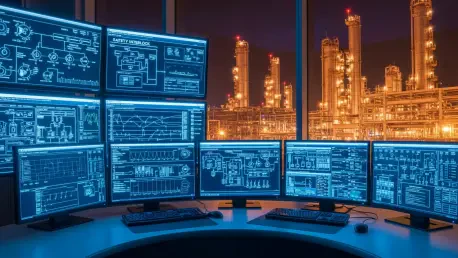

The rapid integration of sophisticated digital control systems within the chemical manufacturing sector has created a volatile landscape where a single line of malicious code can trigger a massive physical explosion. Imagine a chemical refinery where a silent digital intrusion alters the pressure setpoints of a distillation column, bypassing hardware safety interlocks and leading to a catastrophic structural failure that endangers an entire local community. This scenario is no longer a plot for a thriller; it is a palpable reality for the global chemical industry in 2026. As facilities embrace digital tools to optimize their operations, they face new risks that go far beyond simple data loss. To remain viable, the industry must move past outdated security concepts and adopt a risk-based strategy that treats a digital breach as a potential physical disaster. The historical reliance on purely mechanical safety measures is no longer sufficient when the logic controlling those measures is vulnerable to remote manipulation from across the globe.
The Convergence of Digital and Physical Risks
The convergence of digital and physical risks in modern manufacturing represents one of the most significant challenges to industrial stability in the current decade. The shift from manual to autonomous control has revolutionized output and precision, but it has also introduced invisible vulnerabilities that legacy safety protocols were never designed to manage. Traditional safety barriers are failing to account for the unique ways digital code can bypass physical stops. In 2026, the complexity of these interconnected systems means that a single point of failure in a network switch can be as dangerous as a corroded pipe or a faulty pressure valve. Digital integrity must now be treated as a prerequisite for physical containment and operational continuity. This necessitates a transition toward a more holistic view of plant health, where network traffic is monitored with the same intensity as temperature, flow, and pressure readings within the process units themselves to ensure safety.
Redefining Security: The Shift Toward Process Safety
The most important change in industrial thinking today is the realization that cybersecurity is now a core part of process safety management rather than a peripheral IT concern. In the past, companies viewed digital security as a secondary issue focused mainly on protecting business secrets and intellectual property from corporate espionage. However, modern systems now manage hazardous materials and critical reactions, meaning a digital intrusion is a direct threat to the mechanical integrity of the facility and the lives of the people working within it. The silos that once separated the IT department from the engineering team have become dangerous liabilities. When a programmable logic controller is compromised, it is not just a data point that is lost; it is the physical control of a high-pressure reactor or a toxic gas release valve. Consequently, safety professionals must treat cyber threats with the same rigor they apply to mechanical fatigue or chemical instability in any unit.
Redefining Security: Mapping Hazards to Digital Assets
Integrating digital security into the safety lifecycle requires a fundamental shift in how risk assessments are conducted within the plant environment. For decades, Hazard and Operability (HAZOP) studies focused on hardware failures, human error, and environmental factors, often ignoring the possibility of a malicious actor manipulating the logic behind the process. In 2026, the industry is increasingly adopting Cyber-PHA (Process Hazard Analysis) to identify where digital vulnerabilities could lead to physical safety consequences. This approach recognizes that an attacker does not need to physically break a valve if they can trick the control system into thinking the valve is already closed. By mapping digital assets to physical hazards, engineers can identify which systems require the highest levels of protection. This holistic view ensures that safety instrumented systems are not only robust against internal failures but also shielded from external interference that could disable alarms.
Case Studies: Analyzing the Impact of Malicious Code
Real-world examples like the Stuxnet virus and the more recent TRITON malware attack prove that these dangers are no longer theoretical or confined to academic research. These incidents demonstrated that malicious code can manipulate industrial logic to destroy hardware or disable the safety systems specifically designed to prevent explosions. Stuxnet proved that even air-gapped facilities could be reached through sophisticated supply chain compromises, while TRITON specifically targeted safety controllers, aiming to remove the final line of defense between stable operation and catastrophe. These events have created a new consensus in the industry: attackers are no longer just looking for information or financial gain; they are looking to cause physical destruction. The technical sophistication required to execute these attacks is decreasing as automated tools become more available, making it imperative for chemical processors to stay ahead of the curve through rigorous monitoring and defense.
Case Studies: Understanding the Shift in Motivations
Beyond the technical details of these historical breaches, the broader lesson for the industry involves the changing profile and motivation of the modern cyber adversary. In the current landscape of 2026, state-sponsored actors and sophisticated criminal syndicates have recognized that disrupting chemical production can have massive geopolitical and economic repercussions. The goal is often to create a physical-to-digital feedback loop where the threat of a safety incident is used as leverage for extortion or political gain. This evolution in threat modeling means that safety systems must be prepared for intelligent failures—scenarios where multiple independent layers of protection are systematically disabled in a coordinated fashion. The industry can no longer rely on the statistical improbability of multiple simultaneous mechanical failures, as a directed digital attack can force those failures to occur in tandem. This shift necessitates a move toward active anomaly detection.
Overcoming Obstacles and Implementing Strategy
To improve security, plant operators must first abandon the air-gap myth, which is the false belief that industrial systems are completely cut off from the outside world. In reality, modern plants are deeply linked to corporate networks and vendor systems for diagnostic purposes and real-time optimization. These connections create a much larger surface for attacks, making it impossible to rely on simple isolation for protection. Remote monitoring and cloud-based analytics have become essential for remaining competitive in 2026, but they also provide a pathway for sophisticated threats to enter the control network. A secure facility must assume that perimeter defenses will eventually be breached and focus on internal segmentation and least-privilege access. Relying on the obscurity of industrial protocols is no longer a valid defense strategy, as attackers have developed deep expertise in the communication methods used by major automation vendors to bypass standard firewalls and gain control.
Strategic Defense: Implementing the ISA/IEC 62443 Standard
The ISA/IEC 62443 standard has emerged as the global solution for closing security gaps by providing a phased approach to industrial protection. This framework helps engineers segment a plant floor into secure zones and conduits, ensuring that a breach in one area does not spread to critical safety components. By isolating the most sensitive control loops from the broader business network, operators can maintain essential functions even if the corporate environment is compromised. This standard also addresses the unique gap between standard IT practices and operational technology by prioritizing system availability and integrity over simple data confidentiality. Implementing these controls requires a multidisciplinary team that understands both chemical kinetics and network architecture. Recent updates to the standard have also introduced maturity models, which allow facilities to track their security progress over time and ensure that defenses remain robust against evolving threats and modern exploits.
Strategic Defense: Ensuring Long-Term Plant Resilience
The transition toward a unified safety and security framework represented a necessary evolution for the chemical industry to survive the complexities of a connected era. Leaders in the field realized that the artificial barrier between physical and digital safety had to be dismantled to prevent catastrophic failures. This effort involved retraining the workforce to recognize digital anomalies as potential safety precursors and investing in robust segmentation strategies that isolated critical processes from the broader business network. Moving forward, the most effective organizations were those that treated their digital infrastructure with the same care and discipline as their most hazardous chemical reactors. They established continuous monitoring programs and integrated cyber-threat intelligence directly into their emergency response plans. By prioritizing these actionable steps, the industry successfully transformed a major vulnerability into a cornerstone of operational excellence.