
The relentless demands of modern industrial agriculture often force producers to choose between the immediate cost savings of repurposed materials and the long-term structural integrity of custom-engineered solutions. For decades, the American cattle industry has relied heavily on salvaged highway guardrails to manage livestock, a practice that, while economical in the short term, frequently fails to address the specific biological and behavioral needs of heavy animals in high-density environments. As global protein demand continues its steady ascent, the necessity for specialized infrastructure that prioritizes animal welfare alongside operational efficiency has never been more critical. Maverick Metal, a firm specializing in high-performance livestock containment systems, has recently signaled a major shift in this sector by establishing a dedicated manufacturing hub in Nebraska. By moving away from the secondary market of discarded industrial components and focusing on precision-engineered steel products, the company is attempting to redefine the standards of durability for feedlot operators across the Great Plains.
Strategic Relocation and Industrial Expansion: The Nebraska Facility
The transition of Maverick Metal’s primary United States manufacturing operations to a new 24,000-square-foot facility in Holdrege, Nebraska, represents a calculated move to capitalize on the geographic heart of the American cattle industry. This relocation from a smaller rental space near Gibbon allows for a significant escalation in production capacity and the integration of advanced fabrication technologies. The acquisition of the former Hawkins Ag building provides the necessary floor space to house heavy-duty industrial machinery, including a CNC plasma tubing cutter and specialized cold-forming equipment. These tools enable the company to maintain tighter tolerances and higher consistency in the production of feed bunks, gates, and complex cattle-handling systems. By centralizing operations in Phelps County, the firm is positioning itself to better serve a vendor network that already stretches from the West Coast to Oklahoma, ensuring that logistics and shipping times are optimized for regional ranchers.
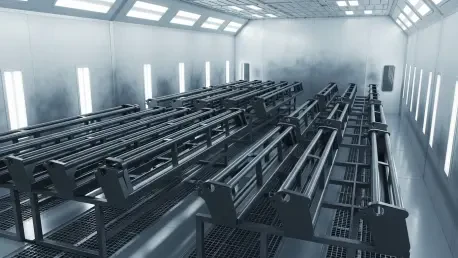
The physical infrastructure of the Holdrege site is designed to support a streamlined workflow from raw material intake to the final finishing stages. A key feature of the new layout is a dedicated, climate-controlled paint booth, which ensures that every piece of equipment receives a protective coating capable of withstanding the corrosive environments typical of livestock operations. Beyond the hardware, the expansion is expected to have a tangible impact on the local economy by creating high-skill opportunities for welders and general laborers as the company scales its workforce. Local economic development officials have noted that the presence of an agricultural manufacturer specializing in feedlot equipment is a perfect synergistic fit for a region where cattle feeding remains a primary economic driver. This move is not merely about finding a larger warehouse; it is about establishing a permanent industrial footprint in a location where the product demand is most concentrated and the labor force understands the agricultural context.
Engineering for Longevity: The proprietary W-Beam Solution
At the center of the company’s technological offering is a proprietary W-beam guardrail system that departs significantly from the traditional use of repurposed highway materials. While many producers use secondhand road barriers that are often fatigued or improperly sized for livestock, Maverick Metal produces its guardrail using 100 percent American-made steel, roll-formed specifically for the stresses of a feedlot. This engineering distinction is vital because livestock containment requires different structural properties than automotive safety barriers. The roll-formed design creates a dual-purpose structure that serves as a formidable containment wall while simultaneously acting as an effective windbreak. This dual functionality is essential for maintaining livestock comfort during harsh winters, as reducing wind chill can directly correlate to better weight gain and improved feed conversion ratios. By controlling the manufacturing process from start to finish, the company ensures that the steel thickness and structural profile meet rigorous specifications.
Durability remains the primary selling point for this engineered fencing, with a projected operational lifespan ranging from 50 to 100 years. This longevity represents a fundamental shift in how agricultural operations view their capital expenditures, moving from a cycle of constant repair and replacement toward a century-long investment. The use of high-grade U.S. steel prevents the rapid degradation often seen in thinner, imported alternatives or rusted salvaged materials. When cattle lean or rub against the fencing, the structural integrity of the W-beam resists bowing and snapping, which reduces the risk of animal injury and escapes. For large-scale feedlot operators, the reduction in maintenance labor and the elimination of frequent component failure provide a clear economic advantage over several decades. This approach treats the fence not as a temporary barrier, but as a permanent piece of industrial infrastructure that supports the entire production lifecycle of the herd.
Future Projections and Industry Adoption: Scaling National Operations
Having successfully entered the American market roughly a year ago, the company is now focused on expanding its domestic presence to mirror the success of its original operations in Alberta, Canada. The Holdrege facility serves as the cornerstone of this growth strategy, providing the manufacturing muscle needed to support a national distribution model. By maintaining separate hubs in Canada and the United States, the firm can navigate the specific regulatory and market nuances of each country while leveraging shared engineering expertise. The goal is to move beyond regional sales and establish a footprint that spans the entire North American cattle corridor. This ambition is supported by a growing realization among producers that high-quality infrastructure is a prerequisite for scaling operations in an increasingly competitive global market. As livestock prices fluctuate, the ability to minimize overhead through long-lasting equipment becomes a critical factor in maintaining profitability for independent producers and large corporations alike.
The transition toward specialized livestock metalwork was finalized through a commitment to technological precision and regional economic integration. By investing in Nebraska’s industrial infrastructure, the company proved that localized manufacturing could effectively compete with generic, mass-produced agricultural goods. Moving forward, livestock producers should evaluate their current fencing and handling systems through the lens of total cost of ownership rather than initial price points. Implementing high-specification steel solutions like the W-beam system allows for improved animal welfare and reduced labor costs over the long term. Future considerations for the industry will likely involve the integration of smart sensors into these durable structures to monitor animal movement and health in real-time. For now, the focus remains on building a solid physical foundation that can withstand the elements and the animals for the better part of a century, ensuring that the infrastructure of today remains functional for the next generation of ranchers.